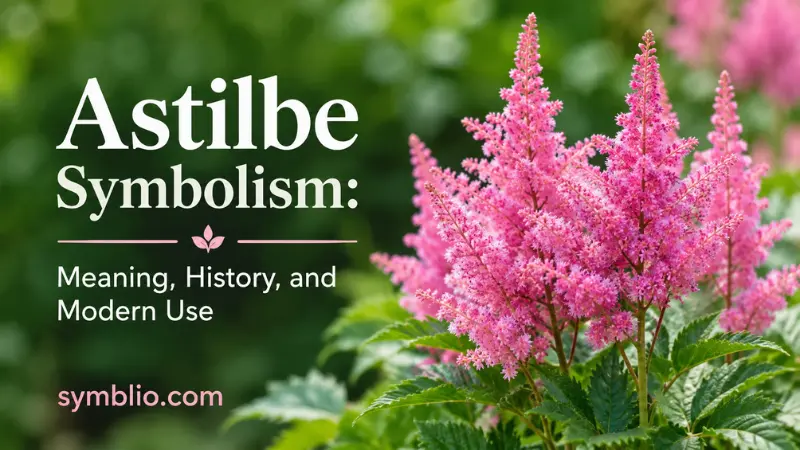
Astilbe symbolism is closely associated with patience, devotion, sincerity, and the ability to remain steady while waiting for the right moment. The flower is especially recognizable for its tall, feathery plumes that rise above fern-like foliage in shaded gardens.
Unlike flowers whose symbolic meanings are strongly tied to mythology or religion, astilbe gained much of its modern symbolism through the tradition of flower meanings. Its association with patience fits the plant itself: astilbe grows well in cool, moist, partly shaded places and produces upright blooms even when it is not growing in the bright conditions preferred by many flowering plants.
In the United States, astilbe is primarily appreciated as a garden flower and a graceful addition to bouquets, wedding arrangements, and landscape designs. Its symbolism tends to be subtle rather than fixed, making it useful for expressing qualities such as persistence, thoughtful affection, and quiet dedication.
Quick Answer
Astilbe commonly symbolizes patience and enduring devotion in modern American flower symbolism, especially when expressing steady affection, sincerity, or appreciation. Historically, its associations developed through the language of flowers, while today its graceful form also suggests calmness, perseverance, and understated beauty.
TL;DR
- Astilbe commonly represents patience, devotion, and sincere affection.
- Its flower meanings developed through nineteenth-century floriography.
- The plant’s shade tolerance reinforces associations with quiet perseverance.
- American gardeners often connect astilbe with calm, graceful landscapes.
- Pink, white, and red flowers can create different emotional tones.
- Modern uses include gardens, bouquets, weddings, and memorial plantings.
What Astilbe Looks Like and Where It Grows
Astilbe is a perennial flowering plant in the saxifrage family. Its leaves have a finely divided, fern-like appearance, while the flowers grow in tall, airy plumes above the foliage. Depending on the cultivar, the blooms can appear in white, pink, red, mauve, and related shades.
The plant naturally occurs across parts of eastern Asia and eastern North America. Different species are associated with places including China, Japan, Korea, the Himalayas, and the southeastern United States. Most garden astilbes grown today are cultivated varieties and hybrids, many of which trace their ancestry to Asian species.
Astilbe generally prefers moist soil and partial or filtered shade. Its ability to flower successfully in these conditions is one reason the plant works so well in woodland gardens, shaded borders, and areas near water.
That natural setting also helps explain why people often perceive the flower as gentle and composed rather than dramatic or aggressive.
The Core Meaning of Astilbe
The most commonly assigned symbolic ideas are patience, dedication, sincerity, and enduring affection.
Patience is particularly appropriate because astilbe does not depend on intense sunlight to create its characteristic floral display. Instead, it thrives in conditions where many other flowering plants may struggle. Its upright plumes emerge from relatively quiet surroundings, giving the plant an appearance of steady growth rather than sudden spectacle.
Devotion is a related idea. When astilbe is given as a flower, the message can suggest affection that is consistent rather than impulsive. It can suit relationships in which loyalty, time, and continued care matter more than dramatic declarations.
These meanings should be treated as part of floral tradition rather than as universal rules. A person giving astilbe may simply appreciate its appearance, while another person may intentionally choose it for its association with patience.
Ancient Roots and Botanical History
Astilbe does not have the same extensive mythology as flowers such as the rose, iris, lotus, or narcissus. Its symbolic history is therefore better understood through botanical culture and the later tradition of floriography.
The genus was formally described in the nineteenth century, although its wild species had long existed across parts of Asia and North America. The genus name is derived from Greek elements associated with a lack of brightness or luster, apparently referring to the relatively inconspicuous individual flowers rather than the overall flowering display.
That distinction is interesting from a symbolic perspective. Thousands of small flowers combine into noticeable, plume-like structures. A plant whose individual blossoms are easy to overlook can therefore create an overall display that is much more striking.
The botanical history does not establish a single ancient symbolic message for astilbe. Most of the familiar emotional associations belong to later flower-language traditions.
Astilbe and the Victorian Language of Flowers
The nineteenth-century language of flowers gave individual plants assigned emotional meanings. The tradition became especially fashionable in Britain and America during the Victorian period, with flower dictionaries helping people interpret bouquets and floral gifts.
Astilbe is commonly associated in modern flower-meaning guides with patience and related ideas of dedication and enduring affection.
However, it is important not to present Victorian flower symbolism as a perfectly standardized code. Different dictionaries sometimes assigned different meanings to the same flower, and historians caution that the extent to which people actually followed these systems in everyday life is uncertain.
For astilbe, this means its symbolic interpretation is best viewed as a cultural tradition rather than an ancient rule. The plant’s appearance and growing habits have also encouraged modern writers and gardeners to reinforce the idea of patience.
Why Patience Became an Appropriate Symbol
Astilbe’s connection with patience makes sense when its physical characteristics are considered.
The plant often grows in moist, shaded environments and produces its flowers during the growing season rather than demanding a bright, exposed position. Modern gardening references emphasize its preference for moisture and partial shade.
Symbolically, this creates an easy metaphor: good results can develop under conditions that require time and care.
The flower does not suggest patience as passive waiting alone. A more useful interpretation is steady persistence—continuing to grow, develop, and eventually bloom without requiring ideal circumstances.
That distinction makes astilbe particularly appropriate when someone wants to recognize perseverance without turning the flower into a dramatic symbol of hardship.
Astilbe Symbolism in the United States
In the United States, astilbe is primarily encountered through gardening, landscaping, floristry, and ornamental planting. It is especially useful in shade gardens, where its upright flowers provide height and seasonal color. American gardening resources describe it as a reliable perennial for moist, partly shaded conditions.
Because of this everyday garden presence, American interpretations are generally less formal than Victorian flower dictionaries might suggest.
Someone seeing astilbe in a garden may associate it with:
- calmness
- patience
- graceful growth
- thoughtful affection
- dedication
- understated beauty
The symbolism works particularly well in gardens designed to feel peaceful and natural. Its soft flower plumes contrast with broad-leaved shade plants such as hostas and textured ferns, making the plant visually suited to quiet outdoor spaces.
What Astilbe Can Mean in Weddings and Relationships
Astilbe can fit wedding symbolism because its traditional associations include patience and devotion.
A wedding arrangement containing astilbe may suggest a relationship built through continued care rather than only excitement. Its feathery flower clusters also provide a softer alternative to large, highly structured blooms.
For anniversaries, astilbe can communicate a similar idea: affection that has remained present over time.
The flower does not have a universally recognized wedding meaning in American culture, however. Couples generally choose flowers according to personal taste, season, color, availability, and design. Its symbolic meaning is therefore an optional layer rather than a fixed message.
Astilbe and Emotional Meaning
Astilbe tends to communicate quiet emotions rather than intense ones.
Its form can suggest calm affection, particularly because the flower spikes are airy and visually delicate. The plant can also represent the satisfaction that comes after waiting, especially when its flowering season arrives after months of vegetative growth.
For personal symbolism, astilbe can represent:
| Context | Meaning in the USA | Common Associations | Notes |
|---|---|---|---|
| Gift | Patience and appreciation | Care, gratitude | Works well for thoughtful occasions |
| Wedding | Steady devotion | Commitment, affection | Meaning depends on the couple |
| Garden | Calm perseverance | Growth, balance | Especially fitting for shade gardens |
| Memorial | Ongoing remembrance | Continuity, tenderness | A personal rather than universal association |
| Friendship | Sincere appreciation | Loyalty, steadiness | Suitable for understated floral gifts |
The emotional message is strongest when the surrounding occasion supports it. A flower does not automatically communicate one feeling simply because a symbolism guide assigns it a meaning.
Astilbe Color Meanings
Astilbe comes in several flower colors, and color can influence how people interpret the plant.
White astilbe often creates an impression of simplicity, peace, sincerity, and elegance. It can work particularly well in formal gardens and restrained floral arrangements.
Pink astilbe tends to feel warmer and more affectionate. It can suggest appreciation, tenderness, friendship, or gentle romantic feeling.
Red astilbe has a stronger emotional presence and can be associated with love, admiration, and enthusiasm.
Purple or mauve astilbe can appear more refined and contemplative, making it suitable for sophisticated garden designs.
These color associations are broad conventions rather than strict cultural rules. The flower’s traditional association with patience and dedication can remain present regardless of color.
Astilbe in Gardens and Home Decor
Astilbe has a particularly strong connection with garden symbolism because its natural growing preferences shape how people experience it.
It is commonly planted beneath trees, along shaded borders, near ponds, or alongside other moisture-loving perennials. Its plumes rise above the foliage, creating vertical structure without making the garden feel overly formal.
In home landscaping, this can give astilbe a symbolic role connected with quiet beauty.
A shaded garden may represent a private or restful part of the home. Astilbe’s presence there can reinforce ideas of calmness, patience, and appreciation for beauty outside the most obvious locations.
Its dried flowerheads can also remain attractive after flowering, extending the plant’s seasonal visual interest into later months.
Astilbe in Memorial and Remembrance Settings
Astilbe can also work naturally in remembrance gardens because its symbolism does not depend on celebration alone.
The ideas of patience, continued care, and enduring affection can fit a garden created to remember someone. Its perennial growth adds another layer: the plant returns from year to year rather than existing as a temporary floral display.
Still, astilbe is not a universal funeral or mourning symbol in the United States. White flowers such as lilies and chrysanthemums have stronger established associations with funerals in many American settings.
Astilbe is better understood as a personal choice for remembrance, especially when the gardener wants something less conventional and more connected with continued growth.
Cross-Cultural Perspectives on Astilbe
Astilbe’s geographic history spans eastern Asia and North America, but that does not mean every culture has developed the same symbolic interpretation of the flower.
Species occur naturally in areas including China, Japan, Korea, the Himalayas, and parts of eastern North America. Botanical research indicates a complex evolutionary history linking Asian and North American populations.
This is different from saying that all of those cultures traditionally assign astilbe the same emotional meaning.
In particular, modern Western flower-language associations should not automatically be projected onto Chinese, Japanese, Korean, or Himalayan traditions. The plant may have botanical, medicinal, horticultural, or local cultural importance without carrying the same Victorian-style symbolic message.
That distinction helps keep astilbe symbolism culturally accurate.
Astilbe in Tattoos, Art, and Personal Style
Astilbe is less common in tattoo culture than roses, lotuses, chrysanthemums, or wildflowers, but its shape can make an appealing botanical design.
A person choosing astilbe imagery might use it to represent:
- patience during a long period of change
- commitment to a relationship
- personal growth
- appreciation for quiet beauty
- persistence without attention-seeking
The feathery shape also allows an artist to create a lighter botanical design than one based on a large, densely petaled flower.
In personal artwork, the meaning is ultimately individual. A tattoo of astilbe may refer to a particular garden, person, memory, or place rather than to a traditional flower dictionary.
Common Misunderstandings About Astilbe Symbolism
One common mistake is treating astilbe’s meaning as an ancient universal tradition. Most of its commonly repeated emotional associations belong to relatively recent flower-language traditions rather than an uninterrupted symbolic system extending back thousands of years.
Another misconception is that the flower has one official meaning. Floral symbolism is interpretive. Different dictionaries, florists, cultures, and individuals can assign somewhat different associations.
It is also misleading to assume that the Greek origin of the botanical name itself created the modern emotional symbolism. The name refers to the appearance of the tiny individual flowers, while the later association with patience comes from a different cultural process.
Keeping these distinctions clear makes the symbolism more useful and historically responsible.
How Astilbe’s Meaning Has Changed Over Time
Astilbe’s meaning has shifted from a specialized flower-language association toward a broader modern interpretation.
During the nineteenth century, flower dictionaries encouraged people to treat plants as coded expressions of emotion. Later, as flower symbolism became less formal, many of these meanings survived through gardening books, florists, gift guides, and popular culture.
Today, few Americans would automatically decode an astilbe bouquet as a specific message. Most people recognize it first as a beautiful perennial.
Even so, the older association with patience remains useful because it fits the plant’s appearance and growing habits. Modern interpretations therefore tend to blend historical flower language with contemporary ideas of perseverance, affection, and graceful growth.
When Astilbe Is a Good Symbolic Choice
Astilbe works especially well when the intended message is understated.
It can be appropriate for someone who has patiently worked toward a goal, a friend whose steady support is appreciated, or a partner celebrating years of commitment. It can also make sense in a garden created around themes of peace, remembrance, or seasonal renewal.
The flower is less suitable when someone wants a universally recognized message. If the recipient needs to immediately understand a conventional floral statement, a more culturally established flower may communicate more clearly.
Astilbe is at its best when the giver can explain the personal reason for choosing it.
Why Astilbe Still Matters Today
Astilbe remains popular because it combines practical garden value with an appearance that naturally invites interpretation.
Modern cultivars offer different heights and flower colors, while the plant’s tolerance for shade makes it useful where many sun-loving flowers perform poorly. American gardening resources continue to recommend it for moist, shaded landscapes.
Its symbolism works for the same reason. Patience is not represented through an elaborate myth but through a recognizable quality of the plant: it grows under particular conditions and eventually produces elegant flower plumes.
That makes astilbe an unusually grounded floral symbol. Its meaning can be appreciated without requiring a supernatural explanation.
FAQs
Astilbe is commonly associated with patience, dedication, sincerity, and enduring affection. These meanings are especially connected with the language-of-flowers tradition and modern interpretations of the plant’s growing habits.
Astilbe can symbolize devoted or enduring love, particularly when patience and long-term commitment are part of the message. It is less universally recognized as a love flower than roses, so context matters.
White astilbe can suggest sincerity, peace, simplicity, and graceful affection. Its traditional associations with patience can remain part of the message as well.
Pink astilbe generally creates a softer emotional impression and can suggest affection, appreciation, tenderness, or friendship. The exact meaning depends on the arrangement and the occasion.
Astilbe is not one of the strongest conventional mourning flowers in American culture. However, its associations with continued care, patience, and perennial growth can make it a meaningful personal choice for a remembrance garden.
Astilbe does not have a widely established religious symbolism comparable to the Christian associations of lilies or the religious traditions surrounding the lotus. Claims of a universal sacred meaning should therefore be treated cautiously.
The association fits both historical flower-language traditions and the plant’s character as a shade-tolerant perennial. Its ability to grow and flower in moist, partly shaded conditions provides a natural metaphor for steady development over time.
Conclusion
Astilbe symbolism centers on patience, dedication, sincere affection, and the kind of commitment that develops gradually. Its meaning comes primarily from flower-language traditions and has been reinforced by the plant’s graceful growth in shaded, moist environments.
In modern American culture, astilbe is more often recognized as a garden flower than as a coded symbolic object. Yet its traditional associations still provide a useful way to express steady devotion, appreciation, remembrance, and perseverance without relying on exaggerated symbolism.
The flower’s appeal ultimately comes from that balance: astilbe can be beautiful without being showy, and its symbolism can be meaningful without needing to be complicated.Astilbe Symbolism: Meaning, History, and Modern Use