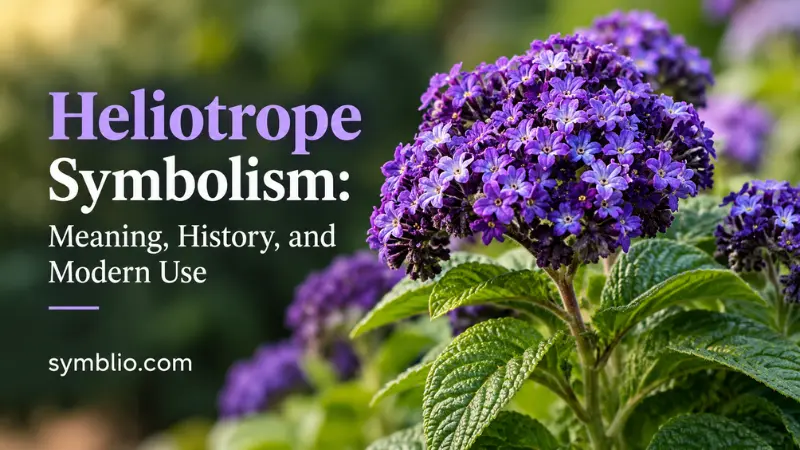
Heliotrope symbolism commonly centers on devotion, loyalty, and turning toward what brings light. The name itself comes from Greek roots associated with the sun and turning, which helped give the flower its long-standing connection with dedication and affection.
The heliotrope is a fragrant flowering plant known especially for clusters of small purple, violet, or lavender flowers. Gardeners value it for its scent as much as its appearance, while writers and flower-symbolism traditions have used it to express ideas about attachment, constancy, and longing.
Its symbolism is particularly interesting because the word has more than one meaning. Heliotrope can refer to a flowering plant, a purple color, and a variety of bloodstone. These different uses developed through separate historical traditions, so understanding the symbol requires looking at each one carefully.
In modern American culture, heliotrope is most naturally associated with flowers, gardens, romantic sentiment, personal style, and the soft purple range of the color itself. Its older associations with devotion still appear in decorative and literary contexts, although most people today do not treat heliotrope as having one fixed universal meaning.
Quick Answer
Heliotrope symbolism commonly represents devotion, loyalty, and affection in modern American culture, especially when the flower is used in gardens, gifts, or decorative settings. Historically, its connection with turning toward the sun also linked it with steadfast attachment, while the heliotrope gemstone developed separate associations with protection, sacrifice, and Christian tradition.
TL;DR
- Heliotrope commonly symbolizes devotion, loyalty, and affectionate attachment.
- Its name comes from Greek words connected with the sun and turning.
- Victorian flower language strengthened its association with devoted love.
- Purple heliotrope often suggests gentleness, remembrance, and romantic feeling.
- Bloodstone, also called heliotrope, has separate historical symbolism.
- Modern Americans mainly encounter heliotrope through flowers, color, gardens, and design.
What Is Heliotrope?
Heliotrope usually refers to plants in the Heliotropium genus, particularly the fragrant garden heliotrope (Heliotropium arborescens). The plant produces small flowers in rounded clusters, commonly appearing in shades of purple, violet, lavender, or white.
Its fragrance is one of its most recognizable characteristics. Garden heliotrope has traditionally been valued for a sweet scent that can be especially noticeable during warm weather.
The name also describes a particular purple color. Heliotrope purple generally falls between violet and reddish purple, although historical color references have not always used the term in exactly the same way.
There is also a mineral meaning. Heliotrope is an older name for bloodstone, a dark green form of chalcedony marked by reddish spots. Because the plant and gemstone developed different symbolic traditions, they should not automatically be treated as one symbol.
Why Heliotrope Is Associated With Devotion
The central idea behind heliotrope symbolism comes from the concept of turning toward the sun.
The Greek roots of the word combine helios, meaning sun, with a word related to turning. Earlier observers associated heliotrope plants with an apparent tendency to orient themselves toward sunlight. That observation gave the plant a natural metaphor: just as the flower was thought to turn toward the sun, a devoted person could turn toward someone they loved.
This makes devotion one of the most recognizable traditional meanings attached to heliotrope.
The symbolism does not necessarily imply romantic love. Devotion can describe loyalty to a person, family, belief, vocation, home, or personal principle. That broader interpretation makes heliotrope useful as a symbol of steady attachment rather than simple romance.
Modern botanical understanding also makes the old symbolism more nuanced. The familiar garden heliotrope does not literally follow the sun in the simple way popular descriptions sometimes suggest. The historical idea nevertheless remained influential because symbolic traditions often grow from observation and metaphor rather than strict scientific accuracy.
Ancient Roots and the Sun-Turning Idea
The connection between heliotrope and the sun is much older than modern flower symbolism.
Ancient Greek terminology used heliotropion for plants and objects associated with turning toward the sun. The concept eventually entered Latin and later European languages. The English word developed from this older linguistic tradition.
The important symbolic step was not simply identifying a plant. It was connecting movement toward sunlight with orientation, attention, and attachment.
The sun has also carried broad associations with visibility, warmth, life, direction, and renewal across many cultures. Heliotrope therefore inherited a symbolic vocabulary that was larger than the flower itself.
Over time, writers could use the flower as a convenient image for someone who continually turns toward a loved person or toward a desired source of guidance.
Heliotrope in Victorian Flower Language
The nineteenth century gave heliotrope symbolism a particularly strong emotional identity.
During the Victorian period, flower dictionaries and illustrated guides assigned meanings to flowers and plants. This practice, often called floriography, became popular in Britain and North America. Flowers could be selected for bouquets according to the sentiments associated with them.
Heliotrope became connected with devotion, particularly devoted affection.
That meaning fit the plant’s supposed relationship with the sun. A flower that appeared to turn toward the light offered an easy metaphor for a person who remained emotionally oriented toward someone they loved.
Victorian flower meanings were not a single official dictionary. Different books sometimes assigned different meanings to the same plant. That is important when discussing heliotrope because modern lists can present one definition as if it were universally accepted.
A more accurate interpretation is that devotion became a prominent traditional association, especially within nineteenth-century floral symbolism.
What Heliotrope Means in the United States
In the United States today, heliotrope does not have one standardized symbolic meaning.
Most Americans encountering the word are likely to associate it with one of three things: a flower, a shade of purple, or the gemstone known as bloodstone. The context determines the interpretation.
For flowers and gardens, heliotrope can suggest:
- devotion
- loyalty
- affection
- remembrance
- gentleness
- appreciation of beauty
In design, the color heliotrope can communicate a softer version of purple. Depending on the shade and surrounding colors, it may feel floral, nostalgic, elegant, playful, or artistic.
Unlike symbols such as the rose or heart, heliotrope is not a dominant everyday American emblem. Its meaning is more specialized and often appears in gardening, historical references, floral design, poetry, and discussions of color.
Heliotrope and Romantic Love
Heliotrope has a natural connection with romantic devotion because of its traditional flower meaning.
A person choosing heliotrope for a bouquet might use it to suggest loyalty or sustained affection rather than dramatic passion. This gives the flower a different emotional tone from red roses, which have become strongly associated with romantic love in American culture.
The distinction is useful:
| Context | Meaning in the USA | Common Associations | Notes |
|---|---|---|---|
| Heliotrope flower | Devotion | Loyalty, affection | Rooted in floral tradition |
| Purple heliotrope color | Individuality | Creativity, elegance | Meaning depends on shade and setting |
| Garden planting | Appreciation | Fragrance, beauty, care | Often more aesthetic than symbolic |
| Romantic gift | Steady affection | Commitment, remembrance | Less conventional than roses |
| Bloodstone/heliotrope | Courage or protection | Sacrifice, faith | Comes from separate gemstone traditions |
Heliotrope therefore works especially well when the intended message is consistent affection rather than sudden attraction.
The Flower’s Symbolism of Loyalty and Constancy
Devotion naturally overlaps with loyalty and constancy.
When someone remains committed despite changing circumstances, heliotrope can serve as a metaphor for that steadiness. Its traditional sun-oriented imagery reinforces the idea of having a clear emotional direction.
This symbolism can apply beyond relationships.
For example, someone might use heliotrope imagery when discussing dedication to a craft, loyalty to a family tradition, or commitment to a personal goal. The symbol does not have to represent another person.
That flexibility helps explain why heliotrope can feel meaningful without being exclusively romantic.
Purple Heliotrope and Emotional Meaning
The color of the heliotrope flower contributes another layer to its symbolism.
Purple has long carried varied associations in Western cultures, including dignity, creativity, spirituality, individuality, and refinement. Lighter purple shades can appear softer and more sentimental, while darker shades may look formal or dramatic.
Heliotrope’s floral purple therefore supports an emotional combination of devotion and sensitivity.
The symbolism should not be reduced to a universal rule about color psychology. Color meanings depend heavily on culture, context, design, and personal experience. A purple flower at a wedding can communicate something different from the same flower in a memorial arrangement.
Still, heliotrope’s purple coloring makes it particularly suited to themes involving affection, remembrance, creativity, and quiet elegance.
Heliotrope in Myth and Folklore
Heliotrope has also appeared in stories connected with unreturned love.
One well-known classical tradition links the flower with Clytie, a figure associated with the sun god Apollo. In later retellings, Clytie becomes so consumed by her longing that she is transformed into a plant that watches the sun.
The story helped reinforce the association between heliotrope and unwavering attachment.
However, there is an important complication: historical writers have not always agreed on which plant the ancient story actually described. Later European traditions connected the story with heliotrope, while botanical interpretations have proposed other plants.
This uncertainty is worth preserving rather than presenting the myth as a straightforward botanical fact. Folklore often changes as stories move between languages, cultures, and periods.
The Separate Symbolism of Heliotrope Bloodstone
Heliotrope can also mean bloodstone, a green chalcedony containing distinctive reddish inclusions.
This gemstone has a symbolic history separate from the garden flower. Ancient and medieval traditions attributed various protective and medicinal qualities to bloodstone. Some beliefs connected it with courage, endurance, healing, or protection.
Christian medieval tradition later associated the red markings with the blood of Christ falling onto stone during the Crucifixion. This helped give bloodstone religious associations involving sacrifice and faith.
The gemstone’s older name, heliotrope, was connected with beliefs about its appearance and relationship to sunlight. Historical writers described unusual optical effects involving the stone and the sun.
Modern readers should distinguish these traditions from established scientific properties. The symbolic associations belong to cultural history, folklore, and religious storytelling rather than proven supernatural effects.
Heliotrope in Religious Symbolism
The flower itself does not have one universal religious meaning.
Its symbolism has sometimes been incorporated into Christian art and literature through the broader idea of faithful devotion. The bloodstone meaning of heliotrope has a much more direct Christian history because of the medieval association between its red markings and Christ’s blood.
That distinction matters.
A heliotrope flower in a modern Christian garden does not automatically represent a specific biblical concept. Its meaning depends on the individual, artwork, devotional setting, or cultural tradition involved.
Similarly, the bloodstone’s Christian symbolism should not be projected backward onto every ancient reference to heliotrope. Different traditions developed at different times.
Heliotrope in Mourning and Remembrance
Devotion and remembrance can overlap naturally, which gives heliotrope a place in historical discussions of mourning.
A flower representing continued attachment can become a metaphor for remembering someone after separation or loss. Purple flowers have also appeared in mourning and memorial traditions because of their subdued, reflective appearance.
Still, heliotrope is not one of the primary standardized American funeral flowers. Its use in remembrance is more personal and literary than conventional.
Someone choosing heliotrope today might therefore communicate a private message of loyalty, memory, or affection rather than following a widely recognized funeral code.
Why Heliotrope Appears in Gardens and Decor
The modern appeal of heliotrope is partly practical: it is an attractive flowering plant with a distinctive fragrance.
Garden symbolism often works through the character of the plant itself. Fragrance can suggest memory because scents are strongly connected with personal experiences and recollection. A fragrant heliotrope planted near a patio, walkway, or sitting area can therefore acquire personal meaning even without a formal symbolic tradition.
In American home and garden design, heliotrope can also contribute a vintage or cottage-garden feeling. Its purple flowers work naturally with other flowering plants and can create a softer visual palette.
For decorators, the heliotrope color offers similar flexibility. It can be used as an accent shade when purple feels appropriate but a stronger royal or jewel-toned purple would seem too intense.
Heliotrope in Tattoos and Personal Style
Heliotrope is less common as a tattoo subject than roses, lilies, sunflowers, or lavender, but its symbolism makes it meaningful for someone looking for a less conventional floral image.
A heliotrope tattoo might represent:
- loyalty to someone important
- lasting affection
- dedication to a personal path
- remembrance
- attraction to sunlight and nature
- appreciation of botanical history
The visual design can change the interpretation. A detailed botanical illustration emphasizes nature and historical interest, while a simple purple flower can make the design feel more personal and decorative.
Because heliotrope is not universally recognized, people who choose it as a tattoo often attach their own story to the flower. That personal layer can be more important than any traditional dictionary definition.
Common Misunderstandings About Heliotrope
One common misunderstanding is that heliotrope always means romantic love. Devotion is broader than romance and can refer to loyalty, dedication, remembrance, or attachment.
Another misconception is that every heliotrope reference concerns the flower. In historical texts, heliotrope may refer to bloodstone or to a purple color.
It is also easy to assume that the flower literally follows the sun throughout the day. The name comes from an old understanding of the plant’s relationship with sunlight, but the botanical reality is more complicated.
Finally, Victorian flower meanings should not be treated as universal codes. Flower symbolism varied between books, authors, regions, and periods. Modern Americans generally interpret flowers through personal and cultural context rather than a fixed floral dictionary.
How Heliotrope Symbolism Has Changed
The evolution of heliotrope symbolism follows a recognizable pattern.
First came the association with the sun and turning. That idea provided a natural metaphor for orientation and attachment. Later folklore connected the plant with stories of longing and unreturned love. Victorian floriography strengthened its meaning of devotion. Modern culture has retained that association but uses it more selectively.
Today, heliotrope is less likely to communicate a universally understood message without explanation. Instead, its meaning depends on whether someone is discussing a flower, a color, a gemstone, a historical text, or a personal design.
That shift reflects a broader change in American symbolism. Older floral codes have not disappeared, but they have become optional cultural references rather than shared rules.
What Heliotrope Represents Emotionally Today
At an emotional level, heliotrope can represent the decision to remain oriented toward something valued.
That might mean staying loyal to a person, remembering someone important, protecting a cherished tradition, or continuing to pursue a meaningful goal.
Its most useful modern interpretation is therefore not simply “love.” It is steadfast affection with a sense of direction.
The sun imagery adds another dimension. Light can suggest clarity, warmth, hope, or renewal, while turning toward it suggests choosing where to place attention. This makes heliotrope a fitting symbol for someone who wants an image of commitment without relying on a more familiar emblem.
FAQs
Heliotrope is traditionally associated with devotion, particularly devoted affection and loyalty. Victorian flower-language traditions helped establish this meaning, although different historical sources did not always agree on every flower’s definition.
A heliotrope tattoo can represent loyalty, devotion, remembrance, or a lasting personal commitment. Because the flower is less familiar than common tattoo flowers, its meaning is often shaped strongly by the person wearing it.
It can symbolize love, especially love expressed through loyalty and devotion. Its traditional meaning is broader than romantic attraction and can include dedication to people, principles, memories, or personal goals.
The flower does not have one universally recognized Christian meaning. Heliotrope as a name for bloodstone, however, has a medieval Christian tradition connecting the stone’s red markings with Christ’s blood and therefore with sacrifice and faith.
The name comes from an old belief and observation involving plants turning toward sunlight. Modern botanical knowledge shows that the behavior is more complicated than the simple idea that garden heliotrope continuously follows the sun.
The heliotrope color, a purple shade, can suggest creativity, individuality, elegance, affection, or sensitivity depending on its context. It does not have one fixed symbolic meaning in contemporary American design.
Yes. Devotion is one of its strongest traditional associations because the flower’s name and folklore connect it with turning toward the sun. That symbolism can apply to romantic relationships, friendship, family, remembrance, or personal dedication.
Conclusion
Heliotrope carries a distinctive symbolic history built around devotion, loyalty, affection, and orientation toward light. Its name created the foundation for these ideas, while folklore and Victorian flower language gave them a more emotional form.
In contemporary America, heliotrope is not a universally recognized code, but that can make it more personal. The flower, purple color, and historical bloodstone meaning each offer different possibilities, allowing people to connect the symbol with love, remembrance, creativity, faith, or commitment.
Ultimately, heliotrope symbolism works best when understood as a tradition rather than a rigid definition. Its enduring image is simple: remaining turned toward what matters.