
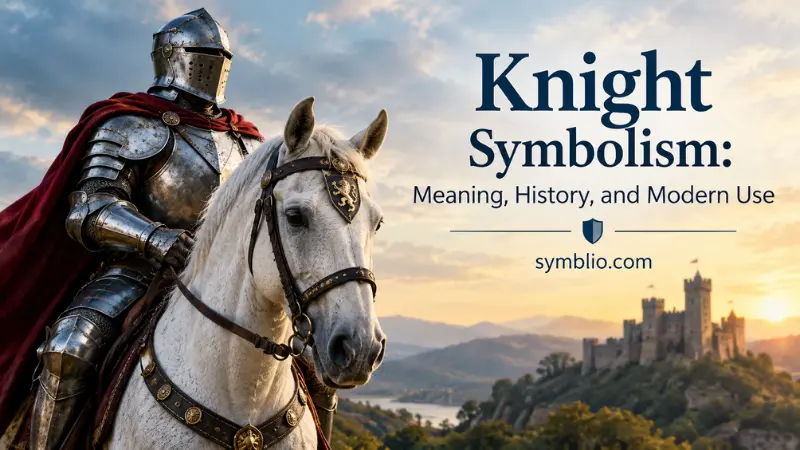
A knight is one of the most recognizable figures associated with medieval Europe, and knight symbolism continues to appear in American culture, literature, fantasy, sports imagery, tattoos, jewelry, and personal identity. The familiar image usually suggests a person guided by courage, loyalty, honor, discipline, and a willingness to protect others.
The meaning comes from a mixture of historical reality and later storytelling. Medieval knights were mounted warriors who served within changing systems of landholding, loyalty, warfare, and social status. Over time, the ideal of the knight became closely connected with chivalry, courtesy, service, and noble conduct, even though real medieval life was considerably more complicated than the heroic image suggests.
For Americans today, the knight is usually understood less as a literal medieval social role and more as a character type. It can represent someone who stands for a principle, protects what matters, keeps a promise, or tries to act with integrity under pressure.
Quick Answer
Knight symbolism commonly represents honor, courage, loyalty, protection, and personal integrity in modern American culture. Historically, knights were associated with military service, social status, heraldry, and chivalry, while later stories transformed them into models of heroic conduct.
TL;DR
- Knights commonly symbolize courage, loyalty, honor, and protection.
- Medieval knights were mounted warriors within complex social systems.
- Chivalry shaped the later ideal of knightly behavior.
- Heraldry connected knights with family identity and social status.
- Modern Americans often use knights as symbols of character.
- Tattoos and fantasy art give the figure new personal meanings.
What a Knight Looks Like as a Symbol
The visual image of a knight usually includes a mounted or standing medieval figure associated with a shield, helmet, heraldic emblem, or other signs of knightly identity. Modern artwork may simplify the figure into a helmeted silhouette, a crest, a shield, or a stylized medieval character.
These visual elements matter because medieval knights used identifiable designs to distinguish themselves. As helmets increasingly covered the face, painted shields and other devices became important ways to identify individuals and families. This helped develop the European heraldic tradition.
Modern artists often remove most historical details and keep only the recognizable outline. A shield may therefore suggest protection, while a crest can suggest family identity, loyalty, or belonging.
What Knights Commonly Represent in the United States
In contemporary American culture, the knight most often represents honor, courage, protection, loyalty, and principled action.
The idea of protecting others is especially common. A knight may appear in a logo, story, tattoo, or piece of artwork when someone wants to communicate the idea of standing between vulnerable people and danger.
Courage is another major association. The symbolic knight does not necessarily represent someone who is fearless. Instead, the figure often represents a person who accepts responsibility despite fear or difficulty.
Honor adds another layer. In modern usage, it generally refers to keeping one’s word, behaving with integrity, or remaining committed to personal principles.
The meaning can also be personal. Someone might choose a knight as a symbol of discipline, perseverance, family loyalty, or the decision to defend a particular value.
Ancient Roots and the Medieval Knight
The historical knight emerged from the military and social structures of medieval Europe rather than from a single moment or tradition. By the ninth century, many knights and nobles held land connected with service to powerful lords, although other arrangements based on family ties, wages, household service, and personal loyalty also existed.
The word itself has an interesting history. The Old English cniht originally referred to a boy or servant, showing that the later meaning of “knight” developed over time rather than existing fully formed from the beginning.
By the later twelfth century, knights had become increasingly associated with nobility and with the developing concept of chivalry. That connection helped transform the knight from a description of a mounted warrior into a broader cultural ideal.
How Chivalry Changed the Symbol
Chivalry is central to understanding why the knight means more today than “medieval warrior.”
The word is connected to the French cheval, meaning horse, reflecting the close relationship between knighthood and horsemanship. Over time, chivalric culture developed expectations concerning conduct, loyalty, courtesy, service, and social behavior.
Modern storytelling simplified these ideas into a recognizable moral character: the honorable knight who keeps promises, helps others, shows restraint, and follows a code.
That ideal was never a perfect description of every historical knight. Medieval society contained political conflict, inequality, violence, competing loyalties, and substantial differences between individuals. The symbolic knight therefore represents an idealized model of conduct, not a complete picture of medieval society.
Knights, Heraldry, and Identity
Heraldry gave knightly imagery another important meaning: identity.
As armor and helmets made individual warriors harder to recognize, identifying symbols became increasingly important. Designs on shields, clothing, helmets, and horses could communicate family connections, allegiance, rank, or individual identity. Heraldry eventually became a sophisticated visual language.
That history explains why a knight symbol can suggest more than bravery.
It can also represent:
- family heritage
- belonging
- loyalty
- reputation
- ancestry
- social identity
- personal principles
In modern American design, a knight combined with a crest or shield can therefore communicate group identity as much as individual courage.
The Knight as a Symbol of Protection
Protection is probably one of the easiest modern meanings to understand.
A knight is commonly portrayed as someone who takes responsibility for defending something valuable. In symbolic use, that “something” does not have to be a person. It might be family, faith, community, freedom, personal values, or a cause.
This makes the knight particularly useful in fictional storytelling. A character described as knightly may be expected to protect others, honor commitments, or place responsibility above personal convenience.
In personal symbolism, the idea can be quieter. Someone might use a knight image to express the belief that they should remain dependable when other people need support.
Honor, Loyalty, and Keeping One’s Word
Knights are frequently associated with promises and loyalty because medieval social relationships often depended on systems of service and allegiance. However, those relationships were more complicated than the modern idea of simple, unquestioning loyalty. Medieval loyalties could involve family, friendship, employment, landholding, political relationships, and obligations to lords.
Modern culture compresses those complicated relationships into a simpler message: stand by what you have committed to.
That is why knight imagery sometimes appears in contexts involving friendship, family, remembrance, or personal principles. The figure can communicate reliability without requiring a literal connection to medieval history.
Knight Symbolism in American Culture
The United States did not develop a medieval knightly class of its own, but American culture inherited the knight through European literature, legends, art, fantasy, and popular entertainment.
Stories about King Arthur, Camelot, quests, heroic champions, and medieval kingdoms helped establish the knight as a familiar fictional character. Museums and cultural institutions also continue to display European arms and armor, keeping the historical image visible to modern audiences.
In America, the knight can consequently function as a shorthand for the honorable champion rather than a historical occupation.
Sports teams, schools, entertainment brands, fantasy stories, and organizations sometimes use knight imagery to communicate determination, tradition, competition, or group identity. The exact meaning depends heavily on context.
Common Meanings by Context
| Context | Meaning in the USA | Common Associations | Notes |
|---|---|---|---|
| Tattoo | Courage, loyalty, personal code | Strength, identity, perseverance | Often highly personal |
| Fantasy art | Heroism and adventure | Quests, honor, guardianship | Usually fictionalized |
| Family emblem | Heritage and belonging | Loyalty, ancestry, reputation | Often connected with heraldic imagery |
| Jewelry | Personal values | Honor, protection, commitment | Meaning depends on design |
| School or team imagery | Determination and unity | Discipline, competition, courage | Usually symbolic rather than historical |
| Memorial or tribute art | Devotion and remembrance | Protection, sacrifice, loyalty | Context determines the meaning |
Emotional and Psychological Meaning
The knight can symbolize a particular way of responding to difficulty.
At an emotional level, the figure often represents steadiness under pressure. Someone drawn to knight imagery may associate it with remaining committed to important values even when circumstances become difficult.
The symbol can also express a desire for structure. A knight is traditionally imagined as following a code, making the figure useful when someone wants to represent discipline, responsibility, or self-control.
Another interpretation involves identity. The knight is a recognizable archetype, so choosing one can communicate a particular self-image: protector, loyal friend, principled person, defender, or determined individual.
These meanings are not universal psychological rules. Personal experiences, cultural background, and the specific artwork all influence what the image communicates.
Religious and Cross-Cultural Associations
Knight imagery is primarily rooted in European medieval history, but its later symbolic development overlaps with religious storytelling and Christian European culture.
Some medieval knights belonged to religious military orders, while religious imagery also appeared on weapons, armor, and other objects associated with chivalric culture. Medieval and Renaissance armor could carry devotional inscriptions, religious imagery, and references to religious orders.
Modern interpretations should not assume that every knight image has a religious meaning. In the United States, a knight is more commonly understood through historical, fictional, fantasy, or personal symbolism unless explicit religious imagery is present.
Why Knights Appear in Tattoos
Knight tattoos often focus on identity rather than medieval history.
A person may choose a knight to represent perseverance, personal discipline, loyalty to family, or a commitment to certain values. A shield or heraldic emblem can make the design more specific by adding ideas of heritage or belonging.
Some designs emphasize the contrast between a human face and a concealed medieval figure. That contrast can suggest privacy, resilience, or a public role, depending on the person’s intended meaning.
Because tattoo symbolism is personal, there is no single fixed interpretation. The surrounding imagery often matters as much as the knight itself.
Knights in Jewelry, Fashion, and Decor
Knight imagery also appears in rings, pendants, wall art, decorative shields, medieval-inspired clothing, and fantasy-themed interiors.
In jewelry, the symbol can communicate loyalty or personal identity without being visually overwhelming. A small crest or knightly emblem may function as a reminder of a particular principle.
Home decor tends to emphasize history and fantasy. A decorative knight may create a medieval atmosphere, while a heraldic design can evoke ancestry and tradition.
Modern fashion and graphic design frequently simplify the knight into a logo-like figure. At that point, historical accuracy becomes less important than the recognizable ideas of strength, determination, and identity.
Knights in Fantasy and Popular Culture
Fantasy has arguably done more than any other modern genre to preserve the knight as a living cultural symbol.
Fantasy stories often separate the knight from actual medieval history and place the figure in imagined kingdoms, quests, magical worlds, or moral conflicts. The result is a character archetype rather than a historical profession.
This fictional knight often faces a choice between personal ambition and duty. Stories may use the character to explore loyalty, sacrifice, leadership, betrayal, justice, or moral responsibility.
That is why Americans who have never studied medieval history can still immediately understand what a knight is supposed to represent.
Common Misunderstandings About Knight Symbolism
One common misunderstanding is that all medieval knights followed the same code of behavior. Chivalry developed over time and varied across places and circumstances, so the modern image of a perfectly honorable knight is partly an idealized construction.
Another misconception is that every person shown wearing medieval armor was a knight. Historical European armies included many different kinds of soldiers, and armor was not exclusive to knights.
The familiar “knight in shining armor” is also largely a later cultural image. Real armor changed substantially across the medieval and Renaissance periods, and its design reflected practical needs, fashion, wealth, ceremony, and changing military conditions.
Understanding these distinctions makes the symbolism more interesting. The modern knight represents both a historical figure and a later cultural ideal built around that figure.
How Knight Symbolism Has Evolved
The meaning of the knight changed as the knight’s practical role changed.
During the medieval period, the figure was connected to warfare, service, landholding, social rank, family identity, and chivalric culture. As military technology and social structures changed, knights became less central to warfare, while heraldry, tournaments, ceremonial traditions, and the cultural image of chivalry continued.
Later literature increasingly emphasized the knight as a moral and romantic hero. Modern fantasy then transformed the figure again, making knights characters in imagined worlds.
Today, the symbol can exist almost completely apart from medieval history. A knight on a tattoo, school emblem, fantasy poster, or piece of jewelry may communicate courage or loyalty without referring to any specific historical person.
FAQs
A knight can symbolize moral commitment, service, courage, and protection when used in a spiritual context. However, the figure is not inherently religious, so its spiritual meaning depends on the surrounding imagery and tradition.
A knight tattoo may represent courage, loyalty, perseverance, protection, or commitment to a personal code. The meaning becomes more specific when combined with symbols such as a family crest, shield, crown, or other imagery.
Yes. Modern symbolic use frequently presents the knight as a protector or guardian. This interpretation comes partly from the historical association with military service and partly from later stories portraying knights as defenders of people, communities, or ideals.
In romantic symbolism, a knight can represent loyalty, devotion, commitment, and the ideal of protecting or standing beside a partner. This is largely a literary and cultural interpretation rather than a universal historical meaning.
Courage is one of the most common modern associations. The symbolic idea is usually not that knights never experience fear, but that they act according to duty or principle despite difficult circumstances.
A black knight can suggest mystery, independence, authority, rebellion, or a darker version of the traditional heroic archetype. Its meaning depends heavily on the story, artwork, colors, and surrounding symbols.
A historical knight was a person occupying a particular military and social role in medieval Europe. A symbolic knight is a cultural image representing ideas such as honor, courage, loyalty, protection, or heroic duty.
Conclusion
The knight has moved far beyond its original medieval context. Historically, knights were part of complex European military and social systems, while chivalry and heraldry gradually added ideas of conduct, identity, loyalty, and status to the figure.
Today, knight symbolism usually communicates a more personal set of ideas: courage under pressure, loyalty to important people or principles, protection, discipline, and a commitment to acting with integrity. Whether it appears in a tattoo, crest, fantasy story, piece of jewelry, or modern logo, the knight remains recognizable because the image connects a historical figure with an enduring cultural idea: character expressed through action.


