Cinnamon symbolism is closely connected to warmth, comfort, hospitality, prosperity, and celebration. This familiar spice has a distinctive sweet aroma and reddish-brown color that make it recognizable in kitchens, holiday decorations, traditional remedies, and cultural ceremonies. Although people primarily use cinnamon for cooking today, its associations extend far beyond food.
In the United States, cinnamon often brings to mind autumn mornings, freshly baked desserts, family gatherings, and winter holidays. Its scent can make a room feel welcoming, while its presence in traditional recipes connects people with family memories and cultural traditions. For many Americans, cinnamon represents the comfort of familiar places and the pleasure of sharing something with others.
However, cinnamon has a much longer history than its modern association with baking. It traveled through ancient trade networks, became a valuable commodity, and appeared in religious practices, traditional medicine, and ceremonial customs. Understanding these connections helps explain why this ordinary kitchen spice developed such a wide range of symbolic associations.
Quick Answer
Cinnamon commonly symbolizes warmth, comfort, hospitality, prosperity, and celebration in modern American culture, particularly through its connection with home cooking, family gatherings, and seasonal traditions. Historically, it was associated with wealth, luxury, sacred offerings, and preservation because of its rarity, fragrance, and value in international trade.
TL;DR
- Cinnamon represents warmth, comfort, and welcoming hospitality.
- Ancient spice trading connected cinnamon with wealth and luxury.
- Its fragrance has associations with religious ceremonies and sacred spaces.
- American holidays use cinnamon to evoke nostalgia and togetherness.
- Traditional customs sometimes associate cinnamon with prosperity and good fortune.
- Modern designs use cinnamon imagery to suggest natural warmth and familiarity.
What Cinnamon Looks Like and Where It Comes From
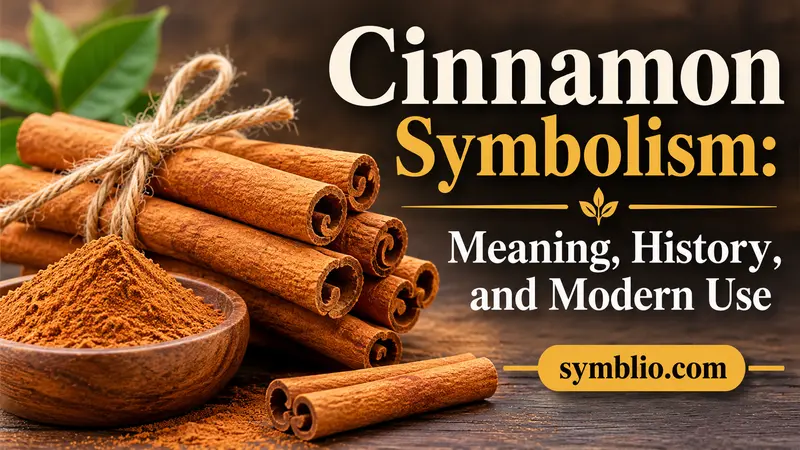
Cinnamon comes from the inner bark of trees belonging to the Cinnamomum genus. After the bark is harvested and dried, it curls into familiar brown sticks or quills. It can also be ground into a fine powder used in cooking, beverages, fragrances, and decorative products.
Two varieties are particularly familiar in American kitchens:
- Ceylon cinnamon: Often called true cinnamon, it comes primarily from Sri Lanka and has a relatively delicate, mildly sweet flavor.
- Cassia cinnamon: Commonly imported from Southeast Asia and China, it has a stronger, more pronounced flavor and is widely sold throughout North America.
The appearance of cinnamon contributes to its symbolic associations. Its reddish-brown color suggests earth, wood, autumn leaves, and natural warmth. Its curled bark can also resemble something carefully rolled or preserved.
Unlike flowers that communicate through their colors and shapes, cinnamon is often recognized through its fragrance. The combination of appearance, flavor, and scent makes it a familiar symbol of comfort and domestic life.
The Main Symbolic Meanings of Cinnamon
Cinnamon does not have one universally established symbolic meaning. Its interpretations developed through different cultural practices, historical uses, and everyday experiences.
Several associations appear particularly frequently in contemporary American culture.
Warmth and comfort: Cinnamon is closely connected with warm beverages, baked goods, and familiar household smells. It often represents emotional comfort and the welcoming atmosphere of home.
Hospitality and generosity: Offering cinnamon-flavored food or drinks can communicate care and consideration. Its association with shared meals makes it a natural symbol of welcoming others.
Prosperity and abundance: Because cinnamon was once an expensive imported commodity, it became associated with material wealth, luxury, and access to valuable goods.
Celebration and togetherness: Cinnamon appears in many seasonal recipes and festive traditions. Its familiar aroma can suggest family gatherings, special occasions, and shared memories.
Preservation and continuity: Its historical use in fragrances, traditional preparations, and food-related practices connects cinnamon with maintaining familiar customs.
These meanings overlap, but they are not interchangeable. A cinnamon-scented candle may communicate comfort, while an expensive decorative cinnamon arrangement may suggest abundance or seasonal celebration.
Ancient Roots and the History of Cinnamon
Cinnamon has been valued for thousands of years. Its early history connects South Asia and Southeast Asia with ancient trading communities in the Middle East, North Africa, and the Mediterranean.
Ancient Egyptians used aromatic substances in religious and funerary practices, and cinnamon-related materials have been associated with preparations used in embalming. Its fragrance made it desirable for purposes beyond ordinary cooking.
In ancient Mediterranean societies, cinnamon and cassia were regarded as valuable aromatic commodities. Their origins were not always understood by consumers, and merchants sometimes circulated extraordinary stories about how these spices were collected. Such accounts helped make rare spices seem even more exotic and desirable. ORA+1
The spice’s value also reflected the difficulty of obtaining it. Long-distance trade involved merchants, transport networks, political relationships, and considerable expense.
As a result, cinnamon gradually acquired associations with wealth, refinement, and exclusivity. These historical connections help explain why prosperity remains one of its recognizable symbolic interpretations.
It is important to remember that ancient references to cinnamon and cassia do not always identify the same botanical species sold under those names today. Historical terminology and trade descriptions were not always precise.
Cinnamon in Religious and Sacred Traditions
Cinnamon has appeared in religious traditions because of its fragrance, rarity, and suitability for aromatic preparations.
One notable example comes from the Hebrew Bible. In Exodus, cinnamon is included among the ingredients of the sacred anointing oil described for use in religious settings. This association connects the spice with consecration, ceremonial preparation, and sacred purpose.
Cinnamon also appears in the Song of Songs, where aromatic plants and spices contribute to descriptions of fragrance, beauty, and affection.
These references demonstrate that cinnamon had significance beyond food in the ancient Near East. Its distinctive scent helped distinguish it as a valued ingredient in religious and poetic language.
In other historical traditions, fragrant spices were used in ceremonies, offerings, and preparations intended to create an appropriate atmosphere for worship.
However, cinnamon does not carry one universal religious meaning. Its significance depends on the particular tradition, text, and ritual in which it appears. It would be inaccurate to suggest that every religion considers cinnamon sacred or assigns it the same spiritual qualities.
What Cinnamon Symbolizes in the United States
In contemporary American culture, cinnamon is strongly associated with home, seasonal traditions, and familiar food.
Its presence in apple pie, cinnamon rolls, oatmeal, cookies, and hot drinks makes it recognizable across different generations. These foods are often prepared for family gatherings, celebrations, and ordinary moments of relaxation.
Autumn is particularly important to cinnamon’s American identity. Pumpkin-flavored products, apple cider, baked desserts, and seasonal candles frequently incorporate cinnamon or cinnamon-inspired fragrances.
During winter, cinnamon appears in gingerbread, holiday cookies, spiced beverages, and decorative arrangements. Its aroma can remind people of family traditions and celebrations that return each year.
Cinnamon also appears in everyday hospitality. A cup of cinnamon tea, a freshly baked pastry, or a warmly scented kitchen can communicate thoughtfulness without requiring an elaborate gesture.
Its American symbolism is therefore largely domestic rather than formal. Cinnamon is more likely to suggest a welcoming home or a comforting memory than an official religious or national emblem.
Cinnamon and the Symbolism of Prosperity
Cinnamon’s association with prosperity has historical foundations.
Before modern international distribution made it widely accessible, cinnamon was a valuable imported spice. Its price reflected transportation difficulties, commercial competition, and limited access to reliable supplies.
Possessing cinnamon could indicate that a household had the financial resources to purchase desirable imported goods. In this context, the spice became connected with luxury and economic comfort.
Modern prosperity symbolism sometimes extends beyond material wealth. Cinnamon may represent a well-stocked kitchen, a generous household, financial stability, or the ability to enjoy life’s small comforts.
In some contemporary spiritual and folk practices, cinnamon is associated with attracting good fortune, abundance, or opportunities. These interpretations are part of modern customary belief rather than scientifically established effects.
The distinction matters: cinnamon can serve as a reminder of someone’s hopes for financial security without having any demonstrated ability to change their circumstances.
Cinnamon in Traditional Medicine and Cultural Practices
Cinnamon has a long history in traditional medical systems, particularly in China, India, and Persia.
Different preparations have been used in traditional practices for digestive complaints, respiratory discomfort, and other everyday health concerns. The specific uses varied between regions and historical periods.
In traditional Chinese medicine, cinnamon-related ingredients have appeared in herbal preparations. In Ayurvedic traditions, cinnamon has also been used as part of broader approaches to health and bodily balance.
These practices contributed to cinnamon’s reputation as a useful and valuable natural ingredient.
Its symbolic association with healing developed partly from this history. People may interpret cinnamon as representing restoration, nourishment, or care because earlier generations used it in traditional preparations.
Nevertheless, traditional use should not be confused with proven medical effectiveness. Modern research has not established cinnamon as a treatment for any particular health condition. NCCIH+1
Its historical cultural importance remains meaningful even when individual medical claims are not supported by current evidence.
The Emotional and Psychological Meaning of Cinnamon
Cinnamon is particularly interesting because its symbolism involves smell as much as appearance.
Fragrance can become connected with memories of particular places, people, and experiences. A person who grew up around homemade cinnamon rolls might associate the smell with family breakfasts, while someone else might remember holiday visits or a favorite café.
These reactions are personal rather than universal.
In American homes, cinnamon often creates associations with:
- Security: Familiar foods and household routines can represent stability.
- Nostalgia: Seasonal recipes may remind people of earlier family experiences.
- Affection: Preparing cinnamon-flavored food can be an expression of care.
- Relaxation: Its familiar fragrance may contribute to a comfortable atmosphere.
- Belonging: Shared recipes can connect people with family and cultural traditions.
Cinnamon’s reddish-brown appearance also contributes to its emotional associations. Earthy colors are commonly used in interior design to create a natural, grounded atmosphere.
Together, its fragrance, flavor, and appearance make cinnamon a recognizable expression of domestic comfort.
Cinnamon Symbolism in Food, Holidays, and Seasonal Decor
Food is probably the most visible way Americans encounter cinnamon symbolism.
During autumn, cinnamon appears in apple desserts, spiced drinks, and seasonal baked goods. These foods often accompany harvest celebrations and family activities.
During winter holidays, cinnamon becomes part of traditional recipes and decorative displays. Cinnamon sticks may appear in potpourri, wreaths, handmade ornaments, and scented arrangements.
Its association with celebration comes from repeated cultural experiences. When people encounter the same fragrance during familiar holidays, they may begin to connect it with those occasions.
The following table shows how its meaning changes depending on context.
| Context | Symbolic Meaning | Common American Association |
|---|---|---|
| Home cooking | Comfort and care | Family meals and baking |
| Autumn decorations | Seasonal change | Harvest and fall celebrations |
| Winter holidays | Togetherness | Festive food and gatherings |
| Historical trade | Wealth and luxury | Valuable imported goods |
| Religious traditions | Consecration and fragrance | Sacred preparations |
| Modern folk practices | Prosperity and good fortune | Personal intentions |
Cinnamon’s symbolism is therefore closely tied to how people use it. A decorative cinnamon arrangement may communicate seasonal warmth, while a traditional recipe can represent family continuity.
Cinnamon in Tattoos, Jewelry, and Personal Style
Cinnamon is not among the most recognizable conventional tattoo subjects, but its natural appearance can work in botanical and food-inspired artwork.
A cinnamon stick tattoo may represent an appreciation for cooking, cultural heritage, or the comforting memories associated with a particular household.
Some people may also choose cinnamon imagery because it represents simplicity and a connection with nature.
In botanical illustrations, cinnamon branches, leaves, and curled bark can create attractive designs. These details may communicate an interest in plants, traditional ingredients, or natural materials.
Cinnamon-colored jewelry and accessories can carry related visual associations. Warm brown, copper, and reddish shades often complement earthy fashion styles.
However, there is no standardized tattoo dictionary that assigns a fixed meaning to cinnamon imagery. Its interpretation depends on the individual and the story behind the design.
For someone, it may represent childhood memories. For another, it may symbolize cultural identity, culinary interests, or a preference for natural aesthetics.
Cinnamon in Home Design and Modern Lifestyle
Cinnamon has become a familiar element in American home design through color palettes, fragrance products, and seasonal decoration.
The term cinnamon is often used to describe warm reddish-brown shades in furniture, fabrics, wall colors, and accessories.
These shades work particularly well with cream, beige, dark green, natural wood, and muted gold. Together, they can create an inviting environment without relying on bright or dramatic colors.
Cinnamon-scented candles and room fragrances also reinforce its connection with comfort. People often use them to create a pleasant atmosphere during colder months or while entertaining guests.
In lifestyle branding, cinnamon can suggest natural ingredients, traditional preparation, and familiarity. Food companies, cafés, and home-fragrance businesses frequently use spice imagery to communicate these qualities.
Social media has also strengthened cinnamon’s association with seasonal aesthetics. Photographs of cinnamon drinks, baked desserts, and autumn decorations frequently appear in fall-themed content.
The modern meaning is not necessarily spiritual. Often, cinnamon simply represents an enjoyable sensory experience connected with home and everyday life.
Cinnamon Symbolism Across Different Cultures
Cinnamon’s cultural meaning varies because different societies encountered it through distinct culinary, commercial, and religious traditions.
South Asian traditions: Cinnamon has been used in regional cooking and Ayurvedic preparations. Its historical role in traditional practices connects it with nourishment, warmth, and household knowledge.
Chinese traditions: Cinnamon-related ingredients have a place in traditional Chinese medicine and food culture. Its use reflects established approaches to aromatic plants and herbal preparations.
Middle Eastern traditions: Cinnamon has long been incorporated into various sweet and savory dishes. Its presence in hospitality and shared meals connects it with generosity and culinary tradition.
European traditions: Cinnamon became associated with expensive imported spices, refined cooking, and festive recipes. Its historical value helped establish its connection with luxury.
American traditions: Cinnamon is particularly associated with baking, seasonal celebrations, household comfort, and nostalgic memories.
These interpretations share some similarities, but they should not be treated as identical. Cinnamon’s importance in a traditional medical preparation, for example, is different from its role in a family holiday recipe.
Understanding those differences makes its cultural symbolism more accurate and respectful.
Common Misunderstandings About Cinnamon Symbolism
Cinnamon has accumulated several symbolic associations, but not every popular claim about it has a historical or cultural foundation.
One common misunderstanding is that cinnamon has always represented wealth in every society. Its association with luxury developed partly because of its value in international trade. However, its meaning differed according to local availability, economic conditions, and cultural practices.
Another misconception involves its spiritual properties. Some modern folk traditions associate cinnamon with attracting prosperity, encouraging positive experiences, or creating a welcoming atmosphere. These beliefs are meaningful to their practitioners, but they should not be presented as universally accepted religious teachings or proven supernatural effects.
There is also a tendency to confuse traditional medicinal use with scientific evidence. Cinnamon has a long history in herbal practices, but that history does not establish that it can cure illnesses or replace appropriate medical treatment.
Finally, cinnamon is sometimes treated as having one fixed emotional meaning. In reality, its fragrance may remind one person of childhood and another of a completely different experience.
Recognizing these distinctions helps separate documented history, cultural customs, personal interpretations, and modern spiritual beliefs.
How Cinnamon’s Symbolic Meaning Has Evolved
Cinnamon’s symbolic identity has changed alongside its availability and everyday uses.
In ancient societies, its fragrance and rarity made it valuable for ceremonial preparations, aromatic products, and trade. Its associations with luxury and sacred settings reflected the importance of expensive fragrant materials.
During later periods of international commerce, cinnamon became increasingly familiar in European cooking. Its role in food gradually expanded beyond wealthy households as trade and distribution developed.
In the United States, cinnamon eventually became a familiar household ingredient. Its widespread availability changed its primary cultural association from expensive imported spice to everyday comfort.
Today, both interpretations remain recognizable. Cinnamon can still communicate luxury through sophisticated fragrance products or carefully presented food, but its more common American meaning involves warmth, hospitality, and seasonal enjoyment.
This evolution illustrates how an object’s symbolism can change without completely losing its earlier associations.
FAQs
Cinnamon is associated with warmth, protection, prosperity, and purification in some contemporary spiritual and folk traditions. These interpretations vary between communities and are not universal religious teachings.
Cinnamon can represent affection, intimacy, and emotional warmth through its connection with shared meals and comforting experiences. Its use in romantic food traditions can also give it associations with attraction and closeness.
Historically, cinnamon was an expensive imported commodity that required extensive trade networks to reach distant markets. Its value helped establish its association with luxury, abundance, and material prosperity.
Cinnamon appears in Exodus as an ingredient in the sacred anointing oil and is also mentioned in the Song of Songs. These references connect it with fragrance, ceremonial use, and the language of beauty.
Some modern folk and spiritual practices associate cinnamon with good fortune, abundance, and positive intentions. However, these are cultural and personal beliefs rather than established universal meanings.
Dream interpretations sometimes associate cinnamon with comfort, affection, celebration, or prosperity. However, there is no scientifically established interpretation of cinnamon in dreams, and personal memories may influence what the spice represents to an individual.
Conclusion
Cinnamon symbolism brings together several ideas, including warmth, comfort, hospitality, prosperity, and celebration. Its historical value as an imported spice created associations with wealth and luxury, while its role in religious preparations and traditional practices connected it with fragrance and ceremonial importance.
In modern American culture, cinnamon is especially recognizable as a symbol of home, family traditions, seasonal celebrations, and everyday comfort. Its familiar aroma can remind people of childhood recipes, holiday gatherings, and the welcoming atmosphere of shared meals.
Ultimately, cinnamon’s meaning depends on its cultural setting and personal associations. From an ancient luxury commodity to an everyday kitchen ingredient, it demonstrates how ordinary natural materials can acquire lasting meaning through history, tradition, and human experience.