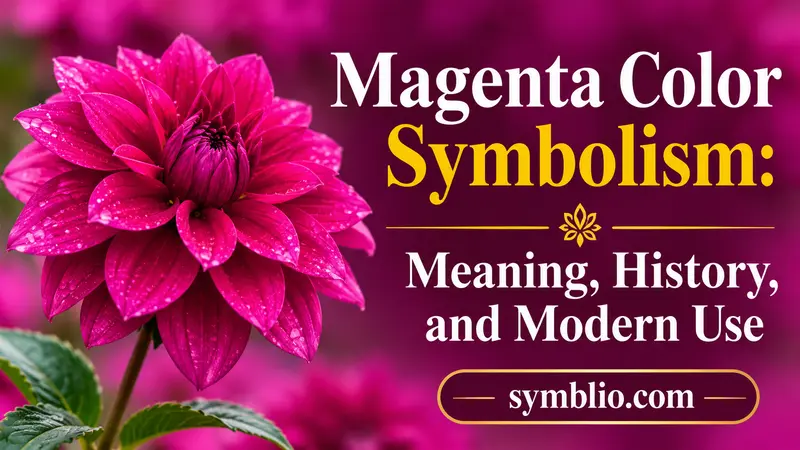
Magenta color symbolism is closely associated with creativity, individuality, confidence, emotional expression, and unconventional thinking. Sitting between red and purple, magenta has an appearance that combines the warmth and intensity of red with some of the imaginative associations traditionally connected to purple. Its vivid appearance makes it difficult to overlook, whether it appears in clothing, artwork, advertising, interior design, or digital media.
Unlike colors with thousands of years of established cultural associations, magenta has a relatively modern history as a named color. It became widely recognized during the nineteenth century following the development of synthetic dyes. Its name also carries a historical connection to a European military conflict, although its modern visual identity has moved far beyond that origin.
In the United States, magenta often communicates originality, bold personal style, artistic expression, and energetic optimism. Designers use it to attract attention, while individuals may choose it to express a personality that feels imaginative, expressive, or independent. However, its meaning changes depending on the shade, setting, and surrounding colors.
Understanding magenta requires looking at its scientific characteristics, historical development, cultural associations, and place in contemporary American life.
Quick Answer
Magenta color symbolism commonly represents creativity, individuality, confidence, self-expression, and emotional energy in modern American culture. Historically, the color emerged from nineteenth-century synthetic dye innovation, while its associations with imagination, boldness, and artistic freedom developed through fashion, design, and popular culture.
TL;DR:
- Creativity and originality encourage unconventional ideas and artistic expression.
- Confidence and individuality communicate a willingness to stand apart.
- Emotional energy combines qualities associated with red and purple.
- Nineteenth-century synthetic dyes established magenta as a recognizable color.
- American design uses magenta for visibility, personality, and modern expression.
- Cultural interpretations vary according to tradition, setting, and shade.
What Magenta Looks Like and What Makes It Distinctive
Magenta is a vivid color positioned between red, violet, and pink. Depending on the particular shade, it can appear more reddish, purplish, or intensely pink. It is often confused with fuchsia, hot pink, and raspberry, although these colors can differ in their precise tones and technical definitions.
In digital design, pure magenta is commonly represented by the hexadecimal color code #FF00FF. It is also one of the four principal inks in the CMYK printing system, alongside cyan, yellow, and black.
One interesting feature of magenta is that it is not a single wavelength of visible light. It is a perceptual color created when the visual system combines signals associated with red and blue light. This helps explain why it occupies an unusual position between familiar color families.
Its appearance creates several recognizable impressions:
- Brightness: Its high visual intensity attracts attention.
- Warmth: Red undertones can make it feel energetic and expressive.
- Imagination: Its violet associations suggest creativity and experimentation.
- Originality: Its unusual position between red and purple gives it a distinctive identity.
These characteristics make magenta useful in settings where ordinary colors might seem too restrained.
The Core Symbolism of Magenta
Magenta does not have one universally accepted symbolic definition. Its meaning develops through its appearance, cultural setting, and use. In contemporary American design and personal expression, several associations appear particularly often.
Creativity and imagination: Magenta is frequently associated with artistic thinking, experimentation, and originality. Artists and designers may use it when they want a composition to feel unconventional rather than traditional.
Confidence and individuality: Its strong visual presence can communicate self-assurance. Someone who chooses magenta clothing or accessories may be expressing a preference for distinctive personal style.
Emotional expression: Magenta combines visual qualities associated with red and purple. This gives it a character that can suggest enthusiasm alongside reflection and imagination.
Joy and optimism: Bright magenta can create a cheerful, celebratory impression. Its use in decorations, promotional graphics, and fashion often communicates excitement.
Transformation and independence: Because it does not fit neatly into traditional red, pink, or purple categories, magenta can represent experimentation and a willingness to move beyond familiar expectations.
These meanings are associations rather than fixed rules. A dark magenta room may feel sophisticated, while a bright magenta graphic may appear playful and energetic.
Historical Origins: How Magenta Became a Recognized Color
Magenta’s modern history began during the nineteenth century, when chemists developed synthetic dyes that could produce vivid colors on fabrics.
Before this period, many textiles relied on natural coloring materials obtained from plants, minerals, and insects. Producing consistent, bright shades could be difficult and expensive. The development of synthetic dyes changed the textile industry by making new colors more accessible.
In 1858, French chemist François-Emmanuel Verguin developed a synthetic red dye that became known as fuchsine. Its name was associated with the fuchsia flower and possibly the German word for fox. The dye was subsequently marketed under different names, including magenta.
The name became associated with the Battle of Magenta in northern Italy in 1859, where French and Sardinian forces defeated Austrian troops during the Second Italian War of Independence.
This historical connection is important, but it should not be confused with the color’s entire symbolic meaning. Magenta was not originally created as a universal symbol of courage, sacrifice, or warfare. Its name emerged from the commercial and political atmosphere surrounding a newly developed synthetic dye.
By the 1860s, magenta had become fashionable in European clothing and decorative design. Its unusual brightness distinguished it from many familiar traditional textile colors.
The color gradually entered broader artistic, commercial, and everyday vocabulary. What began as a modern industrial dye became a recognizable visual category with its own identity.
Magenta Symbolism in the United States
In the United States, magenta is commonly understood through fashion, branding, entertainment, advertising, and contemporary design.
Its strongest cultural association is often individuality. Unlike subdued neutral colors, magenta is difficult to overlook. Businesses and creative professionals use it to establish a recognizable visual identity.
In fashion, it can communicate confidence, experimentation, and a willingness to embrace distinctive combinations. In advertising, it can create an impression of excitement and help important visual elements stand out.
Magenta also appears in celebrations and seasonal decorations. Bright pink-purple arrangements can contribute to festive displays, while darker shades may be selected for more elegant occasions.
Its American interpretation is not limited to femininity or romance. Although some shades overlap visually with pink, magenta can communicate strength, artistic independence, modernity, and expressive personality.
The context matters. A magenta evening dress, a brightly colored business logo, and a magenta-painted bedroom can communicate quite different impressions.
What Magenta Represents in Color Psychology
Color psychology examines how people respond to colors and how visual environments can influence perception. Magenta is often discussed through its relationship with red, pink, and purple.
Red is commonly associated with stimulation, warmth, urgency, and passion. Purple frequently carries associations with imagination, creativity, and luxury. Pink can communicate tenderness, playfulness, or affection, depending on its shade and cultural context.
Magenta brings some of these visual associations together.
Its red component can make it appear lively and assertive, while its violet component can give it a more imaginative character. This combination helps explain why designers often use it when they want something to appear both energetic and unconventional.
However, color psychology should not be treated as an exact science of personality. Seeing magenta does not automatically make someone confident, creative, or happy. Individual experiences, cultural background, personal preferences, and surrounding visual elements all influence emotional responses.
Its psychological symbolism is best understood as a set of common visual associations rather than a reliable way to predict someone’s character.
The Emotional Meaning of Magenta
Magenta can communicate different emotional qualities depending on its intensity and surrounding environment.
Bright magenta often creates an impression of excitement. It may remind people of celebrations, creative events, colorful artwork, or expressive fashion.
Softer magenta shades can appear more romantic or gentle, particularly when combined with white, lavender, or muted pink. Deeper versions may suggest sophistication, drama, and self-assurance.
The color can also communicate emotional independence. Its unusual appearance makes it suitable for people who want to express themselves without relying on conventional color choices.
There is also an interesting contrast within magenta. It can appear cheerful and playful in one setting but dramatic and serious in another. A glossy magenta accessory might feel youthful, whereas a deep magenta velvet surface may suggest luxury.
This flexibility is one reason the color remains useful across different creative environments.
Magenta in Fashion and Personal Style
Fashion is one of the clearest ways Americans use magenta to communicate individuality. Its visibility makes it suitable for statement clothing, accessories, footwear, and special-occasion outfits.
A magenta jacket or dress can become the central feature of an outfit without requiring complicated patterns or additional decoration. Designers sometimes pair it with black, white, navy, or gray to create contrast.
Different shades communicate different styles:
- Bright magenta: Suggests energy, confidence, and playful expression.
- Deep magenta: Often appears sophisticated, dramatic, and luxurious.
- Soft magenta: Can communicate romance, gentleness, and creativity.
- Reddish magenta: Creates a warmer impression associated with enthusiasm and passion.
- Purple-toned magenta: Can suggest artistic expression and individuality.
Magenta also challenges the assumption that pink-related colors must communicate traditional femininity. People of different ages and genders wear it as a personal style choice.
Its meaning depends more on the individual and the setting than on a fixed social expectation.
Magenta in Art, Design, and Creativity
Artists use magenta because it creates strong visual contrast and can change the emotional character of a composition.
In contemporary illustration, photography, and graphic design, it can highlight important details, establish a recognizable atmosphere, or direct attention toward a particular subject.
Its relationship with complementary colors also makes it valuable. Green sits opposite magenta on many commonly used color wheels, creating a noticeable contrast when the two appear together.
Designers may use this combination in posters, digital illustrations, packaging, and promotional materials. However, too much contrast can make a composition visually tiring, so balance remains important.
Magenta also has a practical role in printing. The CMYK system uses cyan, magenta, yellow, and black to reproduce a broad range of printed colors. This means the color is not simply decorative; it is part of the technology behind magazines, photographs, packaging, and commercial printing.
Its position in both creative expression and everyday printing gives magenta a particularly recognizable place in modern visual culture.
Cultural Meanings of Magenta Around the World
Magenta does not carry identical associations across cultures. Its interpretation can depend on local traditions, textile practices, religious settings, national identity, and historical experiences.
One particularly interesting example comes from Mexico, where a related shade is known as rosa mexicano, or Mexican pink.
The color became prominent in discussions of Mexican national identity and fashion during the twentieth century. Fashion designer Ramón Valdiosera helped popularize the shade internationally through a collection presented in New York in 1949.
The color became associated with Mexican visual identity, colorful architecture, textiles, celebrations, and design. It also became connected with discussions about Indigenous cultural heritage.
However, it is important not to assume that every Indigenous community historically used modern synthetic magenta in the same way. Bright pink and magenta textile dyes have a relatively recent industrial history, and their relationship with older textile traditions is more complicated than popular descriptions sometimes suggest.
In other cultural settings, similar shades may appear in ceremonial clothing, artistic decoration, contemporary fashion, or national branding. Their meanings are not necessarily the same.
The important distinction is that magenta has a modern international identity, while individual communities give particular shades their own cultural interpretations.
Magenta in Digital Culture and Technology
Magenta has a particularly strong connection with digital communication.
Its role in the CMYK printing system made it familiar to generations of people who used printers, magazines, newspapers, and commercial publishing. In digital graphics, the bright hexadecimal shade #FF00FF also makes it easy to recognize.
On websites and social media, magenta can communicate creativity, innovation, and an energetic personality. It frequently appears in promotional graphics, entertainment artwork, digital illustrations, and visual branding.
Its high visibility makes it useful for highlighting selected design elements, although designers generally avoid using it excessively when readability is important.
Magenta also has a place in discussions about artificial intelligence and digital creativity. Pantone’s 2023 Color of the Year, Viva Magenta 18-1750, brought renewed attention to the color through the concept of the Magentaverse.
That campaign connected the shade with experimentation, optimism, creative expression, and the relationship between natural inspiration and digital experiences.
The example demonstrates how a color can acquire new associations through contemporary technology and popular design.
Magenta in Interior Design and Home Decoration
In interior design, magenta can transform the atmosphere of a room. Its effect depends on how much of the color appears and which materials surround it.
A small magenta decorative object can add personality to a neutral room without overwhelming the space. Cushions, artwork, flowers, lampshades, and rugs are common ways to introduce the shade.
Larger applications create a different impression. A magenta accent wall can become a dramatic focal point, while magenta upholstery may give furniture a distinctive contemporary appearance.
Popular combinations include:
- Magenta and white: Creates a clean, bright, contemporary appearance.
- Magenta and charcoal: Adds contrast and a more dramatic atmosphere.
- Magenta and gold: Suggests celebration and decorative luxury.
- Magenta and green: Produces a lively complementary contrast.
- Magenta and lavender: Creates a softer, more artistic color palette.
Lighting also changes how magenta appears. Natural daylight, warm indoor lighting, and cool LED lighting can make the same shade look noticeably different.
For this reason, designers often consider the room’s lighting and surrounding materials before selecting a particular magenta finish.
Magenta in Flowers, Nature, and the Natural World
Although modern synthetic magenta dyes became widely recognized during the nineteenth century, similar red-violet and pinkish-purple colors occur naturally.
Flowers are among the most familiar examples. Fuchsia blossoms, bougainvillea, orchids, and certain varieties of dahlias can display shades that resemble magenta.
These flowers contribute to the color’s associations with vitality, beauty, growth, and visual abundance.
In gardens, magenta flowers can stand out against green leaves. This contrast makes them useful in decorative planting and floral arrangements.
The fuchsia flower is particularly relevant to the color’s history because the early synthetic dye known as fuchsine was associated with the flower’s vivid appearance.
Magenta also appears in certain fruits, feathers, and natural surfaces, although not every bright pink-purple shade should technically be classified as magenta.
Its natural appearances help balance its association with industrial production and digital technology. The color belongs to both the natural world and the modern world of manufactured images.
Magenta in Tattoos, Jewelry, and Personal Expression
Magenta can be an expressive choice in tattoos because it offers a vivid alternative to conventional red, pink, and purple ink.
People may choose it to represent creativity, independence, confidence, optimism, or an important personal transformation. Others simply appreciate its appearance and use it to make a design more visually distinctive.
In floral tattoos, magenta can emphasize beauty and vitality. In abstract designs, it may communicate originality and artistic freedom. When combined with black, it can create strong visual contrast.
Jewelry offers another way to incorporate the color. Magenta-colored gemstones, enamel details, and decorative materials can give accessories a bright and expressive appearance.
However, a magenta tattoo does not have one universal interpretation. Its meaning comes from the design, personal story, and intentions of the individual wearing it.
The same principle applies to jewelry. One person may associate magenta with confidence, while another may simply connect it with a favorite flower, memory, or creative interest.
Religious and Spiritual Interpretations of Magenta
Magenta does not have one universally recognized meaning across major religions. Its interpretation depends on the particular religious tradition, community, and ceremonial context.
Some contemporary spiritual color systems associate magenta with compassion, transformation, creativity, or the relationship between emotional and imaginative experiences. These interpretations are personal or tradition-specific rather than universal religious teachings.
It is also important to distinguish magenta from purple, violet, and crimson. These colors have different histories in religious art and ceremonial clothing, even though people sometimes group them together because of their visual similarities.
For example, purple has established associations with royalty, penitence, and religious authority in certain Christian traditions. Those associations should not automatically be transferred to magenta.
In modern spiritual artwork and decorative settings, magenta may appear because of its expressive visual character. However, its presence does not necessarily indicate a particular religious belief.
Respecting these distinctions prevents a modern design preference from being mistaken for an ancient religious tradition.
Misunderstandings and Misuse of Magenta Symbolism
Several misunderstandings surround magenta, particularly when its modern associations are presented as universal historical facts.
Magenta does not always represent femininity. Although some people connect it with pink and traditional feminine styling, the color also appears in technology, contemporary art, commercial design, and fashion for people of all genders.
Magenta is not identical to purple or fuchsia. These shades can look similar, but their technical definitions and visual characteristics are not always interchangeable.
Its name does not make it a symbol of warfare. The color’s name has a historical connection to the 1859 Battle of Magenta, but that does not mean wearing or displaying magenta communicates violence or military allegiance.
It does not have a universal spiritual meaning. Claims that magenta always represents a particular spiritual condition or energy are interpretations, not established facts shared by all cultures.
Color does not determine personality. A preference for magenta cannot reliably establish whether someone is creative, confident, emotional, or independent.
Another common mistake is treating a company’s color campaign as a universal cultural definition. A designer, brand, or color authority may promote a particular interpretation, but that does not make the interpretation binding on everyone.
Understanding magenta requires separating documented history, cultural traditions, design conventions, and personal associations.
How Magenta’s Meaning Has Changed Over Time
Magenta’s development illustrates how commercial innovation can influence cultural symbolism.
During the nineteenth century, it was closely connected with synthetic dye production, fashionable textiles, and the excitement surrounding new industrial colors.
During the following decades, its use expanded through painting, printing, advertising, and decorative arts. Its appearance in commercial printing helped establish it as a practical and recognizable color rather than simply a fashionable textile shade.
In the twentieth century, magenta became increasingly familiar through graphic design, magazines, packaging, and mass-produced visual media. Its association with modern technology grew as printing methods became more widespread.
The digital era introduced another dimension. Computer graphics and online communication made bright magenta easy to reproduce and widely recognizable.
By the 2020s, the color had become associated with experimentation, self-expression, and contemporary creativity in many design settings. Pantone’s Viva Magenta selection in 2023 provided a prominent example of this modern interpretation.
Today, magenta carries several overlapping identities: a nineteenth-century synthetic dye, an important printing color, a fashion statement, and a visual expression of individuality.
Its meaning continues to evolve as artists, designers, and communities use it in new ways.
A Quick Comparison of Magenta’s Symbolic Meanings
The following table summarizes how the color is commonly interpreted in different settings.
| Context | Common Symbolism | Typical Impression |
|---|---|---|
| Fashion | Confidence and individuality | Expressive and distinctive |
| Art and design | Creativity and experimentation | Original and imaginative |
| Business branding | Innovation and visibility | Modern and energetic |
| Home decoration | Personality and drama | Bold and contemporary |
| Flowers and nature | Vitality and beauty | Lively and colorful |
| Personal expression | Independence and optimism | Individualistic and expressive |
These interpretations are general associations, not fixed meanings. A particular shade or cultural setting can change the impression considerably.
FAQs
Magenta commonly symbolizes creativity, individuality, confidence, emotional expression, and optimism. Its combination of red and violet visual qualities gives it an expressive character that works well in artistic and contemporary settings.
Magenta is generally associated with positive qualities such as originality, enthusiasm, and self-expression. However, its intensity can sometimes make it feel overwhelming or overly dramatic when used excessively.
In some contemporary spiritual interpretations, magenta represents compassion, transformation, emotional awareness, and creative expression. These associations vary between spiritual communities and are not universal religious beliefs.
A magenta tattoo can represent individuality, creativity, confidence, personal growth, or emotional expression. Its specific meaning depends on the artwork and the personal significance the wearer attaches to the color.
Magenta is visually distinctive and occupies an unusual position between red and purple. Artists and designers often use it to communicate experimentation, originality, and a willingness to move beyond conventional visual styles.
Magenta and fuchsia are closely related colors, and their shades sometimes overlap. Magenta is commonly described as a red-purple or vivid pink-purple, while fuchsia often refers to a similarly bright shade with a more noticeable pink or purple appearance.
Conclusion
Magenta represents creativity, individuality, confidence, optimism, and emotional expression in many contemporary settings. Its distinctive appearance allows it to communicate energy and originality, making it a recognizable choice in American fashion, art, advertising, interior design, and digital culture.
Its history adds another dimension to its identity. From nineteenth-century synthetic dye development to modern printing technology and contemporary design, magenta has evolved from a fashionable industrial color into an established part of everyday visual communication.
Ultimately, magenta color symbolism is not limited to one emotion or cultural interpretation. Its meaning depends on how people use it, the traditions surrounding it, and the personal experiences they associate with its distinctive shade.