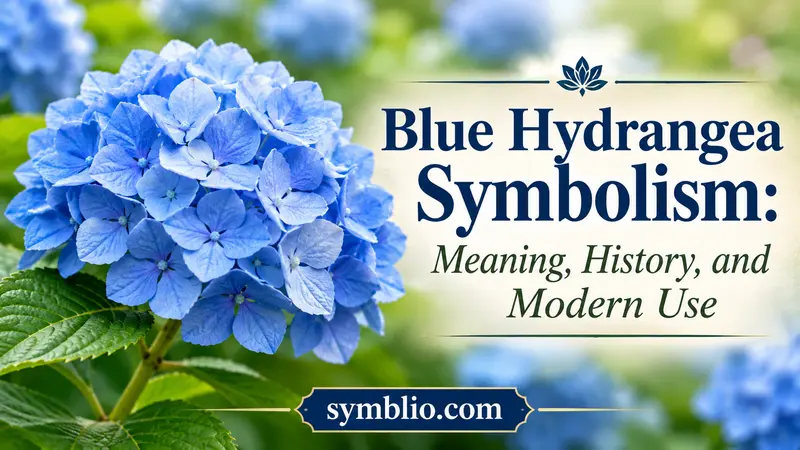
Blue hydrangea symbolism is commonly connected with gratitude, forgiveness, understanding, heartfelt emotions, and sincere apologies. With their rounded clusters of delicate blue flowers, blue hydrangeas have become popular choices for gardens, floral arrangements, weddings, and meaningful gifts. Their soft color gives them a calm appearance, while their changing shades add another layer of interest to their cultural interpretation.
Hydrangeas have a particularly interesting history because their meanings differ across cultures. In Japan, they have long been associated with emotional expression, appreciation, and changing feelings. European traditions sometimes gave them less favorable associations, including vanity and boastfulness. In the United States, however, hydrangeas are widely appreciated for their beauty, generosity, and associations with affection and gratitude.
Today, blue hydrangeas appeal to people who want flowers that communicate something more personal than ordinary decoration. Whether they appear in a wedding bouquet, a garden, or a thoughtful gift, these flowers can represent the desire to repair a relationship, express appreciation, or communicate feelings that are difficult to put into words.
Quick Answer
Blue hydrangea symbolism commonly represents gratitude, forgiveness, understanding, and heartfelt emotion in modern American culture, particularly when flowers are given as thoughtful gifts or used in meaningful celebrations. Historically, hydrangeas have also represented changing emotions, perseverance, vanity, and sincere apologies in different cultural traditions.
TL;DR
- Blue hydrangeas represent gratitude, forgiveness, and emotional understanding.
- Japanese traditions associate hydrangeas with heartfelt feelings and apologies.
- Victorian flower language sometimes connected hydrangeas with vanity and boastfulness.
- American floral traditions use them for weddings, anniversaries, and celebrations.
- Their blue color develops through particular soil and aluminum conditions.
- Modern designs use blue hydrangeas to communicate calmness and appreciation.
What Blue Hydrangeas Look Like and Why They Stand Out
Blue hydrangeas are flowering shrubs recognized for their large, rounded flower clusters and soft blue shades. Their blossoms consist of numerous small flowers or decorative sepals grouped together into generous formations. Depending on the variety, they can appear as dense, rounded mophead clusters or flatter lacecap arrangements with smaller flowers in the center and larger ones around the edges.
Their colors range from pale sky blue and powder blue to lavender-blue and deeper shades of blue. Some flowers even display several shades at once.
Most familiar blue hydrangeas belong to bigleaf hydrangeas (Hydrangea macrophylla), although certain mountain hydrangeas can also produce blue flowers.
One unusual feature makes these flowers particularly interesting: their color can change depending on growing conditions. Soil acidity affects aluminum availability, which influences whether certain hydrangea varieties develop blue, purple, or pink flowers. UMass Amherst+1
This natural variation contributes to the flower’s associations with changing emotions, flexibility, and the complexity of human relationships.
The Core Symbolic Meaning of Blue Hydrangeas
Blue hydrangeas carry several related meanings. Most center on emotional sincerity and the importance of relationships.
Gratitude: These flowers can communicate appreciation for someone who has offered kindness, support, or encouragement. Their generous clusters make them suitable for expressing thanks without relying on elaborate words.
Forgiveness: Blue hydrangeas are sometimes associated with apologies and reconciliation. They can represent a willingness to acknowledge mistakes, repair misunderstandings, and approach another person with sincerity.
Understanding: Their gentle appearance makes them a fitting symbol of patience and emotional consideration. They can represent the effort to understand another person’s perspective rather than immediately judging their actions.
Heartfelt emotion: Blue hydrangeas are also associated with genuine feelings. They can represent affection, appreciation, regret, or emotions that deserve thoughtful expression.
Perseverance: Some interpretations connect blue hydrangeas with enduring affection and the ability to maintain emotional commitment despite distance or difficult circumstances.
These meanings are not universal rules. A flower’s significance depends on the person giving it, the recipient, the occasion, and the cultural tradition involved.
Japanese Origins and Traditional Hydrangea Symbolism
Hydrangeas have an important connection to Japan, where they are known as ajisai. The flowers bloom abundantly during the country’s rainy season, generally around June and early July. Their appearance has made them a familiar part of Japanese summer landscapes.
Japanese interpretations of hydrangeas include heartfelt emotion, gratitude, affection, and changing feelings. Their shifting colors have also contributed to associations with uncertainty and an inconsistent heart.
One frequently repeated story connects blue hydrangeas with apology and gratitude. According to the story, a Japanese emperor gave hydrangeas to the family of a woman he loved as an expression of apology for neglecting her. The flowers subsequently became associated with sincere emotional communication and making amends. This account is best understood as a traditional anecdote rather than a firmly established historical explanation. Cornell Botanic Gardens+1
Hydrangeas also have a place in Japanese Buddhist celebrations. A sweet tea called amacha, prepared from certain leaves of mountain hydrangea, is used during Hana Matsuri, the celebration of Buddha’s birth. The flowers and tea therefore have connections to seasonal customs and religious observances, although these practices do not mean that blue hydrangeas have one fixed Buddhist meaning. Cornell Botanic Gardens
Blue Hydrangea Symbolism in American Culture
In the United States, hydrangeas are especially familiar in residential gardens, floral shops, wedding decorations, and summer celebrations.
Their associations with gratitude, affection, and appreciation make them suitable for occasions when people want to recognize important relationships.
American homeowners often plant hydrangeas around entrances, patios, walkways, and outdoor gathering spaces. Their full flower clusters create a welcoming appearance, making them popular in traditional and contemporary garden designs.
In floral arrangements, blue hydrangeas can communicate:
- Appreciation for a close friend or family member.
- A sincere expression of thanks.
- Affection without an overly romantic message.
- A wish for understanding after a disagreement.
- Recognition of a meaningful personal relationship.
Hydrangeas are also associated with the fourth wedding anniversary in American floral traditions. Their generous blossoms can represent appreciation, enduring affection, and the importance of a lasting partnership. Cornell Botanic Gardens+1
However, Americans do not generally interpret every blue hydrangea as an apology or a message of forgiveness. Sometimes people simply choose them because they complement an event’s colors or match a particular garden design.
The Emotional and Psychological Meaning of Blue
The color blue contributes considerably to how people interpret blue hydrangeas.
In many modern design contexts, blue is associated with calmness, stability, trust, and reflection. It appears in spaces intended to feel peaceful, organized, or welcoming. These associations influence how people respond to blue flowers.
Blue hydrangeas combine this familiar color language with the generous shape of the hydrangea bloom.
Their emotional associations include:
Calmness: Their soft blue shades can suggest a peaceful atmosphere, making them suitable for quiet spaces and thoughtful floral arrangements.
Trust: Blue is frequently used in visual communication to suggest reliability and confidence. Blue hydrangeas can carry a similar impression when given as a gesture of appreciation.
Emotional reflection: Their gentle appearance can encourage associations with thoughtful communication, understanding, and personal reflection.
Comfort: Blue flowers can create a reassuring atmosphere in gardens, homes, and arrangements intended to communicate kindness.
These are cultural and design associations, not scientifically established psychological effects. Individual responses to color depend on personal experiences, cultural background, and context.
Blue Hydrangeas as Symbols of Forgiveness and Reconciliation
One of the most recognizable interpretations of blue hydrangeas is forgiveness.
The association makes sense within the broader history of Japanese hydrangea symbolism, particularly stories connecting the flowers with apologies and emotional sincerity.
Giving blue hydrangeas after a disagreement can communicate a willingness to restore understanding. The flowers may express feelings that are difficult to communicate through an ordinary message.
They can also represent reconciliation between friends, relatives, or partners.
For example, someone might choose a blue hydrangea arrangement when reconnecting with an old friend after a long period of separation. Another person might give the flowers to express appreciation after receiving patience and support during a difficult period.
Nevertheless, flowers cannot replace honest communication. An apology becomes meaningful through acknowledging what happened, taking responsibility, and showing consideration for the other person.
Blue hydrangeas can accompany that message, but the intention behind the gesture matters more than the flowers themselves.
Victorian Flower Language and Negative Interpretations
Not every historical interpretation of hydrangeas was positive.
During the Victorian period, flowers were frequently used to communicate emotions through an informal language of floral meanings. This tradition became particularly popular in the nineteenth century, when bouquets could carry messages that people preferred not to express directly.
Hydrangeas sometimes received unfavorable interpretations, including vanity, arrogance, boastfulness, and emotional coldness.
One explanation connected these associations with the plant’s abundant flower clusters and relatively small number of fertile flowers. Its impressive appearance was sometimes interpreted as excessive display without sufficient substance.
Some historical European interpretations also associated hydrangeas with rejection or romantic disappointment.
These meanings should be understood within their particular historical context. They are not universal interpretations, and modern American floral culture generally does not treat blue hydrangeas as an insult.
The contrast is useful because it demonstrates how the same flower can communicate different messages depending on the period and cultural setting.
Blue Hydrangeas in Weddings and Romantic Celebrations
Blue hydrangeas are popular in wedding arrangements because their appearance combines softness, elegance, and visual abundance.
Their symbolic associations with understanding, appreciation, and enduring affection make them appropriate for celebrations centered on commitment and partnership.
In American weddings, blue hydrangeas commonly appear in:
- Bridal and bridesmaid bouquets.
- Wedding ceremony arrangements.
- Reception table centerpieces.
- Floral arches and decorative installations.
- Anniversary celebrations and engagement parties.
They work particularly well with white roses, ivory flowers, greenery, and other blue-toned decorations.
Their color also makes them suitable for weddings featuring coastal, garden, vintage, or classic design themes.
Although blue hydrangeas can represent loyalty and affection in a wedding arrangement, they do not have one officially established romantic meaning. Couples may choose them simply because they complement the event’s visual style or hold personal significance.
Blue Hydrangeas in Gardens and Home Decoration
Blue hydrangeas are widely used in American landscaping because their large blossoms create noticeable color without requiring complicated garden arrangements.
Their symbolic associations with welcome, appreciation, and peaceful surroundings complement their decorative appeal.
In residential gardens, they often appear near front entrances, along walkways, beneath trees, and around outdoor seating areas.
In home decoration, blue hydrangeas can communicate different moods depending on how they are displayed.
Traditional interiors: Blue hydrangeas in ceramic or glass vases complement classic furniture, neutral walls, and traditional decorative pieces.
Coastal interiors: Their blue tones work naturally with white furniture, natural textures, and seaside-inspired color schemes.
Cottage-style homes: Their rounded flower clusters complement informal arrangements, vintage containers, and relaxed garden settings.
Modern interiors: A simple arrangement of blue hydrangeas can introduce color without making a room feel visually crowded.
For many Americans, the flowers also suggest summer gardens, family gatherings, and familiar outdoor spaces.
Cross-Cultural Interpretations of Hydrangeas
Hydrangea symbolism changes considerably across cultural traditions.
| Cultural context | Common interpretation | Important association |
|---|---|---|
| Japan | Gratitude, heartfelt emotion, changing feelings | Seasonal ajisai traditions |
| Victorian Europe | Vanity, boastfulness, emotional coldness | Historical flower language |
| Modern United States | Appreciation, affection, forgiveness | Gifts, gardens, and celebrations |
| Contemporary floral design | Calmness, elegance, understanding | Blue color associations |
| Buddhist Japanese customs | Seasonal celebration | Amacha and Hana Matsuri |
These interpretations should not be treated as identical across every community.
Japanese traditions connect hydrangeas with seasonal changes and emotional expression. During the nineteenth century, European flower dictionaries and social customs introduced different interpretations, including associations with vanity and pride.
Today, Americans often place greater importance on personal intention and decorative context than on historical flower-language rules.
This distinction is important when giving hydrangeas internationally. A flower that communicates appreciation in one setting may carry a different traditional association elsewhere.
Blue Hydrangeas as Gifts and Their Occasion-Based Meanings
Blue hydrangeas make thoughtful gifts because their symbolism can be adapted to different relationships and occasions.
Their meaning becomes clearer when the flowers are connected to the reason for giving them.
These flowers can show appreciation, companionship, and gratitude for a supportive friendship.
Their presence can communicate thanks for years of encouragement, patience, and family support.
A blue hydrangea arrangement makes a thoughtful gesture of respect for someone’s guidance.
For an anniversary: The flowers can represent affection, mutual understanding, and appreciation for a lasting relationship.
During difficult times: Their gentle appearance can offer a message of consideration, comfort, and hope for more peaceful days.
After a disagreement: Giving blue hydrangeas can accompany a sincere apology and express a willingness to rebuild understanding.
Blue hydrangeas are not limited to romantic relationships. Their associations with gratitude and understanding make them suitable for friendships, family relationships, and professional expressions of appreciation.
Blue Hydrangeas in Tattoos, Art, and Personal Expression
Although hydrangeas are more commonly encountered in gardens and floral arrangements, they can also appear in tattoos and artistic designs.
A blue hydrangea tattoo may represent an important emotional experience or a personal commitment to understanding and forgiveness.
Some people choose the flower to remember a family member, celebrate a meaningful relationship, or mark a period of personal development.
Others appreciate its botanical appearance rather than assigning it a specific symbolic message.
In artwork, blue hydrangeas often appear in watercolor paintings, botanical illustrations, greeting cards, and decorative prints.
Artists may use them to communicate:
- Appreciation for meaningful relationships.
- Memories of a particular summer or garden.
- Emotional sensitivity and reflection.
- Peaceful domestic surroundings.
- The beauty of natural change.
Their rounded flower clusters also create interesting visual compositions, especially when combined with leaves, branches, and other seasonal flowers.
In digital culture, blue hydrangeas appear in lifestyle photography, garden inspiration, wedding mood boards, and social media posts. Their meaning depends largely on the accompanying message and the creator’s intention.
Common Misunderstandings About Blue Hydrangea Symbolism
Hydrangeas have accumulated many interpretations, and some popular explanations present those meanings as universal facts. Several distinctions help prevent confusion.
Misunderstanding 1: Every blue hydrangea represents an apology.
Apology is one traditional association, particularly in Japanese storytelling. However, blue hydrangeas can also represent gratitude, affection, appreciation, or simply a preference for blue flowers.
Misunderstanding 2: Hydrangeas always have the same meaning across cultures.
Their interpretations differ between Japanese traditions, Victorian flower language, and modern American floral customs.
Misunderstanding 3: Blue flowers always represent sadness.
Blue can be associated with melancholy in certain artistic contexts, but blue hydrangeas are also connected with understanding, forgiveness, and appreciation.
Misunderstanding 4: All hydrangeas can naturally become blue.
Only certain varieties, particularly some bigleaf and mountain hydrangeas, respond to soil conditions in ways that produce blue flowers. Other varieties maintain their characteristic colors regardless of soil acidity. UMass Amherst+1
Misunderstanding 5: Victorian negative meanings still determine modern gift etiquette.
Historical associations with vanity and boastfulness are not standard rules in contemporary American flower giving.
Understanding these distinctions allows people to appreciate the flower without assuming that every arrangement carries an identical message.
Why Blue Hydrangea Symbolism Continues to Evolve
The meaning of blue hydrangeas continues to change because flowers are interpreted through personal experiences, cultural traditions, and modern design preferences.
In earlier Japanese traditions, hydrangeas became associated with seasonal changes and emotional expression. European flower language introduced different interpretations, including unfavorable associations with vanity. American floral culture gradually developed its own emphasis on appreciation, affection, and meaningful celebrations.
Modern communication has added another dimension.
People increasingly choose flowers based on personal stories, relationships, and visual preferences rather than relying entirely on traditional flower dictionaries. A blue hydrangea arrangement might represent a childhood garden to one person and an important friendship to another.
The flower’s natural color variation also provides a useful image of change. Its appearance can shift with growing conditions, reminding observers that nature is influenced by its environment.
This does not mean that the flower has one fixed message about personal growth. Instead, it gives people room to connect its changing appearance with their own experiences.
FAQs
Blue hydrangeas are sometimes interpreted as symbols of peace, understanding, gratitude, and emotional reflection. These are broad spiritual interpretations rather than meanings established by one universal religious tradition.
Yes. Forgiveness and sincere apologies are among their recognized symbolic associations, particularly in Japanese hydrangea traditions. They can be given as a thoughtful gesture when someone wants to communicate a desire for reconciliation.
Yes. They can express appreciation, affection, understanding, and emotional sincerity. They are appropriate for romantic relationships, friendships, and family relationships.
Japanese hydrangeas, known as ajisai, are associated with heartfelt emotion, gratitude, and changing feelings. They are also connected with the rainy season and certain traditional celebrations.
Some historical European flower-language traditions associated hydrangeas with vanity, boastfulness, or emotional coldness. These interpretations are not generally accepted as standard meanings in modern American floral culture.
Blue hydrangeas are commonly associated with forgiveness, understanding, and gratitude, while pink hydrangeas are more often connected with affection, love, and sincere emotion. These distinctions are informal floral interpretations rather than universal cultural rules.
Certain hydrangea varieties change color because soil acidity affects the availability of aluminum to the plant. Acidic conditions generally encourage blue flowers, while less acidic or alkaline conditions tend to produce pink flowers. UMass Amherst+1
Conclusion
Blue hydrangea symbolism centers on gratitude, forgiveness, understanding, and heartfelt emotion. Its associations with sincere apologies and emotional expression have connections to Japanese traditions, while modern American floral culture often uses the flower to communicate appreciation, affection, and meaningful relationships.
Its history also demonstrates how cultural interpretations can change. Victorian traditions sometimes viewed hydrangeas negatively, while contemporary celebrations frequently feature them as symbols of beauty, connection, and generosity.
Whether displayed in a garden, presented as a gift, or included in a wedding arrangement, blue hydrangeas offer a thoughtful way to express feelings that deserve attention. Their most meaningful message comes from the intention behind the gesture and the relationship it represents.