Pink rose symbolism centers on admiration, gratitude, affection, and gentle romantic interest. With their soft petals and wide range of shades, pink roses offer a way to express feelings that may seem too personal for an ordinary greeting but less intense than a traditional declaration of passionate love. They appear in birthday bouquets, wedding arrangements, thank-you gifts, gardens, and memorial displays throughout the United States.
The meaning of a pink rose depends on its shade, the occasion, and the relationship between the people exchanging it. A pale pink bloom may suggest tenderness or appreciation, while a vivid pink rose can communicate enthusiasm, confidence, and celebration. These interpretations are common conventions rather than fixed rules.
Pink roses also have a history that reaches beyond modern gift-giving. Roses appeared in ancient mythology, religious art, European literature, and the Victorian language of flowers. Understanding those traditions helps explain why a pink rose can communicate several related emotions without having one universal meaning.
Quick Answer
Pink rose symbolism most commonly represents admiration, appreciation, gratitude, and gentle affection in modern American culture, making pink roses popular gifts for friends, family members, romantic partners, and people being celebrated. Historically, roses were associated with love, beauty, religious devotion, and artistic ideals, while the pink color developed additional associations with tenderness, warmth, and femininity in many modern Western settings.
TL;DR
- Pink roses commonly express admiration, gratitude, affection, and appreciation.
- Pale pink suggests tenderness, while brighter shades convey enthusiasm and celebration.
- Ancient mythology connected roses with Aphrodite and Venus, goddesses of love.
- Victorian flower symbolism helped popularize the practice of communicating through blossoms.
- Americans give pink roses for birthdays, weddings, anniversaries, and expressions of thanks.
- A rose’s meaning depends on context, culture, shade, and personal intention.
What a Pink Rose Looks Like and Why Its Color Matters
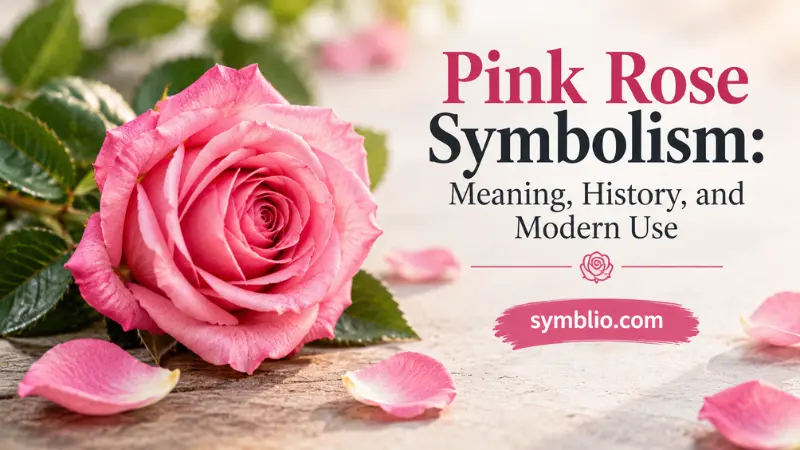
A pink rose is a flowering plant in the genus Rosa, recognized by its layered petals, often fragrant bloom, thorn-bearing stems, and colors ranging from nearly white blush to vivid magenta. Garden varieties differ in shape and size, with some producing tightly packed petals and others displaying a simpler, open flower.
The color is central to the flower’s symbolic appeal. Red roses are strongly associated with romantic passion, while pink roses often communicate warmth, admiration, and affection without placing the same emphasis on intensity. This distinction makes pink roses suitable for relationships that are romantic, familial, friendly, or professional.
Pink itself has no single emotional meaning. Pale pink may look delicate and calming, whereas a saturated pink can appear lively and confident. When combined with the rose’s established associations with love and beauty, these different shades create a flexible symbol for expressing positive feelings.
The Main Symbolic Meanings of Pink Roses
Pink roses are associated with several closely related sentiments, but each has a slightly different emphasis.
Admiration is one of the most common interpretations. Giving someone a pink rose can communicate respect for their character, appreciation of their achievements, or recognition of something they have done well. It is an appropriate choice for a graduation, promotion, performance, or personal milestone.
Gratitude is another established meaning. Pink roses can express thanks to a friend who offered support, a family member who helped during a difficult period, or someone whose kindness made a difference. Deeper pink shades are particularly associated with appreciation in modern floral traditions.
Affection gives pink roses their romantic dimension. They can represent a growing attraction, a loving partnership, or a tender connection between people who already know each other well. Unlike the more familiar red rose, a pink rose can communicate care without making an emphatic declaration of passion.
Grace and elegance are reflected in the flower’s form and color. Pink roses often appear in formal arrangements, celebrations, and decorative settings where their appearance suggests refinement and thoughtful attention.
Together, these meanings make pink roses useful when the giver wants to recognize another person, celebrate a relationship, or express care in a considerate way.
How Pink Rose Symbolism Developed Through History
The rose acquired symbolic importance long before modern florists began assigning meanings to individual colors. People cultivated roses for their fragrance, beauty, medicinal uses, and ornamental value across several ancient societies. As the flower entered mythology, literature, religious art, and gardens, it became associated with ideas extending beyond its physical appearance.
In ancient Greek and Roman traditions, roses were connected with Aphrodite and Venus, goddesses associated with love and beauty. Their presence in stories and artistic representations helped establish the rose as an emblem of attraction, pleasure, and romantic feeling.
Roses also appeared in religious imagery. In medieval European Christianity, the flower became associated with the Virgin Mary and, in certain interpretations, with Christ. These associations gave the rose meanings related to devotion, purity, and spiritual love alongside its secular romantic associations.
The particular significance of pink roses developed through overlapping traditions rather than one clearly documented origin. As horticulture produced a wider range of rose varieties and flower symbolism became more elaborate, people increasingly connected different colors with distinct sentiments.
By the modern era, pink roses had become familiar expressions of admiration, gratitude, gentleness, and affection. Their meaning grew from the rose’s older cultural associations combined with changing ideas about color and emotional expression.
Pink Roses in the Victorian Language of Flowers
During the Victorian era, especially the nineteenth century, floriography—the practice of assigning messages to flowers—became popular in Britain and influenced floral customs elsewhere, including the United States.
Flower dictionaries and sentimental publications offered interpretations for different blooms, colors, arrangements, and sometimes stages of flowering. People could use these conventions to express affection, admiration, longing, or regret through a carefully selected bouquet.
Pink roses fitted naturally into this tradition because they offered a gentler alternative to the red rose’s association with romantic love. Floral guides commonly connected pink with sentiments such as grace, happiness, admiration, and gratitude, although the precise definitions varied between publications.
This historical practice should not be mistaken for a universal code. Different dictionaries could assign different meanings to the same flower, and individual people did not necessarily follow the suggested conventions. The language of flowers was a cultural practice, not a standardized system.
Its influence remains visible today. Florists continue to describe pink roses as symbols of appreciation and tenderness, and gift-givers often select them because those meanings feel appropriate. The Victorian tradition helped popularize the idea that choosing a flower’s color can add a personal message to a gift.
What Pink Roses Mean in American Culture
In the United States, pink roses commonly communicate appreciation, affection, and celebration. Their flexibility makes them suitable for occasions that range from intimate personal milestones to public events.
Pink roses also appear in American weddings. They complement white flowers in bridal bouquets, decorate reception tables, and contribute a softer color to floral arrangements. Depending on the couple’s preferences, they may suggest romance, happiness, elegance, or affection between families.
Valentine’s Day provides another familiar setting. Although red roses remain strongly associated with passionate romantic love, pink roses offer an alternative for people who prefer a gentler expression of affection. They can suit a new relationship, a long-term partner, or someone whose importance is difficult to describe with a single conventional gesture.
Pink roses also feature in sympathy arrangements and thoughtful gestures of support. In these situations, their associations with tenderness and care can help communicate compassion without relying on romantic imagery.
These uses reflect common American conventions rather than strict social rules. The recipient’s preferences and the relationship between the people involved matter more than any fixed interpretation.
Light Pink vs. Dark Pink Rose Symbolism
The shade of a pink rose can influence the impression it creates. Although there is no universal color code, florists and flower-gifting traditions commonly distinguish between softer and more saturated pinks.
Pale pink roses often suggest tenderness, grace, gentle admiration, and sympathy. They work well for thank-you gifts, family celebrations, supportive gestures, and occasions when a subtle expression of affection feels appropriate.
Deep pink roses commonly represent gratitude, appreciation, and recognition. Their richer color can make a bouquet feel more celebratory, making them suitable for achievements, important milestones, and heartfelt expressions of thanks.
Vivid pink roses may communicate enthusiasm, confidence, joy, and lively affection. They suit festive arrangements, birthdays, congratulatory gifts, and designs intended to make a noticeable visual impression.
These distinctions are useful when selecting flowers, but they should not be treated as exact translations. A recipient may see a pale rose as romantic or a dark pink rose as simply beautiful. The surrounding message and circumstances shape the interpretation.
Pink Roses in Love, Romance, and Relationships
Pink roses occupy an interesting place in romantic symbolism because they communicate affection without necessarily suggesting overwhelming passion.
For someone beginning a relationship, a pink rose can express interest and appreciation while leaving room for the relationship to develop. Its message may be understood as admiration, warmth, or a wish to grow closer rather than a declaration of lifelong commitment.
In established partnerships, pink roses can represent everyday affection. They are appropriate for anniversaries, thoughtful surprises, or moments when a couple wants to celebrate companionship as well as romance. A bouquet may communicate that love includes gratitude, kindness, and recognition of the other person’s individuality.
Pink roses can also represent love outside romantic relationships. A parent may give them to a child, siblings may exchange them during a celebration, and friends may choose them to mark an important occasion.
The difference between pink and red roses is therefore one of emphasis rather than an absolute boundary. Pink often foregrounds appreciation and tenderness; red more commonly emphasizes passion and romantic devotion. Neither color determines the giver’s intentions on its own.
If the relationship is new or the meaning could be misunderstood, a short note can clarify the gesture. A simple expression of thanks or affection is often more meaningful than expecting the recipient to interpret a color precisely.
Pink Roses in Weddings, Birthdays, and Celebrations
Pink roses are popular in event design because they combine familiar floral beauty with several positive associations. Their color can be understated or vivid, allowing them to suit a wide range of personal styles.
At weddings, pale pink roses may complement white or cream flowers in bouquets, centerpieces, and ceremony decorations. Brighter varieties can add contrast to greenery or more neutral floral palettes. Symbolically, they can suggest affection, happiness, admiration, and the care invested in a shared future.
For birthdays, pink roses are often chosen to communicate fondness and appreciation. They work for friends, relatives, partners, and mentors because the flower’s meaning is not restricted to romantic love.
At graduations, retirements, promotions, and other achievements, pink roses can express recognition and pride. A deep pink arrangement may feel especially fitting when the giver wants to acknowledge another person’s work or perseverance.
Pink roses are also used in Mother’s Day bouquets, where they can convey gratitude and family affection. Their appearance is familiar in spring arrangements, although they are available from florists throughout much of the year.
The practical lesson is that pink roses adapt to the event. Their color contributes to the message, while the occasion explains why the flowers are being given.
Pink Rose Symbolism in Religion and Spiritual Traditions
Roses have religious associations in several traditions, but those meanings should be distinguished from modern floral conventions.
In Christianity, the rose has a long history of association with the Virgin Mary, spiritual devotion, and, in some medieval interpretations, Christ. Roses appear in religious paintings, architectural decoration, devotional imagery, and the symbolism surrounding the rosary. These associations generally concern the rose as a flower rather than establishing one universal meaning for pink roses specifically.
Pink roses may be used in contemporary church decorations, wedding ceremonies, or personal devotional arrangements because their color can suggest tenderness and affection. However, these choices do not necessarily carry an official religious meaning.
In other cultural settings, roses may be associated with love, beauty, celebration, or gratitude. Interpretations vary according to local customs, religious practices, literature, and the meaning assigned to color.
It is important not to assume that every culture understands pink roses in the same way. Even within a single religious tradition, the flower’s meaning may differ according to the artwork, ceremony, or personal beliefs involved.
For readers who want to give pink roses for a religious occasion, the specific community’s customs and the recipient’s preferences provide better guidance than a general flower-meaning chart.
Pink Roses in Art, Literature, and Popular Culture
Artists and writers have used roses to explore love, beauty, desire, innocence, longing, and the passage of time. The flower’s layered petals and delicate appearance make it visually expressive, while its thorns and short-lived blooms offer opportunities for contrasting interpretations.
In European painting, roses have appeared in portraits, still lifes, garden scenes, and religious compositions. Their significance depends on the surrounding imagery. A rose beside a devotional figure may communicate spiritual love, while a rose in a romantic scene may emphasize beauty or attraction.
Pink roses are especially useful in visual storytelling because their softer appearance can convey affection without the stronger associations commonly attached to red. In contemporary photography, advertising, and decorative design, they frequently accompany themes of celebration, self-care, femininity, romance, and personal appreciation.
Social media has expanded the flower’s role as a visual expression. A photograph of pink roses may accompany a birthday message, a congratulatory post, a relationship milestone, or a public thank-you. In such cases, the caption often supplies the meaning that the image alone cannot establish.
Pink roses can also appear in fictional stories as gifts, reminders, or objects connected to a character’s relationships. Their symbolism is not always positive: a fading rose may suggest disappointment or the temporary nature of beauty, depending on the story.
The flower’s visual familiarity allows artists to communicate emotion quickly, while the surrounding narrative determines whether the rose represents hope, affection, nostalgia, or loss.
The Emotional and Psychological Associations of Pink Roses
Pink roses often create an impression of softness and warmth. Their rounded petals, layered form, fragrance, and familiar cultural associations can make them feel welcoming and emotionally expressive.
Color psychology offers a useful but limited way to discuss these reactions. In many modern Western settings, pink is associated with gentleness, tenderness, care, and femininity. However, color preferences and emotional responses differ among individuals and cultures. No shade produces the same psychological effect in every person.
The flower’s appearance also matters. A tightly formed rosebud may suggest potential or a beginning, while a fully open bloom can appear more expressive and celebratory. A bouquet may communicate generosity or the importance of an occasion simply through its size and presentation.
Receiving flowers can also matter because the gesture itself shows that someone has spent time choosing a gift. A pink rose given with a thoughtful message may become meaningful because of the relationship and the memory attached to it, rather than because of a conventional color definition.
Pink roses are therefore best understood as emotional cues rather than tools for diagnosing feelings. They can express care, but they cannot prove that someone is romantically interested, emotionally attached, or communicating a hidden message.
Pink Roses in Tattoos, Jewelry, Fashion, and Home Decor
The pink rose’s visual versatility has helped it become a familiar motif in personal style and decorative design.
Tattoos: A pink rose tattoo may represent affection, gratitude, admiration, family connections, or a meaningful relationship. Some people choose the flower because it recalls a loved one or a particular life event. Adding a name, date, or other image can make the design more personal, but the meaning ultimately belongs to the person wearing it.
Jewelry: Rose-shaped pendants, earrings, brooches, and pink gemstone designs can evoke romance, elegance, or sentimental attachment. A rose motif may be chosen for its appearance without carrying a specific symbolic message.
Fashion: Pink rose patterns appear on dresses, scarves, accessories, and printed fabrics. Depending on the design, they can create a romantic, vintage, playful, or dramatic impression. Their interpretation changes with the colors, materials, and styling surrounding them.
Home decor: Pink roses are common in floral arrangements, wallpaper, table linens, artwork, and seasonal displays. Pale shades can complement soft neutral interiors, while brighter blooms add color to a room or celebration.
Across these settings, the rose offers a recognizable image that people can adapt to their own tastes. Its symbolism can add personal meaning, but visual appeal alone is also a perfectly valid reason to choose it.
Pink Rose Symbolism Compared With Other Rose Colors
Rose colors share some associations but are commonly used to express different emotional emphases. The following table summarizes familiar modern floral conventions in the United States.
| Rose color | Common symbolic meaning | Typical use |
|---|---|---|
| Pink | Admiration, gratitude, affection | Thank-you gifts, birthdays, celebrations |
| Red | Romantic love, passion, devotion | Valentine’s Day, romantic anniversaries |
| White | Reverence, innocence, remembrance, new beginnings | Weddings, memorials, formal ceremonies |
| Yellow | Friendship, joy, warmth | Friendly gestures, congratulations |
| Orange | Enthusiasm, fascination, energy | Celebrations, expressive gifts |
These meanings are conventions, not universal rules. A white rose may be used in a joyful wedding or a solemn memorial, while a pink rose may be given romantically or platonically. The recipient’s circumstances and the giver’s message determine how the flowers are most likely to be understood.
Common Misunderstandings About Pink Roses
One misconception is that pink roses always indicate romantic interest. Although they can express attraction, they are also widely used to show appreciation, friendship, family affection, and sympathy. Their meaning is not restricted to dating or romantic relationships.
Another misunderstanding is that every shade has a fixed definition. Florists often describe pale pink as gentle and dark pink as grateful or appreciative, but these associations vary between guides and individual preferences. There is no universal authority assigning a precise emotional meaning to every shade.
Some people also assume that a particular number of roses carries a universally recognized message. Certain floral traditions assign meanings to single roses or particular bouquet sizes, but these conventions are not consistently understood by everyone in the United States. The number of flowers may simply reflect the giver’s budget, taste, or the scale of the celebration.
Pink roses should not be treated as secret evidence of someone’s intentions. A bouquet can be affectionate without being romantic, and a person may choose pink simply because it is the recipient’s favorite color.
Finally, the flower’s positive associations do not mean it is appropriate for every situation. Cultural expectations, personal sensitivities, allergies, and the nature of the relationship can all influence whether a floral gift feels welcome. A thoughtful gesture begins with understanding the recipient rather than relying exclusively on symbolism.
How Pink Rose Symbolism Has Changed Over Time
The rose’s associations have expanded as societies have used it in different settings. Ancient mythology linked the flower with love and beauty, medieval religious imagery gave it devotional meanings, and European literature used it to explore courtship, desire, and the pursuit of affection.
The Victorian language of flowers encouraged people to interpret individual blooms and colors as messages. Modern florists continue that practice, although today’s meanings are more flexible and less dependent on formal flower dictionaries.
Pink itself has also acquired changing cultural associations. Its connection with femininity became particularly pronounced in modern Western consumer culture, but pink has not always carried the same gender associations. Historical clothing, art, and decorative traditions demonstrate that color meanings change with social expectations.
In contemporary American life, pink roses can represent romantic affection, gratitude, family love, personal achievement, or simple appreciation of beauty. They appear in traditional bouquets as well as modern arrangements, tattoos, photographs, and digital greetings.
This evolution explains why the pink rose remains useful as a symbol. It draws on familiar cultural associations while leaving room for individual expression. Its meaning is recognizable without being rigid.
FAQs
A pink rose most commonly communicates admiration, affection, appreciation, or gratitude. Whether the gesture is romantic depends on your relationship with the giver, the occasion, and any accompanying message.
Pink roses can represent both love and friendship. They are often chosen when someone wants to express affection and appreciation without making the stronger declaration of passion commonly associated with red roses.
A light pink rose commonly represents tenderness, grace, gentle admiration, and sympathy. It can be appropriate for a supportive gesture, a family celebration, or a thoughtful gift that does not need to communicate intense romantic feelings.
A dark pink rose is frequently associated with gratitude, appreciation, and recognition. It is a popular choice for thanking someone, celebrating an achievement, or acknowledging a meaningful contribution.
Yes. Pink roses can communicate compassion, affection, and remembrance in sympathy arrangements. The most suitable choice depends on the family’s preferences, the ceremony’s customs, and the message you want to convey.
A pink rose tattoo can represent admiration, affection, gratitude, family bonds, or a personal memory. Its meaning may change when combined with names, dates, or other imagery, and the wearer’s own interpretation matters most.
Roses appear in some English biblical translations, including the Song of Songs, although the precise plant intended by certain translated flower names is debated. Christian rose symbolism developed through centuries of religious interpretation and art, rather than from one universally established biblical meaning for pink roses.
Conclusion
Pink rose symbolism brings together admiration, gratitude, tenderness, and affection. Its associations developed through ancient mythology, religious art, European flower traditions, and modern gift-giving customs. In the United States, pink roses remain a versatile way to celebrate relationships, acknowledge achievements, express appreciation, and offer comfort.
The shade, occasion, and relationship all influence how a pink rose is understood. Pale blooms may suggest gentle care, while deeper pink varieties often communicate appreciation and celebration. Neither meaning is fixed, and the flower does not automatically reveal the giver’s intentions.
Ultimately, the pink rose is meaningful because it allows people to express care in a recognizable yet personal form. A thoughtful choice of flowers, accompanied by a sincere message, can communicate more than any symbolic definition alone.