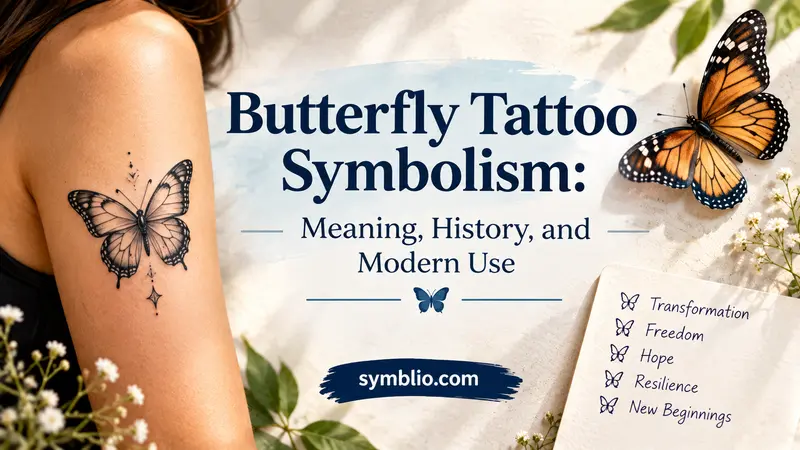
Butterfly tattoos are popular in the United States because they can express personal growth, freedom, beauty, and the courage to begin again. Their appeal comes partly from the butterfly’s life cycle: it transforms from a caterpillar into a chrysalis before emerging with wings. For many people, this natural process offers a meaningful way to represent a change in identity, a new chapter, or a personal milestone.
The meaning of a butterfly tattoo depends on the person wearing it. One individual may choose the design to celebrate independence, while another may associate it with a loved one, a period of recovery, or a memory they want to preserve. Color, placement, size, and accompanying imagery can all influence how the tattoo is understood.
In American tattoo culture, butterflies appear in everything from small, delicate outlines to colorful traditional designs and elaborate nature-inspired artwork. Some carry established associations with transformation and the soul, while others hold meaning specific to the wearer’s life.
Understanding butterfly tattoo symbolism involves looking beyond the insect’s appearance. Its biological transformation, cultural associations, and role in personal storytelling help explain why this design remains meaningful to so many people.
Quick Answer
Butterfly tattoo symbolism most commonly represents transformation, personal growth, freedom, and new beginnings in modern American culture. Historically, butterflies have also been associated with the soul, the cycle of life, and spiritual change, although their meanings vary across cultures and traditions.
TL;DR
- Transformation: Represents change, growth, and moving into a new phase of life.
- Freedom: Reflects independence, self-expression, and the desire to live authentically.
- New beginnings: Marks a fresh start after a significant life change.
- Remembrance: Can honor a loved one or preserve an important memory.
- Cultural history: Connects with longstanding associations between butterflies, souls, and renewal.
- Personal expression: Color, placement, and accompanying symbols make each tattoo distinctive.
What a Butterfly Tattoo Commonly Symbolizes
The most common meaning of a butterfly tattoo is transformation. A butterfly’s development offers a visible example of dramatic change, making it a natural symbol for people who have experienced an important turning point.
For some, that turning point involves growing more confident, leaving an unhealthy situation, changing careers, or learning to establish personal boundaries. For others, it marks the transition from adolescence to adulthood or the beginning of an independent life.
Butterflies also symbolize freedom. Their wings suggest movement, possibility, and the ability to explore beyond familiar surroundings. A person who values independence may choose a butterfly tattoo to express a commitment to making their own decisions.
Beauty and individuality are other common associations. Because butterflies come in many shapes, colors, and patterns, they can represent the idea that people develop their own identities rather than following a single path.
Not every butterfly tattoo represents a major struggle or life-changing event. Some people simply appreciate butterflies, enjoy nature-inspired artwork, or want a design that feels light and expressive. A tattoo can have personal significance without representing a dramatic story.
How the Butterfly’s Life Cycle Shapes Its Meaning
The butterfly’s life cycle provides the main reason it has become associated with personal change. A butterfly begins as an egg, develops into a caterpillar, enters the chrysalis stage, and eventually emerges as an adult with wings.
This process gives the image several possible interpretations. The caterpillar can suggest an earlier stage of life, while the chrysalis may represent a period of uncertainty, reflection, or transition. The adult butterfly often symbolizes the next stage, when change becomes visible.
People sometimes use this sequence to describe their own experiences. Someone who has moved to a new country, rebuilt confidence after a difficult period, or discovered a new sense of purpose may see the butterfly as a reminder of how their identity has developed.
The biological process also offers a more subtle lesson: meaningful change is not always immediately visible. A person may be growing internally long before other people recognize the difference.
However, the butterfly’s life cycle should not be treated as a universal formula for human experience. People change in different ways, and growth does not always follow a neat progression. For some tattoo owners, the butterfly represents the freedom to keep developing rather than the achievement of a final, perfected self.
Butterfly Symbolism in American Culture
In the United States, butterflies have become familiar images of change, hope, individuality, and the natural world. Their appearance on clothing, greeting cards, jewelry, artwork, and tattoos makes them accessible symbols that do not require a specific religious or cultural background.
The butterfly also fits an American tradition of using personal symbols to tell individual stories. Tattoos, in particular, allow people to turn an experience or belief into something visible and lasting. A butterfly can mark graduation, a move to a new city, the end of an important chapter, or a decision to live more independently.
The image is also common in springtime designs, gardens, and nature-focused decorations. These settings connect butterflies with seasonal renewal and the return of life after winter.
Another familiar American association comes from the expression “social butterfly,” which describes someone who enjoys meeting people and moving easily between social groups. Although this phrase is different from the symbolism of a butterfly tattoo, it illustrates how the insect has entered everyday language as an image of movement and sociability.
There is no single official American meaning for the design. Its significance depends on the wearer’s experiences, the artwork, and the context in which others see it.
The Historical Connection Between Butterflies and the Soul
The association between butterflies and the soul reaches back to ancient Greek thought. The Greek word psychē could refer to both a butterfly and the soul, creating a linguistic connection that influenced art and philosophical interpretation.
In Greek mythology, Psyche is a figure associated with the soul and is often represented in art with butterfly wings. Her story, which includes separation, trials, and eventual reunion with Eros, has encouraged interpretations involving love, endurance, and spiritual development.
Greek and Roman artworks also used butterfly imagery in connection with death and the soul’s departure from the body. A creature that emerges from a seemingly inactive stage and takes flight offered an evocative image of existence continuing beyond visible physical form.
These historical associations help explain why some modern butterfly tattoos commemorate deceased loved ones. A person may choose a butterfly to express the belief that love continues after death, or simply to represent a lasting emotional connection.
It is important to distinguish this historical symbolism from a universal religious doctrine. Ancient beliefs differed, and a butterfly tattoo does not automatically communicate a particular view of the afterlife. For many contemporary Americans, the association with the soul is personal rather than theological.
Butterfly Tattoos and New Beginnings
A butterfly tattoo can represent a new beginning without implying that the past has disappeared. People often carry memories, responsibilities, and lessons from earlier stages of life even as their circumstances change.
For someone starting over after a major move, a butterfly may represent the willingness to explore an unfamiliar environment. For another person, it might mark the decision to pursue a long-delayed goal, develop a new skill, or build healthier relationships.
The design can also celebrate an ordinary transition. A person does not need to have experienced a dramatic event to identify with the idea of change. Becoming more confident, understanding personal values, or learning to make independent decisions can all provide reasons to choose this image.
Some butterfly tattoos combine the insect with a date, initials, a short phrase, or another personal emblem. These additions help identify the particular event or relationship associated with the design.
For many wearers, the tattoo serves as a reminder rather than a declaration that a journey has ended. Its meaning can evolve as life changes, allowing the same image to represent different lessons at different times.
What Different Butterfly Colors Represent
Color influences how a butterfly tattoo feels and what viewers may associate with it. However, color meanings are not fixed rules. Personal preference, cultural background, and the overall design often matter more than a traditional color interpretation.
Blue butterfly
Blue designs are often associated with calm, hope, peace, and emotional openness. Some people choose them for their resemblance to blue butterflies found in nature, while others simply prefer their cool, understated appearance.
Orange butterfly
Orange can suggest warmth, energy, enthusiasm, and creativity. A monarch-inspired tattoo may also connect the wearer to nature, migration, or memories of seeing monarch butterflies.
White butterfly
White is commonly used to convey simplicity, peace, innocence, or remembrance. In a memorial design, it may communicate a quiet tribute, although the meaning depends on the individual’s beliefs.
Purple butterfly
Purple can suggest imagination, individuality, dignity, or spirituality. It works particularly well in designs intended to express a distinctive personality or a reflective approach to life.
Black butterfly
Black ink can create a strong, restrained design associated with elegance, strength, grief, or personal remembrance. It does not inherently represent death, bad luck, or negativity.
The monarch butterfly deserves particular attention in the United States. Its orange-and-black wings and remarkable migration make it recognizable to many Americans. A monarch tattoo may therefore express a connection to wildlife, environmental awareness, a particular place, or a childhood memory rather than transformation alone.
Butterfly Tattoos as Symbols of Freedom and Identity
Butterfly wings make freedom one of the design’s most immediate associations. Unlike a flower rooted in one location, a butterfly can move between plants, gardens, and open landscapes. Artists often emphasize this quality by depicting the insect in flight or positioning its wings as if they are about to open.
For tattoo owners, this movement may stand for independence, self-discovery, or the freedom to make personal choices. Someone who has become more comfortable expressing their opinions may choose a butterfly as a symbol of growing confidence.
The design can also communicate identity without using words. A brightly colored butterfly may feel playful and expressive, while a small black outline may convey simplicity and restraint. Neither style has a fixed personality attached to it, but each allows the wearer to choose how much visual attention the tattoo receives.
Some people use butterfly tattoos to challenge expectations about who they should be. The design can represent choosing a different path, changing one’s priorities, or allowing personal interests to develop over time.
Butterflies are sometimes marketed as feminine tattoo designs, particularly when artists use fine lines, pastel colors, or floral details. Yet the insect itself is not inherently feminine. Geometric, bold, realistic, and monochromatic versions can suit many different styles and identities.
Butterfly Symbolism in Other Cultures and Religions
Butterflies have acquired different meanings in different societies. These traditions offer useful context, but they should not be treated as interchangeable beliefs or as rules that determine what every tattoo means.
In some Chinese artistic traditions, butterflies are associated with love, joy, and long life. Butterfly imagery can appear in decorative art and in compositions that communicate happiness or romantic affection. A pair of butterflies may suggest partnership or marital harmony in certain contexts.
In Japanese art and cultural imagery, butterflies can represent beauty, change, femininity, or the soul. Their interpretation depends on the artwork and setting. A butterfly motif in a traditional painting, for example, may carry associations that differ from those of a contemporary tattoo.
Christian interpretations sometimes connect the butterfly’s life cycle with resurrection and the promise of new life. The contrast between the caterpillar, chrysalis, and winged adult provides a visual analogy for spiritual renewal. However, the butterfly is not a universal Christian symbol, and its importance varies among denominations and artistic traditions.
Indigenous cultures across the Americas are diverse, and butterfly traditions differ among individual peoples. Certain communities have associated butterflies with seasonal change, rain, or spiritual relationships, but these beliefs should not be generalized to all Native American nations.
Anyone choosing a tattoo specifically to represent a cultural or religious tradition should learn about that tradition in its own context. A design’s meaning is more respectful and accurate when it reflects a genuine understanding rather than a broad assumption about an entire culture.
Butterfly Tattoos for Love, Relationships, and Remembrance
Although butterflies are frequently associated with personal growth, they can also represent relationships. Their delicate appearance and connection with change make them suitable for marking a relationship that has influenced someone’s life.
Two butterflies may symbolize companionship, mutual affection, or a shared journey. A pair of matching butterfly tattoos can serve as a reminder of a friendship, family bond, or romantic relationship. For some people, the paired design represents the idea that two individuals can remain distinct while sharing a meaningful connection.
A butterfly can also honor someone who has died. In these tattoos, the insect may stand for the person’s memory, the continuing influence they have on others, or the wearer’s spiritual beliefs about life after death.
Memorial designs sometimes include a name, initials, a meaningful date, or a small floral element. Others use a single butterfly without additional text because the image itself has personal significance.
The same design can also commemorate a relationship that has ended. In that context, the butterfly might represent gratitude for what was learned, acceptance of change, or the decision to move forward.
These meanings are not mutually exclusive. A butterfly can represent love and independence, or grief and hope, at the same time. Its value often lies in its ability to hold more than one emotion without requiring an explanation.
Butterfly Tattoo Styles and Their Visual Messages
The style of a butterfly tattoo affects how people perceive it. The insect remains recognizable across different artistic approaches, but the amount of detail, the use of color, and the surrounding imagery create different impressions.
Minimalist and fine-line
Thin outlines and limited detail create a subtle design. This style suits people who prefer a quiet personal reminder or an uncomplicated nature-inspired image.
Realistic butterfly
Detailed wings and natural coloring emphasize the insect itself. This approach often appeals to nature enthusiasts or people who want to honor a particular species.
Traditional tattoo style
Bold outlines and strong colors give the butterfly a classic tattoo appearance. The design may emphasize confidence, individuality, and visual impact.
Watercolor design
Blended colors and loose edges create a painterly effect. This style can express creativity, movement, or an appreciation for unconventional artwork.
Butterfly with flowers
Floral details connect the butterfly to nature, seasonal growth, affection, or a particular flower’s personal meaning. The flower may be chosen for its appearance or to honor someone.
Placement also affects the design’s presentation. A small butterfly on the wrist or ankle may function as a private reminder, while a larger piece on the shoulder, back, or arm gives the artist more room for wing patterns and surrounding details.
There is no universal symbolic meaning attached to a particular body location. Placement is usually a matter of personal preference, visibility, comfort, and the shape of the artwork.
What Butterfly Tattoos Mean Emotionally
A butterfly tattoo can serve as a visual reminder of an emotion or principle that matters to its owner. Because the image is compact and easily recognizable, it can carry a personal story without requiring words.
For some people, the design encourages patience. The butterfly’s development reminds them that change can take time and that progress is not always immediately apparent. For others, it expresses hope during an uncertain period or a willingness to accept that life may take an unexpected direction.
The image can also support a sense of continuity. Someone may choose a butterfly after a major transition and keep it as a reminder of the values they want to carry into the future.
These emotional associations are personal interpretations, not established psychological effects. A butterfly tattoo does not automatically create confidence, resolve grief, or produce emotional healing. Its significance comes from the meaning the person attaches to it and the memories it represents.
A useful way to understand the emotional value of the design is to ask what the wearer wants to remember. The answer might be a particular person, a decision, a period of personal development, or simply the enjoyment of nature.
Common Misunderstandings About Butterfly Tattoo Symbolism
Butterfly tattoos are sometimes assigned meanings that are too rigid or based on assumptions about appearance. Understanding these misunderstandings helps separate personal symbolism from unsupported claims.
A butterfly tattoo always means transformation. Transformation is common, but not universal. Someone may choose a butterfly because they love its colors, collect images of insects, or associate it with a specific place.
A black butterfly always represents death. Black ink can communicate grief or remembrance, but it can also create a minimalist, elegant, or dramatic design. Color alone cannot determine the tattoo’s meaning.
Butterfly tattoos are exclusively feminine. The design is used by people of different genders and across a wide range of tattoo styles. Artistic treatment and personal significance matter more than gender stereotypes.
A butterfly tattoo indicates a particular personality. The image cannot reliably tell you whether someone is outgoing, sensitive, independent, or spiritual. These are possible associations, not conclusions about the person wearing it.
The butterfly has the same meaning in every culture. Historical and cultural interpretations vary. A meaning found in one religious tradition or region should not automatically be applied to another.
A tattoo is a form of personal expression, not a reliable method of judging someone’s history, beliefs, or character.
Butterfly Tattoos in Modern Fashion and Digital Culture
In contemporary American culture, butterfly imagery appears across tattoo studios, clothing, jewelry, illustrations, and social media. Its continued popularity comes partly from its visual versatility: the shape can be simplified into a few lines or expanded into a detailed composition.
On social media, butterflies often accompany discussions of personal development, changing circumstances, and fresh starts. They also appear in fashion aesthetics that favor nostalgic motifs, decorative wing patterns, and delicate nature imagery.
The butterfly can be particularly effective as a tattoo because it is recognizable even at a small size. Artists can adapt the basic shape to different proportions, colors, and levels of detail while keeping the subject clear.
Its meaning can change with its surroundings. A butterfly beside a date may commemorate an event, while one incorporated into a botanical sleeve may emphasize a love of the natural world. A butterfly paired with a moon, star, or abstract pattern may reflect the wearer’s own visual language rather than an established symbolic tradition.
Modern design trends can influence how a butterfly is drawn, but they do not determine what the tattoo must mean. A popular style may inspire the artwork while the underlying reason for choosing it remains deeply individual.
Butterfly Tattoo Meanings at a Glance
The following table summarizes common interpretations in contemporary American tattoo culture. These associations are possibilities rather than fixed definitions.
| Tattoo context | Common interpretation in the USA | Additional association |
|---|---|---|
| Single butterfly | Transformation and growth | Independence or individuality |
| Monarch butterfly | Nature and migration | Environmental awareness or personal memories |
| White butterfly | Peace and remembrance | Spiritual reflection |
| Two butterflies | Connection and affection | Partnership or friendship |
| Butterfly with flowers | Beauty and renewal | Love of nature or a personal tribute |
| Butterfly with a date or name | Memory and personal history | Commemoration of an important person or event |
FAQs
A butterfly tattoo may represent independence, personal growth, freedom, beauty, or a new beginning. However, these meanings are not exclusive to women, and the design does not indicate a particular personality or life experience.
Some people use butterfly tattoos to mark a period of recovery, personal development, or renewed confidence. The tattoo acts as a personal reminder rather than a guarantee of healing or a sign that someone has completed a difficult journey.
Spiritual interpretations can include the soul, renewal, resurrection, and the possibility of life beyond physical existence. The precise meaning depends on the person’s beliefs and the religious or cultural tradition they associate with the image.
Yes, it can serve as a memorial for someone who has died. The butterfly may represent remembrance, an enduring emotional bond, or a belief about the soul, although not every butterfly tattoo has a connection to loss.
A monarch tattoo can represent transformation, freedom, migration, and an appreciation for wildlife. In the United States, it may also remind someone of a particular season, childhood experience, or concern for butterfly conservation.
Butterflies are generally associated with positive ideas such as growth, hope, freedom, and renewal in contemporary American tattoo culture. Nevertheless, some people choose them to express grief, uncertainty, or remembrance, so their meaning is not always exclusively cheerful.
Placement can influence how visible or personal the tattoo feels, but there is no universally accepted symbolic meaning for each body location. The wearer’s intention, the design, and any accompanying elements usually provide more context than placement alone.
Conclusion
Butterfly tattoo symbolism most often centers on transformation, freedom, personal growth, and new beginnings. Its historical connections with the soul and its varied cultural associations add further possibilities, while modern American tattoo culture gives individuals room to develop meanings that reflect their own lives.
A butterfly can commemorate a loved one, mark an important transition, celebrate independence, or simply express an appreciation for nature. Its color, style, and accompanying details help shape the design, but no single interpretation applies to everyone.
Ultimately, the most meaningful butterfly tattoo is one that reflects what its wearer wants to remember or express. The image offers a simple way to carry a personal story forward while leaving room for that story to change over time.