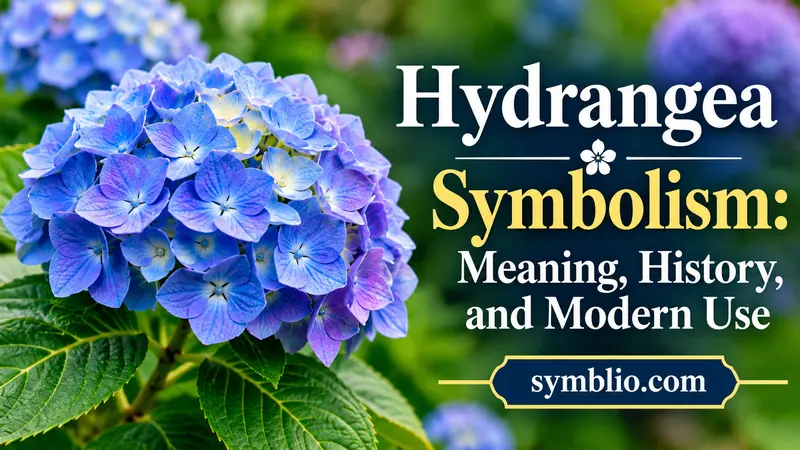
Hydrangea symbolism is closely connected to gratitude, appreciation, heartfelt emotions, abundance, and the changing nature of relationships. Known for their large, rounded flower clusters and soft colors, hydrangeas are popular ornamental flowers in American gardens, wedding arrangements, and seasonal decorations. Their appearance makes them especially recognizable, but their meanings extend beyond their visual beauty.
Hydrangeas belong to the Hydrangeaceae family and include several species native to Asia and the Americas. Their flowers appear in different forms, including rounded mophead clusters, delicate lacecap arrangements, and cone-shaped panicles. Depending on the variety, their colors may include blue, pink, purple, white, and green.
In the United States, hydrangeas often communicate appreciation, affection, and sincere emotion. People use them to decorate homes, celebrate weddings, mark anniversaries, and create thoughtful floral gifts. However, their meanings are not identical across cultures. Some historical European traditions associated them with vanity or boastfulness, while Japanese traditions connect them with changing circumstances and patience.
Understanding these different interpretations helps explain why hydrangeas remain meaningful in modern floral culture.
Quick Answer
Hydrangea symbolism commonly represents gratitude, appreciation, heartfelt emotions, abundance, and lasting relationships in modern American culture. Historically, hydrangeas have also represented vanity and changing emotions in European and Japanese traditions, reflecting their abundant blooms and naturally changing flower colors.
TL;DR
- Gratitude: Expresses appreciation and sincere thanks.
- Abundance: Represents prosperity, generosity, and plentiful blessings.
- Heartfelt emotions: Communicates affection, understanding, and emotional sincerity.
- Changing relationships: Reflects transformation and the passing nature of circumstances.
- Romance: Represents affection, commitment, and enduring connections.
- Cultural differences: Carries different meanings across American, European, and Japanese traditions.
What Hydrangeas Look Like and Why They Are Recognizable
Hydrangeas are flowering shrubs recognized for their large clusters of small individual flowers. Their rounded flower heads can resemble soft clouds, while lacecap varieties have a flatter appearance, with tiny flowers surrounded by larger decorative florets.
The plant’s leaves are generally broad and green, creating a noticeable contrast with its colorful blooms. Depending on the species, hydrangeas flower during spring and summer, with some varieties continuing into early fall.
One particularly interesting feature is that certain bigleaf hydrangeas can change flower color depending on soil chemistry. Soil acidity and the availability of aluminum influence whether some varieties develop blue or pink flowers. Purple shades may also appear under particular growing conditions.
This natural variation contributes to the flower’s association with change, emotional development, and adaptability.
The name hydrangea comes from Greek roots associated with water and a vessel. The name is often connected to the plant’s water requirements and the appearance of its seed capsules. These botanical characteristics make hydrangeas distinctive even before their symbolic meanings are considered. Smithsonian National Museum of Natural History+1
The Core Symbolism of Hydrangeas
Hydrangeas carry several meanings, but gratitude and heartfelt appreciation are among their most familiar positive associations in contemporary American floral culture.
Their full flower clusters provide a natural visual connection to abundance. A single stem can contain dozens of small florets, creating the impression of generosity and completeness. This appearance makes hydrangeas suitable for arrangements intended to communicate appreciation or celebration.
They also represent emotional sincerity. Their soft colors and rounded forms often create a gentle, welcoming atmosphere, making them appropriate for expressing affection without relying on dramatic romantic gestures.
Another interpretation involves changing circumstances. Because certain hydrangea varieties can change color depending on soil conditions, the flower has become associated with transformation and the changing nature of human experiences.
These meanings are not fixed rules. A person giving hydrangeas may simply appreciate their appearance, while another may choose them because they represent a particular relationship or personal experience.
Gratitude and Appreciation: The Most Familiar Positive Meaning
Gratitude is one of the most recognizable positive meanings associated with hydrangeas. Their generous flower clusters make them appropriate for expressing thanks, acknowledging kindness, and celebrating supportive relationships.
In American floral traditions, people often give flowers to communicate feelings that might otherwise be difficult to express. Hydrangeas work particularly well when someone wants to acknowledge another person’s generosity or show appreciation for a meaningful connection.
For example, a bouquet of hydrangeas may be appropriate for:
- Thanking someone for their hospitality.
- Celebrating a supportive friendship.
- Recognizing a thoughtful gesture.
- Expressing appreciation to a family member.
- Marking an important personal achievement.
Blue hydrangeas are sometimes associated with gratitude, understanding, and forgiveness in modern floral interpretations. These associations make them especially suitable for thoughtful gifts.
Their meaning is not limited to romantic relationships. Hydrangeas can communicate appreciation between friends, relatives, colleagues, and people who have supported one another through important experiences.
Hydrangeas and the Symbolism of Abundance
The abundance symbolism of hydrangeas comes naturally from their physical appearance.
Unlike flowers that produce one prominent bloom per stem, many hydrangeas develop large clusters containing numerous small florets. These clusters create a full appearance that can suggest plenty, generosity, and prosperity.
In symbolic interpretations, abundance does not necessarily mean financial wealth. It can also describe a fulfilling family life, strong friendships, emotional support, or opportunities for personal growth.
In American home decoration, hydrangeas frequently appear in large arrangements on dining tables, entryways, and outdoor patios. Their generous appearance makes them suitable for spaces associated with hospitality and welcoming guests.
They are also popular in garden designs where their large flower clusters create visual fullness.
This connection between abundance and generosity explains why hydrangeas are often selected for celebrations and gatherings. Their appearance communicates a sense of completeness without requiring an elaborate symbolic explanation.
Historical Origins of Hydrangea Symbolism
Hydrangeas have a long history of cultivation, particularly in East Asia. China, Japan, and Korea are important centers of hydrangea diversity, and the plant has been cultivated as an ornamental shrub for centuries.
In Japan, native hydrangeas have appeared in written records for more than a thousand years. The flower became closely connected with the rainy season, when hydrangeas bloom across gardens, temple grounds, and public landscapes.
European interest in hydrangeas expanded as botanical exploration and plant collecting introduced Asian varieties to Western gardens. The bigleaf hydrangea became especially popular in European horticulture after its introduction from China in the late eighteenth century.
During the nineteenth century, the language of flowers became fashionable in European and American society. People used flowers to communicate emotions through established symbolic associations.
However, the meanings assigned to individual flowers were not always consistent. Different floral dictionaries sometimes gave the same plant conflicting interpretations.
Hydrangeas acquired negative associations in some Victorian traditions, including vanity, boastfulness, and heartlessness. Their impressive appearance and abundance of decorative flowers were sometimes interpreted as an outward display that promised more than it delivered.
These historical meanings are worth understanding, but they do not represent a universal interpretation of the flower today. Cornell Botanic Gardens+3
Hydrangea Symbolism in American Culture
In the United States, hydrangeas are strongly associated with summer gardens, traditional landscaping, celebrations, and welcoming home environments.
Their popularity comes partly from their versatility. They can grow as garden shrubs, appear in decorative containers, or become part of formal floral arrangements.
American homeowners frequently use hydrangeas to create welcoming outdoor spaces. Their large blooms complement traditional gardens, cottage-style landscaping, and coastal-inspired home designs.
The flower also appears in wedding arrangements and anniversary celebrations. In these settings, hydrangeas can communicate appreciation, affection, and the importance of lasting relationships.
Some American floral traditions also associate hydrangeas with the fourth wedding anniversary. They provide an appropriate way to recognize a relationship built through shared experiences and continued commitment.
Unlike certain flowers strongly connected with one holiday or religious occasion, hydrangeas have a relatively flexible cultural role. They can appear at celebrations, family gatherings, and ordinary moments when someone wants to express appreciation.
Their meaning in American culture is therefore less about a single established tradition and more about the feelings people attach to their appearance and use.
What Different Hydrangea Colors Symbolize
Hydrangea colors influence how people interpret the flowers. Although color symbolism varies between traditions, certain associations are common in contemporary floral arrangements.
| Hydrangea Color | Common Symbolic Meaning | Emotional Association |
|---|---|---|
| Blue | Gratitude, understanding, forgiveness | Calmness and sincerity |
| Pink | Affection, romance, heartfelt emotion | Warmth and tenderness |
| White | Grace, purity, appreciation | Peace and simplicity |
| Purple | Pride, dignity, abundance | Admiration and elegance |
| Green | Renewal, balance, growth | Freshness and harmony |
Blue hydrangeas are often chosen to communicate understanding, gratitude, and forgiveness. Their cool color creates a peaceful appearance that works well in thoughtful arrangements.
Pink hydrangeas commonly represent affection and sincere emotions. They are suitable for expressing appreciation toward loved ones, friends, and family members.
White hydrangeas are associated with grace, simplicity, and purity. Their neutral appearance makes them especially useful in wedding arrangements and understated home decorations.
Purple hydrangeas can suggest dignity, admiration, and abundance. Their distinctive color gives floral arrangements a more formal appearance.
Green hydrangeas are sometimes associated with renewal, balance, and personal growth. Their color connects them with nature and the changing seasons.
It is important to distinguish cultural symbolism from botanical facts. Blue and pink hydrangeas do not necessarily represent different emotions because of their chemistry. Their emotional meanings come from human interpretation, while their color changes can result from growing conditions. Smithsonian National Museum of Natural History+2
Japanese Hydrangea Symbolism and the Rainy Season
Hydrangeas hold a particularly recognizable place in Japanese seasonal culture, where they are known as ajisai.
They bloom mainly during June and July, coinciding with Japan’s rainy season. Their flowers appear in temple gardens, parks, residential landscapes, and other public spaces during this period.
Japanese interpretations often connect hydrangeas with patience, changeability, and the temporary nature of circumstances.
Their changing colors contribute to these associations. Some Japanese traditions refer to hydrangeas as flowers that change colors repeatedly, making them an image of life’s changing conditions.
The flower is also associated with the rainy season itself. Its appearance marks a recognizable transition in the natural calendar, when frequent rainfall and humid weather shape everyday life.
Japanese floral symbolism, known as hanakotoba, assigns different meanings to flowers and sometimes distinguishes between colors. Hydrangeas may represent patience, fickleness, intelligence, or affection depending on the interpretation.
This range of meanings shows why it is important not to assume that every culture understands the same flower in exactly the same way. Japan Guide+3
Victorian Symbolism: Vanity and Boastfulness
Although hydrangeas have several positive meanings today, their historical European symbolism was not always favorable.
During the Victorian period, certain floral dictionaries associated hydrangeas with vanity, boastfulness, or heartlessness.
One explanation connected these negative meanings with the flower’s abundant decorative appearance. Its large clusters could be interpreted as excessive display, while some older interpretations focused on the contrast between showy flowers and seed production.
Hydrangeas were sometimes used in symbolic messages directed toward people considered emotionally distant or overly concerned with appearances.
These interpretations belonged to a particular historical system of floral communication. They should not be treated as established facts about the plant or as universal meanings.
The Victorian language of flowers was influenced by literature, social conventions, personal opinions, and changing cultural preferences. Its meanings could differ from one published dictionary to another.
Today, most American floral arrangements do not carry these negative Victorian messages unless someone deliberately chooses to reference that historical tradition.
Hydrangeas in Weddings and Romantic Relationships
Hydrangeas are popular wedding flowers because their large clusters create fullness and softness in floral arrangements.
In American weddings, they often represent appreciation, enduring affection, and the importance of family relationships.
Their appearance works well in bridal bouquets, ceremony decorations, reception centerpieces, and outdoor wedding arrangements.
White hydrangeas can complement traditional wedding designs, while pink and blue varieties introduce color without making an arrangement look overly dramatic.
Hydrangeas can also represent the idea that a successful relationship contains many small moments of care. Their clusters provide a natural visual comparison with the individual experiences that gradually create a lasting partnership.
For anniversaries, hydrangeas may communicate appreciation for shared years and continued companionship.
However, they do not have one universally recognized romantic meaning. Their message depends on the occasion, color, personal preferences, and relationship between the people exchanging them.
Emotional and Psychological Meaning of Hydrangeas
Hydrangeas often create an emotional impression of calmness, comfort, and generosity.
Their rounded shapes and closely grouped flowers can make an arrangement appear complete and balanced. Soft shades of blue, pink, and white are frequently used in environments designed to feel welcoming and peaceful.
This does not mean hydrangeas have a scientifically established psychological effect. Rather, their visual qualities can influence the atmosphere people associate with a space.
Different colors may communicate different emotional impressions:
- Blue can suggest calmness and reflection.
- Pink can create an impression of warmth and affection.
- White can suggest simplicity and peacefulness.
- Purple can communicate elegance and admiration.
- Green can evoke nature and renewal.
People may also attach personal memories to hydrangeas. Someone might associate them with a grandparent’s garden, a childhood home, a wedding, or a memorable summer.
These individual experiences can become more meaningful than traditional floral definitions.
In this way, hydrangeas can function as personal symbols of family history, belonging, and emotional connection.
Hydrangeas in Gardens, Home Decor, and Modern Design
Modern hydrangea symbolism extends beyond bouquets and special occasions. The flowers are frequently used in residential landscaping, interior decoration, and seasonal design.
In American homes, hydrangeas often appear in traditional, farmhouse, cottage, and coastal-inspired interiors. Their large flower clusters provide visual fullness without requiring several different types of flowers.
Blue and white arrangements are popular in coastal-inspired spaces because their colors complement natural materials and lighter interior palettes.
Pink and purple hydrangeas can create a softer atmosphere in bedrooms, living rooms, and decorative arrangements.
Outside the home, hydrangeas are common in foundation gardens, walkways, and landscaped entrances. Their seasonal flowers help create a welcoming appearance.
Designers also use dried hydrangea heads in certain decorative arrangements. Their appearance changes as they dry, creating another visual connection with aging, transformation, and the passage of time.
In contemporary design, hydrangeas are often appreciated for their appearance rather than a strict symbolic message. Nevertheless, their traditional associations with hospitality and abundance continue to influence how people use them.
Hydrangea Tattoos and Personal Identity
Hydrangea tattoos offer a floral design that can communicate several personal ideas.
Some people choose hydrangeas because they represent gratitude, family connections, emotional development, or meaningful memories. Others simply appreciate their rounded flower clusters and layered appearance.
A blue hydrangea tattoo might represent forgiveness or understanding, while a pink design could express affection and personal relationships.
White hydrangeas may appeal to people who associate the flower with simplicity, grace, or a meaningful new beginning.
Tattoo designs can include individual flower heads, full botanical branches, or larger arrangements with leaves and other plants.
The flower may also represent a particular place or period in someone’s life. For example, someone who grew up around hydrangeas may choose the design to remember a childhood home or a family member.
There is no official hydrangea tattoo meaning. Its interpretation ultimately belongs to the person wearing it.
Hydrangeas in Gifts, Celebrations, and Everyday Life
Hydrangeas are versatile gifts because they can communicate appreciation without requiring a romantic or formal occasion.
In the United States, they may appear in arrangements for birthdays, anniversaries, housewarmings, family gatherings, and expressions of thanks.
Their association with gratitude makes them appropriate when someone wants to recognize another person’s kindness.
They can also serve as thoughtful gifts for hosts, teachers, friends, and relatives. Their large clusters make even a relatively simple arrangement visually noticeable.
For weddings and anniversary celebrations, hydrangeas often complement other flowers rather than functioning as the only decorative element.
Their flexibility makes them especially useful for people who want a gift that feels thoughtful and attractive without carrying an overly specific message.
The occasion and personal relationship matter more than any single dictionary definition.
Common Misunderstandings About Hydrangea Symbolism
Several misconceptions surround hydrangea meanings, particularly because their historical and modern interpretations sometimes conflict.
Misunderstanding one: Hydrangeas always represent vanity.
Vanity and boastfulness are historical Victorian associations, not universal meanings. Modern American floral culture more commonly uses hydrangeas to express gratitude, affection, and appreciation.
Misunderstanding two: Every blue hydrangea represents forgiveness.
Blue hydrangeas are sometimes associated with forgiveness, but this is a cultural interpretation rather than a fixed botanical or religious rule.
Misunderstanding three: Hydrangeas have identical meanings everywhere.
Japanese, European, and American traditions developed different interpretations. Local customs and personal experiences influence how people understand the flowers.
Misunderstanding four: All hydrangeas change color.
Color changes depend on the species and growing conditions. Certain bigleaf varieties respond to soil chemistry, while other hydrangeas do not change color in the same way.
Misunderstanding five: Hydrangeas have one official romantic meaning.
They can represent affection and commitment in certain arrangements, but their meaning depends on the sender, recipient, and occasion.
Understanding these distinctions prevents historical interpretations from being confused with modern everyday use.
How Hydrangea Symbolism Has Evolved Over Time
Hydrangea symbolism has developed through botanical history, literature, cultural traditions, and changing preferences in floral design.
In East Asia, the flower became associated with seasonal change, particularly Japan’s rainy season. Its appearance and color variation contributed to interpretations involving patience and the temporary nature of life.
During the nineteenth century, European and American flower dictionaries introduced additional meanings, including vanity and boastfulness.
Over time, hydrangeas became increasingly popular as ornamental garden plants and decorative flowers. Their role in weddings, home design, and celebrations encouraged more positive interpretations.
Modern American floral culture frequently connects them with gratitude, abundance, family bonds, and sincere emotion.
Social media and contemporary floral design have also made hydrangeas familiar in wedding photography, garden inspiration, and seasonal decorating.
Their meanings continue to evolve because flowers are not symbols with permanently fixed definitions. People interpret them through the experiences, traditions, and occasions in which they appear.
FAQs
Hydrangeas commonly symbolize gratitude, appreciation, abundance, and heartfelt emotions. Their meanings can also include affection, forgiveness, and changing circumstances, depending on cultural traditions and flower colors.
Hydrangeas are generally used as positive decorative flowers in modern American culture, particularly for celebrations and welcoming spaces. However, they do not have one universally established good-luck meaning.
Blue hydrangeas are commonly associated with gratitude, understanding, and forgiveness in modern floral interpretations. In some Japanese traditions, they can also carry associations with patience and emotional complexity.
In Japan, hydrangeas are closely associated with the June and July rainy season. Their changing colors have also connected them with patience, changeability, and the temporary nature of circumstances.
Some Victorian flower dictionaries connected hydrangeas with vanity and boastfulness because of their abundant, showy blooms. These interpretations reflected historical floral conventions rather than a universally accepted meaning.
Yes. Hydrangeas are popular wedding flowers because they can represent appreciation, affection, and lasting relationships. Their full flower clusters also make them suitable for bouquets, centerpieces, and ceremony decorations.
Conclusion
Hydrangea symbolism brings together gratitude, appreciation, abundance, affection, and the changing nature of life. Their large flower clusters help explain their association with generosity and fullness, while their ability to change color under certain growing conditions contributes to interpretations involving transformation and emotional development.
In the United States, hydrangeas are especially familiar in gardens, wedding arrangements, anniversary celebrations, and home decoration. Although older European traditions sometimes connected them with vanity, modern floral culture generally embraces more positive associations.
Ultimately, hydrangeas demonstrate how a flower can carry different meanings across generations and cultures. Whether growing in a summer garden, decorating a wedding, or appearing in a thoughtful gift, they offer a recognizable way to express appreciation and celebrate meaningful relationships.