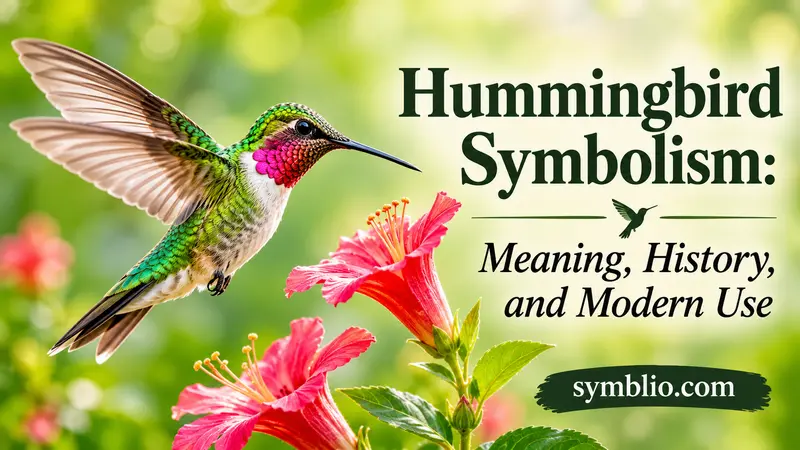
Hummingbird symbolism is commonly connected with joy, love, resilience, freedom, and the ability to appreciate life’s small moments. These tiny birds attract attention through their colorful feathers, rapid movements, and remarkable ability to hover in midair. Their unusual behavior has made them meaningful in art, folklore, personal expression, and spiritual traditions across the Americas.
Hummingbirds are especially familiar in the United States, where people encounter them in gardens, parks, flowering landscapes, and backyard feeders. Their sudden appearance often feels like a special moment because they move quickly and may disappear almost as soon as they arrive.
For many Americans, a hummingbird represents happiness during difficult times, the memory of someone loved, or the determination to keep moving forward. However, its meaning is not limited to modern interpretations. Indigenous traditions in North America and ancient civilizations in Mexico developed their own associations with the bird, including beauty, sacred knowledge, warriors, and the relationship between life and death.
Understanding these different interpretations helps explain why the hummingbird remains such a popular subject in tattoos, jewelry, memorial artwork, and nature-inspired design.
Quick Answer
Hummingbird symbolism most commonly represents joy, love, resilience, freedom, and appreciation for life’s small pleasures in modern American culture. Historically, hummingbirds also held sacred associations with beauty, wisdom, warriors, renewal, and spiritual traditions among several Indigenous peoples of the Americas.
TL;DR
- Hummingbirds commonly represent happiness, love, resilience, and freedom.
- Their ability to hover symbolizes patience, balance, and adaptability.
- Ancient Mexica traditions connected hummingbirds with warriors and Huitzilopochtli.
- Diné traditions associate hummingbirds with beauty and wisdom.
- Modern Americans often use hummingbirds in memorials and personal tattoos.
- Their colorful appearance makes them popular in jewelry, gardens, and artwork.
What Makes the Hummingbird a Recognizable Symbol?
Hummingbirds are among the smallest birds in the world, but their appearance and behavior make them easy to recognize. They have slender bodies, long narrow bills, and rapidly beating wings. Many species display iridescent feathers that appear green, red, blue, violet, or turquoise depending on the lighting.
Unlike most birds, hummingbirds can hover in place, fly backward, and change direction with remarkable control. They use these abilities to reach nectar inside flowers and capture small insects.
These physical characteristics help explain several modern symbolic interpretations.
The bird’s small size also contributes to its symbolism. It demonstrates that something does not need to be large to make an impression or accomplish something remarkable.
For this reason, hummingbirds frequently appear in illustrations, decorative objects, greeting cards, and personal artwork.
The Most Common Meanings of Hummingbirds
Hummingbirds carry several related meanings, but some associations appear more frequently in contemporary American culture.
Joy and happiness are among the most recognizable interpretations. Their colorful appearance and lively movements make them natural representations of cheerful experiences and positive moments.
Resilience and determination come from their demanding lifestyle. Hummingbirds must find food frequently and travel considerable distances during migration. Their behavior makes them appealing symbols of persistence and adaptability.
Love and affection are also common associations. Their visits to flowers and their delicate appearance make them suitable representations of romantic love, family connections, and appreciation for someone important.
Freedom and independence relate to their ability to move quickly between different places. In personal artwork, a flying hummingbird can represent the desire to explore, make independent decisions, or begin a new chapter.
Renewal and hope connect with their seasonal movements and repeated visits to flowering plants. People sometimes interpret a hummingbird’s appearance as a reminder that difficult periods do not last forever.
These meanings are not fixed rules. A hummingbird can represent something different depending on the person, cultural background, or circumstances in which it appears.
Ancient Roots of Hummingbird Symbolism
Some of the oldest documented cultural associations with hummingbirds come from ancient Mesoamerica, particularly the traditions of the Mexica, commonly called the Aztecs.
Hummingbirds were admired for their bright feathers, unusual flight, and connection with flowers. They also appeared in religious imagery and ceremonial traditions.
One of the most important figures associated with the bird was Huitzilopochtli, a major Mexica deity connected with the sun, warfare, and the Mexica people. His name is commonly translated using references to a hummingbird and the south or left, although interpretations of the name differ.
Huitzilopochtli was sometimes represented with hummingbird features, including feathers and associated imagery.
The bird also had connections with warriors who died in battle. In Mexica beliefs recorded in historical sources, fallen warriors could return in the form of hummingbirds or butterflies after death.
This association gave the hummingbird a meaning beyond beauty and nature. It became connected with courage, sacrifice, transformation, and the continuation of existence.
These historical traditions should not be confused with modern interpretations of hummingbirds as general symbols of happiness. They developed within a particular religious and cultural system.
Hummingbirds in Native American Traditions
Hummingbirds appear in different Indigenous traditions across the Americas, but their meanings are not identical among communities.
For the Diné (Navajo), hummingbirds are associated with beauty and wisdom. Traditional stories connect them with the gathering of pollen, and their appearance can carry significance within relationships between people, animals, and the natural world.
The Diné name for hummingbird is often written as dahiitį́hí. In Diné traditions, birds are treated with respect, and hummingbirds should not be harmed or mistreated.
Other Indigenous communities have their own stories involving hummingbirds. These accounts may connect the birds with healing, particular plants, communication, or relationships between humans and the natural world.
Cherokee oral traditions also include stories involving hummingbirds. In one account recorded by ethnographer James Mooney, the hummingbird plays a role in recovering tobacco.
These examples demonstrate why it is inaccurate to describe one interpretation as the universal Native American meaning.
Each community has its own history, language, beliefs, and relationship with the natural environment. Respectful interpretation requires recognizing those differences rather than combining separate traditions into one generalized spiritual message.
What Hummingbirds Represent in American Culture
In the United States, hummingbirds are especially associated with backyard gardens, summer landscapes, and the enjoyment of wildlife.
For many homeowners, attracting hummingbirds is a pleasant way to bring nature closer to everyday life. Flowering plants and feeders create opportunities to observe their movements, feeding habits, and interactions with other birds.
This everyday experience contributes to their cultural meaning.
A hummingbird in a garden can represent appreciation for nature, environmental awareness, and the pleasure of noticing small details. Its seasonal arrival may also remind people of changing seasons and the return of warmer weather.
Hummingbirds are popular in American decorative culture as well. They appear on greeting cards, garden decorations, clothing, stationery, ceramic objects, and household artwork.
Their association with happiness also makes them suitable for celebrations and encouraging messages.
In personal settings, a hummingbird may represent a loved one’s personality, a family memory, or an individual’s determination to approach life with optimism.
Unlike symbols connected with a specific national holiday, hummingbirds do not have one established place in the American holiday calendar. Their cultural importance is more closely connected with nature, personal memories, and individual expression.
Hummingbird Symbolism in Love and Relationships
Hummingbirds frequently represent love, affection, and emotional connection.
Their delicate appearance and relationship with flowers make them natural subjects for romantic artwork. A hummingbird approaching a flower can suggest attraction, tenderness, and the appreciation of another person.
In jewelry and gifts, the bird may communicate affection without relying on traditional romantic imagery such as hearts or roses.
Some people also associate hummingbirds with the ability to find happiness in ordinary moments. In a relationship, this interpretation can represent enjoying everyday experiences rather than expecting happiness to come only from major occasions.
A pair of hummingbirds may be used to represent companionship, although hummingbirds do not generally form lifelong mating pairs. The image therefore communicates a human interpretation rather than a universal fact about hummingbird behavior.
In Mexican cultural history, hummingbirds also became associated with love-related folk practices. Some traditional beliefs connected hummingbirds with attraction and romantic influence.
These historical practices are different from the modern decorative use of hummingbird imagery to express affection.
The Emotional and Psychological Meaning of Hummingbirds
Hummingbirds can represent several emotional experiences because their behavior creates strong visual impressions.
Their speed and constant movement suggest energy and enthusiasm. For someone experiencing a major life change, the image of a hummingbird may express the willingness to adapt and explore new possibilities.
Their ability to hover offers another interpretation. Rather than always moving forward, the bird can remain in one position while adjusting to changing conditions.
People may connect this behavior with emotional balance, reflection, and the importance of pausing before making decisions.
The hummingbird’s small size can also encourage a different understanding of strength. It suggests that determination does not always require physical size, authority, or visibility.
For someone who has experienced a difficult period, a hummingbird image may represent personal perseverance. It can serve as a reminder of an important achievement or a decision to approach the future with greater confidence.
These interpretations are personal rather than scientific psychological conclusions. The bird itself does not create particular emotions, but people use its recognizable characteristics to express experiences that matter to them.
Hummingbirds and Spiritual Interpretations
In contemporary spiritual culture, hummingbirds are sometimes described as signs of hope, encouragement, renewal, or connection with loved ones who have died.
Some people interpret an unexpected hummingbird visit as a comforting reminder of someone they miss. Others understand it as an invitation to appreciate the present or remain optimistic during a difficult period.
These interpretations are particularly common in personal reflection, memorial artwork, and discussions about meaningful encounters with wildlife.
However, there is no single religious teaching that establishes hummingbirds as universal spiritual messengers.
Their spiritual associations vary according to cultural background and individual beliefs. Some historical Indigenous traditions have specific teachings about hummingbirds, while modern spiritual interpretations may combine personal experiences with ideas from different traditions.
It is important to distinguish personal belief from documented cultural history. Someone may find comfort in seeing a hummingbird as a reminder of a deceased relative without claiming that every culture shares that understanding.
Hummingbird Symbolism in Different Colors
The colors associated with hummingbirds contribute to their decorative and personal meanings.
Their feathers contain structural features that produce iridescence, meaning their appearance can change depending on the direction of light. This natural characteristic makes them especially attractive subjects for artwork.
| Hummingbird Color | Common Modern Association | Typical Context |
|---|---|---|
| Red | Passion, energy, and enthusiasm | Romantic artwork and decorative designs |
| Green | Growth, renewal, and nature | Garden artwork and nature-inspired jewelry |
| Blue | Peace, calmness, and reflection | Personal tattoos and decorative art |
| Purple | Creativity, individuality, and imagination | Fashion and artistic illustrations |
| White | Peace, remembrance, and hope | Memorial artwork and personal gifts |
These color associations are contemporary interpretive choices rather than established meanings shared by all historical cultures.
A green hummingbird, for example, does not automatically carry a different traditional meaning from a red one. The interpretation usually depends on the person choosing the design and the context in which it appears.
Why Hummingbirds Are Popular in Tattoos
Hummingbird tattoos are popular because their appearance combines attractive natural details with meanings that can be adapted to individual experiences.
For some people, a hummingbird tattoo represents resilience after a difficult chapter. For others, it celebrates freedom, independence, happiness, or an important personal achievement.
The bird is also frequently chosen for memorial tattoos.
A small hummingbird beside a flower, for example, may represent a loved one who enjoyed gardening or spending time outdoors. A flying hummingbird can communicate the idea of continuing forward while keeping important memories close.
Different tattoo compositions create different impressions.
- Flying hummingbird: Freedom, independence, and personal growth.
- Hummingbird with flowers: Love, beauty, and appreciation.
- Two hummingbirds: Family connection or companionship.
- Small hummingbird: Quiet strength and personal significance.
- Hummingbird with a name: Remembrance of someone important.
Placement and design are personal decisions rather than requirements. Some people prefer a detailed colorful illustration, while others choose a simple outline that emphasizes the bird’s recognizable shape.
The most meaningful tattoo is usually one connected to the wearer’s own story rather than an interpretation chosen simply because it is popular.
Hummingbirds in Memorials and Remembrance
One particularly recognizable modern association is the hummingbird as a symbol of remembrance.
People sometimes include hummingbirds in memorial jewelry, engraved gifts, memorial gardens, and artwork honoring someone who has died.
The bird’s sudden appearance and disappearance can make it a comforting image for people dealing with memories and loss. Some interpret a visit from a hummingbird as a personal reminder of a loved one.
In Mexican and Mexican American cultural settings, hummingbird imagery can also connect with older traditions involving ancestors, spiritual relationships, and the relationship between life and death.
However, not every hummingbird memorial has a direct historical connection to those traditions.
In contemporary American memorial design, the bird can simply represent a person’s cheerful personality, love of gardening, or appreciation for nature.
A hummingbird paired with a person’s name, favorite flower, or meaningful date can create a personal tribute without requiring a specific religious interpretation.
Hummingbirds in Jewelry, Fashion, and Home Decor
The hummingbird’s recognizable shape makes it suitable for many decorative applications.
In jewelry, it appears in necklaces, earrings, bracelets, pendants, and brooches. Some designs feature detailed feather patterns, while others use a simple silhouette to represent freedom or happiness.
In fashion, hummingbird illustrations appear on scarves, embroidered clothing, handbags, and accessories. Their colorful appearance works particularly well with floral and nature-inspired designs.
Home decoration provides another popular setting.
Hummingbirds can be found on:
- Garden signs and outdoor ornaments.
- Decorative wall paintings and framed prints.
- Ceramic plates and household accessories.
- Bedding and floral-inspired fabrics.
- Greeting cards and personalized gifts.
- Window decorations and stained-glass artwork.
These designs are especially popular among people who enjoy gardening, birdwatching, and wildlife-inspired interiors.
Their association with flowers also makes hummingbirds suitable for spring and summer decorations.
Unlike designs associated with a particular religious or political identity, hummingbird decorations are generally flexible. People can enjoy their appearance without assigning them a specific spiritual meaning.
Hummingbird Symbolism in Nature and the Environment
The hummingbird’s natural behavior contributes significantly to its modern associations.
These birds depend on nectar from flowers and also consume small insects and spiders. As they visit flowers, they can transfer pollen and contribute to pollination in the ecosystems where they live.
Their migration patterns are another important characteristic. Some species travel considerable distances between breeding and wintering grounds.
The ruby-throated hummingbird, for example, is familiar across much of eastern North America. Other species, including broad-tailed and rufous hummingbirds, are especially associated with western landscapes.
These natural characteristics support modern interpretations of movement, adaptation, and ecological connection.
Hummingbirds also encourage interest in native flowering plants and wildlife-friendly gardens. People who attract them to their yards often develop a greater appreciation for the seasonal relationships between flowers, insects, birds, and changing weather.
In this context, the hummingbird represents more than an attractive garden visitor. It can serve as a reminder that small creatures play meaningful roles in larger natural systems.
Common Misunderstandings About Hummingbird Symbolism
Several popular claims about hummingbirds are repeated without sufficient historical or cultural context.
One common misunderstanding is that every hummingbird sighting has the same spiritual meaning. In reality, interpretations vary between individuals and communities. A person may see a hummingbird as a reminder of a loved one, while another simply enjoys observing wildlife.
Another misconception is that all Indigenous peoples traditionally understood hummingbirds in the same way. Different communities have distinct stories and teachings, and their beliefs should not be treated as interchangeable.
It is also misleading to claim that hummingbirds universally symbolize romantic love. Although love-related interpretations exist in modern culture and certain historical traditions, they are not the only or universal meaning.
Color meanings can also be exaggerated. There is no universally accepted historical system in which every hummingbird color represents one specific emotion or spiritual message.
Finally, hummingbird symbolism should not be used to justify harming the birds or collecting their feathers. These are living wild animals with ecological importance, and their natural behavior deserves respect.
Understanding these distinctions allows people to appreciate the symbol without confusing personal interpretations with established cultural traditions.
How Hummingbird Meaning Has Changed Over Time
Hummingbird symbolism has developed through several different cultural settings.
In ancient Mesoamerica, the bird had religious, ceremonial, and warrior-related associations. Its relationship with Huitzilopochtli gave it a particularly important place in Mexica religious imagery.
Indigenous communities in other parts of North America developed their own stories and teachings, connecting hummingbirds with beauty, wisdom, plants, and the natural world.
During later centuries, hummingbird imagery continued to appear in artistic and decorative traditions across the Americas.
In modern American culture, its meaning has become more personal and flexible. Rather than being understood primarily through one religious tradition, the hummingbird now frequently represents happiness, perseverance, love, and remembrance.
The growth of nature-inspired tattoos, personalized jewelry, garden decoration, and memorial artwork has further expanded its use.
Digital culture has also made hummingbirds familiar through photographs, illustrations, short wildlife videos, and inspirational posts.
The result is a symbol with several layers of meaning: some inherited from particular historical traditions and others developed through contemporary personal expression.
FAQs
Hummingbirds are commonly associated with joy, hope, renewal, and spiritual connection in contemporary interpretations. Some people also view them as personal reminders of deceased loved ones, although this is not a universal religious belief.
Some people interpret an unexpected hummingbird visit as a comforting reminder of someone who has died. This association is particularly meaningful in personal memorial traditions, but it should be understood as a cultural or individual belief rather than a proven message.
A hummingbird tattoo commonly represents freedom, resilience, love, happiness, and personal growth. Its meaning can become more specific when combined with flowers, names, dates, or other meaningful design elements.
Hummingbirds are often associated with good fortune, happiness, and positive experiences in contemporary popular interpretations. However, these associations vary across cultures and are not part of one universal historical belief.
There is no single Native American interpretation. For example, Diné traditions associate hummingbirds with beauty and wisdom, while other Indigenous communities have their own stories and cultural teachings involving the bird.
In modern decorative and personal interpretations, a green hummingbird often represents nature, growth, renewal, and harmony. These associations are influenced by the color green and the bird’s connection with flowering plants rather than a universal historical tradition.
Their demanding feeding habits, rapid movements, and ability to adapt to different environments make them natural examples of persistence. People often use these characteristics to represent determination, recovery, and the willingness to keep moving forward.
Conclusion
Hummingbird symbolism brings together several ideas, including joy, love, resilience, freedom, beauty, and renewal. Its historical associations are equally interesting, particularly in ancient Mesoamerican traditions and the distinct teachings of Indigenous communities across the Americas.
In modern American culture, the hummingbird has become a popular image in tattoos, memorials, jewelry, gardens, and decorative artwork. For some people, it represents personal strength; for others, it recalls someone they love or encourages them to appreciate ordinary moments.
Ultimately, the hummingbird’s meaning depends on the cultural tradition and personal experience behind its use. Its small size, colorful appearance, and remarkable movements offer a simple reminder that even the smallest parts of nature can leave a lasting impression.