
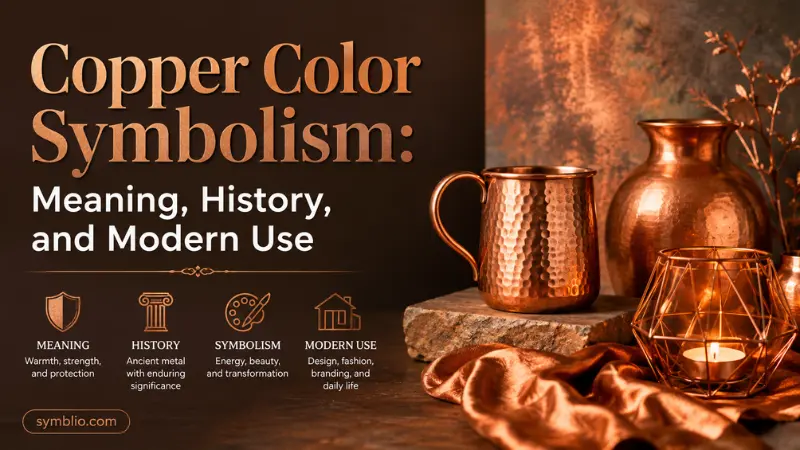
Copper color symbolism comes from the unusual character of the color itself: warm like orange and brown, metallic like bronze, and often touched by red or rose. Unlike a primary color with a long-established symbolic vocabulary, copper gets much of its meaning from the material it resembles and the settings in which people use it.
In the United States, copper-colored objects often suggest warmth, craftsmanship, practicality, autumn, age, and understated luxury. The color can look polished and contemporary when it is bright, or weathered and historic when it has a darker brown surface or greenish patina.
That flexibility explains why copper appears in interior design, jewelry, architecture, fashion, artwork, holiday decoration, branding, and personal style. Its symbolism is rarely about one fixed idea. Instead, it combines the associations of metal, earth, warmth, workmanship, and gradual change.
Quick Answer
Copper color symbolism commonly represents warmth, craftsmanship, durability, understated luxury, and connection to the natural world in modern American culture. Historically, copper’s reddish metallic appearance was connected with valued objects, artistic materials, trade, status, and the changing surface of metal, while its modern color associations extend into design, fashion, and personal expression.
TL;DR
- Copper often symbolizes warmth, practicality, craftsmanship, and understated elegance.
- Its historical meaning comes partly from copper as a valued metal.
- Americans commonly associate copper tones with autumn, homes, and handmade design.
- Patina adds associations of age, transformation, and lived experience.
- Bright copper can suggest modern luxury without looking overly formal.
- Its meaning changes considerably with context, shade, and surrounding colors.
What Does Copper Color Look Like?
Copper is usually a warm reddish-brown or orange-brown metallic color. Depending on the finish, it can range from bright pinkish orange to deep brown, burnt orange, rose, or muted bronze.
That variation matters when interpreting its symbolism.
A polished copper surface catches light and appears energetic and refined. A darker copper finish feels more grounded and traditional. A weathered copper surface may develop green or blue-green patina, creating an entirely different visual impression.
Unlike flat orange or brown, copper also has a visual suggestion of reflectivity. Even when an object is painted rather than made from metal, the copper effect often implies a surface that changes as light moves across it.
This makes copper especially useful when a designer wants warmth without the brightness of yellow or orange.
What Copper Commonly Symbolizes in the United States
In contemporary American culture, copper most often communicates warmth, craftsmanship, durability, and restrained sophistication.
Its association with craftsmanship comes naturally from copper’s long use in household objects, decorative arts, tools, vessels, architectural details, and handmade work. Copper can look expensive, but it does not carry quite the same formal association as gold.
That distinction gives it a particular place in American design. Gold can suggest wealth and ceremony; silver can suggest coolness and modern precision; copper tends to feel more approachable.
Copper also has an earthy quality. Its reddish-brown appearance sits visually between the colors of soil, wood, autumn leaves, fire, and metal. As a result, copper frequently works as a bridge between natural and industrial aesthetics.
| Context | Meaning in the USA | Common Associations | Notes |
|---|---|---|---|
| Home decor | Warmth and craftsmanship | Kitchens, lighting, fixtures | Often paired with wood and neutral colors |
| Jewelry | Individuality and understated style | Handmade pieces, natural materials | Less formal than gold |
| Fashion | Warm confidence | Autumn clothing and accessories | Especially effective with earthy palettes |
| Architecture | Durability and heritage | Roofs, domes, historic buildings | Patina can emphasize age |
| Holidays | Warmth and seasonal richness | Fall and winter decoration | Often combined with bronze, gold, and brown |
Ancient Roots of Copper Symbolism
The symbolism of copper cannot be separated completely from the history of copper itself.
Copper is one of the metals humans have worked for thousands of years. Its relative malleability made it useful for objects that required shaping, decoration, or repeated handling. In different societies, copper could function as a practical material, an artistic medium, a trade good, or a marker of social importance.
Ancient Mediterranean traditions also connected copper with Venus, partly because copper and Venus were associated through the metal’s traditional astrological and mythological relationships. The connection became part of a much larger symbolic system involving metals, planets, and deities.
It is important, however, not to treat these traditions as evidence that the modern color copper has one universal ancient meaning. People in the ancient world generally encountered copper as a physical material rather than as a standardized digital or design color.
Modern copper symbolism developed by combining the appearance of the metal with older associations attached to copper objects.
Copper and Craftsmanship
One of the clearest meanings associated with copper is craftsmanship.
Copper can be shaped, hammered, engraved, soldered, embossed, and finished in ways that reveal the hand of the maker. Its surface also responds visibly to age and treatment.
This makes copper especially appropriate for objects where the process of making matters as much as the finished appearance.
American Arts and Crafts design provides a useful example. Copper was used in decorative objects partly because it was less expensive than precious metals and could communicate simplicity and honest workmanship. Its surface could also be deliberately patinated to create an aged appearance.
That history helps explain why copper remains popular in modern handmade design. A copper object often suggests that someone cared about its material and construction rather than simply producing something shiny.
Copper as a Symbol of Warmth
Copper’s warm color makes it strongly associated with comfort and physical warmth.
In American interiors, copper frequently appears alongside wood, leather, cream, charcoal, terracotta, and other earthy colors. These combinations can create a room that feels comfortable without becoming visually overwhelming.
Copper also has an indirect relationship with fire. Copper cookware, fireplaces, kitchens, lantern-like lighting, and autumn decoration can place the color near visual reminders of heat.
This does not mean copper literally symbolizes fire in every context. Rather, its reddish-orange appearance can borrow some of fire’s visual associations: warmth, activity, light, and comfort.
Copper, Earth, and Nature
Copper has an unusual relationship with nature because its appearance can change over time.
Freshly polished copper has a bright reddish-orange metallic surface. Exposure to air and moisture can eventually produce a patina, often blue-green in appearance.
That transformation has become an important part of copper’s visual symbolism.
A weathered copper roof or sculpture can suggest age without necessarily suggesting decay. Instead, the changing surface can communicate time, adaptation, history, and natural weathering.
The Statue of Liberty provides one of America’s most recognizable examples of this phenomenon. Its copper exterior developed the familiar green patina that Americans now recognize as part of the monument’s identity.
The result is an important symbolic lesson: copper can represent not only what something is when it is new, but also what happens to it as it encounters the world.
Copper and Understated Luxury
Copper occupies an interesting middle ground between ordinary materials and precious metals.
It has the appearance of metal and can be highly polished, yet it generally does not carry the same cultural status as gold or platinum. This allows copper to communicate quality without excessive formality.
In modern American interiors, copper lighting, sinks, hardware, cookware, and decorative pieces can provide a luxurious accent while retaining a practical appearance.
The distinction is particularly useful in contemporary design. Someone choosing copper may want visual richness without the impression of extravagance.
For that reason, copper often symbolizes accessible or understated luxury rather than wealth alone.
Copper and Durability
Copper’s long history as a functional material contributes to another association: durability.
Copper has been used in architecture, plumbing, cookware, electrical systems, decorative objects, and countless other applications. Its usefulness is part of its cultural identity.
As a color, copper can therefore communicate reliability and substance.
This is especially noticeable when copper tones appear in architecture or product design. A copper-colored finish may suggest that an object is solid, dependable, and built to last, even when the object itself contains no copper.
The symbolism comes from visual association rather than a guarantee about the product’s actual quality.
Copper in American Homes and Interior Design
Copper has become especially recognizable in American home design.
Kitchenware is one obvious example. Copper pots, pans, sinks, backsplashes, fixtures, and accents can create a connection with traditional cooking and craftsmanship. At the same time, modern copper finishes can look sleek and minimalist.
Copper lighting is another common use. Pendant lights and fixtures in copper or copper-like finishes can introduce warmth into rooms dominated by white, gray, black, or natural wood.
The color is also common in autumn-inspired interiors. When combined with rust, burgundy, cream, olive, or brown, copper can reinforce the visual atmosphere of fall without relying exclusively on orange.
Copper in Fashion and Personal Style
Copper is less dominant in clothing than colors such as black, navy, white, or blue, but it can be effective as an accent.
Copper-colored jewelry, shoes, accessories, metallic fabrics, and makeup-inspired shades can communicate warmth and individuality. Unlike bright yellow gold, copper tends to feel more muted and earthy.
Its symbolism in fashion therefore depends heavily on the surrounding palette.
Against black, copper can look dramatic and sophisticated. Paired with cream and brown, the shade feels natural and traditional. Denim or muted green gives copper a more relaxed, outdoors-inspired character.
Copper-colored accessories can also appeal to people who want a metallic appearance without choosing conventional silver or gold.
Copper in Jewelry and Personal Expression
Copper jewelry has a long association with handmade design, natural materials, and alternative personal style.
Because copper develops its own surface characteristics over time, it can be particularly appealing to people who appreciate objects that do not remain visually identical forever.
In symbolic terms, copper jewelry may represent individuality, practicality, connection to craft, or appreciation for natural aging.
The meaning is personal rather than universal. A copper bracelet worn because of family tradition communicates something different from a copper-colored necklace selected simply because the wearer likes its warm appearance.
That distinction matters whenever symbolism is interpreted. The material and the individual’s reason for choosing it can both contribute to meaning.
Copper in American Architecture and Public Memory
Copper has played a visible role in American architecture.
Roofing, domes, decorative elements, monuments, and historic buildings have used copper because of its workable qualities and distinctive aging process. Over time, the surface can shift from reddish-brown toward the familiar green associated with aged copper.
This creates a connection between copper and heritage.
A new copper surface may represent construction and investment. An aged copper surface can suggest history and continuity.
That combination is unusual. Many materials simply look old when they weather, but copper can become visually distinctive through the formation of patina. The result can make age part of the object’s aesthetic identity rather than something to conceal.
Copper Across Cultures
Copper has carried important meanings in cultures outside the United States, but those meanings should not be collapsed into one universal definition.
In parts of the ancient Mediterranean world, copper became associated with Venus within systems connecting metals, planets, and deities. In parts of the Americas, copper objects could carry prestige, ceremonial, social, or political significance.
Among Indigenous peoples of North America, copper had different meanings and uses depending on the community and region. Archaeological evidence from Mississippian societies, for example, shows copper objects associated with high-status burials. On the Northwest Coast, copper objects could also participate in systems of wealth, rank, exchange, and ceremonial life.
These examples demonstrate why responsible symbolism writing needs context. Copper did not mean exactly the same thing to every culture, and there is no single Indigenous “copper meaning.”
The Emotional Psychology of Copper
Copper’s emotional effect comes partly from its position between several familiar color families.
Orange contributes energy and warmth to the color. Brown brings earthiness and stability, while the metallic finish adds refinement and visual interest. Together, these qualities make copper feel both grounded and sophisticated.
As a result, copper can communicate a combination of qualities that brighter colors struggle to balance:
- warmth without excessive brightness
- luxury without extreme formality
- age without necessarily looking old-fashioned
- individuality without appearing aggressive
- natural character alongside industrial structure
These impressions are contextual rather than universal psychological laws. A person’s response to copper can depend on culture, memory, lighting, surrounding colors, and personal taste.
Copper and the Meaning of Patina
Patina deserves special attention because it changes the symbolism of copper dramatically.
Bright copper tends to suggest freshness, polish, energy, and refinement. Weathered copper can suggest age, experience, history, and transformation.
The green patina associated with old copper introduces another layer. It can connect the material with nature because the metal’s surface appears to have been altered by its environment.
For this reason, patinated copper is sometimes especially effective when designers want an object or building to feel established rather than brand-new.
Symbolically, patina can be understood as evidence of time made visible.
Copper in Holidays and Seasonal Symbolism
Copper works particularly well in American seasonal decoration because its warm metallic appearance bridges several familiar palettes.
During autumn, copper complements pumpkins, dried leaves, wood, candles, and warm neutral colors. During winter holidays, it can function as a softer alternative to traditional gold and silver.
Its seasonal meaning is therefore usually created through combination rather than tradition alone.
Copper ornaments beside evergreen branches can create a sense of warmth and rustic elegance. When combined with orange and brown, the color naturally reinforces an autumn atmosphere. Pairing it with white and greenery, however, gives winter decorations a cleaner, more contemporary appearance.
The same color can therefore communicate different seasonal moods depending on its surroundings.
Copper Tattoos and Body Art
Copper is sometimes chosen in tattoo concepts because of its visual relationship with metal, earth, machinery, fire, or aged objects.
A copper-colored design may be used to make an object look antique, metallic, weathered, or handcrafted. It can also support imagery involving coins, tools, jewelry, architecture, leaves, or industrial themes.
However, copper does not have one established tattoo meaning in American culture.
When someone chooses copper in body art, the intended symbolism is usually more specific to the image itself. A copper-colored leaf may emphasize autumn and transformation, while a copper-colored mechanical object may emphasize industry or craftsmanship.
The image and personal story matter more than the color alone.
Common Misunderstandings About Copper Symbolism
One common mistake is treating copper as though it has a universally accepted spiritual meaning.
It does not.
Copper has genuine historical associations because the material has been important across many societies. But modern claims that copper always represents one specific emotion, personality trait, or spiritual condition are usually interpretations rather than established historical facts.
Another mistake is assuming that copper and bronze have identical symbolism. The colors can look similar, but the materials have different histories and visual identities.
It is also misleading to interpret every green surface as copper symbolism. Green patina is strongly associated with copper, but green itself carries its own cultural meanings.
The safest interpretation is always contextual: consider the material, shade, object, setting, and cultural tradition together.
How Copper Symbolism Has Changed Over Time
Copper’s symbolic history reflects a movement from material value toward visual identity.
Earlier societies primarily encountered copper as a physical substance with practical, artistic, economic, ceremonial, or social importance. Its meaning was tied to what the metal could do and what people believed about objects made from it.
Modern Americans are more likely to encounter copper as both material and design language.
A copper-colored wall fixture does not need to contain copper to communicate warmth or craftsmanship. A copper-colored digital graphic can suggest autumn or sophistication without having any physical connection to metal.
This is an important development in modern symbolism: color can inherit associations from an object even after the original material disappears.
Why Copper Still Matters in Modern American Culture
Copper remains useful because it avoids extremes.
Compared with silver, copper feels warmer and less formal than gold. Its metallic character distinguishes it from brown, while its muted tone makes it less intense than bright orange or red. Depending on the surrounding materials and colors, copper can feel either rustic and traditional or sleek and contemporary.
That adaptability makes it valuable in American design, where traditional and modern styles frequently overlap.
Copper can represent a preference for things that feel made rather than manufactured, aged rather than disposable, and distinctive without being ostentatious.
Its symbolism is therefore less about a single abstract idea and more about a cluster of recognizable qualities: warmth, usefulness, workmanship, endurance, and visible change.
FAQs
Copper commonly symbolizes warmth, craftsmanship, durability, understated luxury, and an earthy connection to nature. Its meaning can shift depending on whether the shade is bright and polished or dark and weathered.
Generally, copper is associated with positive qualities such as warmth, stability, creativity, craftsmanship, and refinement. However, its meaning depends on context, and a dark or tarnished copper tone can sometimes emphasize age, heaviness, or decay.
In the United States, copper is strongly associated with homes, craftsmanship, architecture, autumn colors, handmade objects, and practical luxury. Its changing patina also makes it a familiar symbol of age and historical continuity.
Copper jewelry can suggest individuality, craftsmanship, natural materials, and appreciation for an aged or changing appearance. There is no single universal meaning, so the wearer’s reason for choosing copper remains important.
Copper has appeared in religious and ceremonial traditions in different cultures, but it does not have one universal religious meaning. Historical interpretations vary considerably by culture, period, and religious tradition.
Copper in a tattoo can emphasize metal, craftsmanship, autumn, age, transformation, machinery, or an antique appearance. The specific image usually determines the meaning more strongly than the copper color itself.
Copper can suggest value and quality, but it usually communicates understated or practical luxury rather than the overt wealth commonly associated with gold. Its symbolism often emphasizes usefulness and craftsmanship alongside value.
Conclusion
Copper color symbolism is best understood as a combination of material history and modern visual association. In the United States, its warm metallic appearance commonly suggests craftsmanship, durability, comfort, understated luxury, and a connection between human-made objects and the natural process of aging.
Its history adds another layer. Copper has been valued as a workable metal, artistic material, trade object, and ceremonial substance in different cultures. Its ability to change through patination also gives it a distinctive association with time and transformation.
Today, copper remains meaningful because it can occupy several worlds at once: traditional and modern, practical and decorative, natural and industrial. Copper color symbolism ultimately works best not as a fixed definition, but as a visual language shaped by material, setting, culture, and personal meaning.


