Pearls have long represented purity, wisdom, elegance, and emotional maturity. Unlike most gemstones, which form beneath the Earth’s surface, pearls develop inside living mollusks in freshwater and saltwater environments. This unusual natural process, combined with their smooth surfaces and gentle luster, has made pearl symbolism especially meaningful across different cultures. In modern American culture, pearls often communicate sophistication, grace, personal achievement, and understated beauty.
People wear pearls for many reasons beyond their appearance. A pearl necklace might represent a family connection, while pearl earrings may serve as a wedding accessory or a treasured gift. Others choose pearls because they appreciate their association with patience, resilience, and personal growth.
Understanding what pearls represent requires looking at their natural formation, historical value, religious associations, and changing place in fashion. Their meaning has developed across centuries, moving from rare objects of royal wealth to widely accessible jewelry with personal and cultural significance.
Quick Answer: What Does Pearl Symbolism Mean?
Pearl symbolism commonly represents purity, elegance, wisdom, and emotional maturity in modern American culture, especially through jewelry, weddings, and personal gifts. Historically, pearls have also represented wealth, spiritual knowledge, protection, and the connection between the moon and water in different cultural traditions.
TL;DR: Key Meanings of Pearls
- Purity: White pearls traditionally represent innocence, sincerity, and cleanliness.
- Wisdom: Their gradual formation connects them with patience and accumulated experience.
- Wealth: Natural pearls historically represented luxury, royalty, and social status.
- Elegance: Modern fashion associates pearls with refinement and understated style.
- Transformation: Their development inside mollusks suggests personal growth and change.
- Spirituality: Several traditions connect pearls with divine wisdom, sacred knowledge, and the moon.
What Pearls Look Like and Why Their Appearance Matters
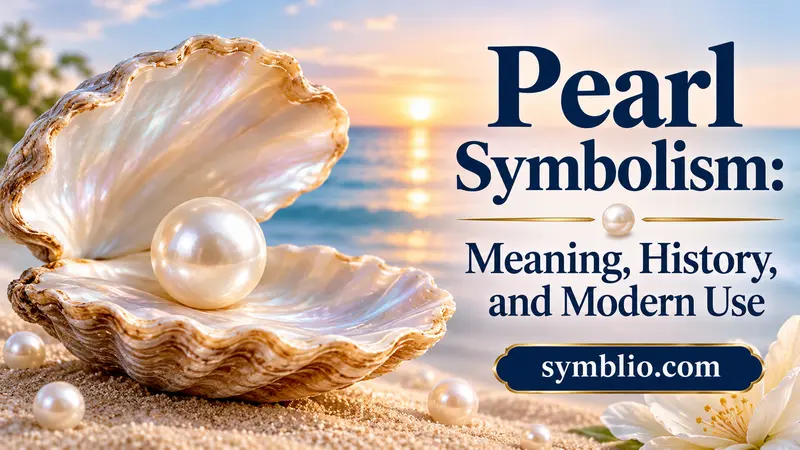
A pearl is an organic gemstone that develops inside certain mollusks, including oysters and mussels. It forms through the accumulation of nacre, a material made primarily of calcium carbonate and organic substances. Layers of nacre create the smooth surface and characteristic luster that distinguish pearls from many other gemstones.
Pearls appear in several colors, including white, cream, pink, silver, gold, gray, and black. Their shapes also vary. Some are nearly round, while others have irregular forms commonly described as baroque pearls.
These physical characteristics contribute to their symbolic interpretations.
White pearls are particularly associated with purity and simplicity. Their soft appearance suggests calmness rather than extravagance. Golden pearls communicate luxury and prosperity, while darker varieties often suggest individuality, sophistication, and mystery.
The natural process behind pearl formation also influences how people interpret them. A pearl develops gradually, making it a fitting representation of patience, time, and personal development.
The Core Symbolic Meanings of Pearls
Pearls carry several related meanings, but some associations appear more frequently than others.
Purity and innocence are among their most recognizable interpretations. Their light colors and smooth surfaces have historically connected them with cleanliness, sincerity, and modesty.
Wisdom and knowledge represent another important meaning. The expression “pearls of wisdom” describes valuable advice or insight, suggesting that something precious can develop through experience.
Elegance and refinement come from their long association with formal clothing, royal collections, and traditional jewelry. Pearls often communicate sophistication without requiring elaborate designs.
Patience and transformation relate to the gradual process through which pearls form. Their development provides a natural comparison to people who gain confidence and understanding through experience.
Finally, love and commitment appear in wedding jewelry, anniversary gifts, and family heirlooms. A pearl can represent affection that grows through shared experiences rather than dramatic gestures.
Together, these associations make pearls meaningful in both personal relationships and wider cultural settings.
Ancient Origins of Pearl Symbolism
Pearls have been valued for thousands of years. One of the earliest written references to natural pearls appears in Chinese historical records dating to approximately 2206 BCE. Their rarity and unusual appearance made them desirable objects among wealthy families and rulers.
Ancient communities developed different explanations for how pearls came into existence. Some traditions associated them with divine tears, morning dew, lightning, or heavenly gifts. These stories reflected the difficulty of understanding how a beautiful object could develop inside an ordinary shell.
In ancient Rome, pearls became particularly important markers of wealth. Members of the upper classes wore pearl jewelry to communicate financial influence and social position. Their popularity increased as trade brought valuable pearls from regions across Asia and the Middle East.
Pearls also appeared in ancient Indian, Chinese, Greek, and Roman traditions. Their meanings varied, but their rarity consistently contributed to their importance.
As trade expanded, pearls became more than decorative objects. They developed associations with royal authority, spiritual beliefs, prosperity, and personal prestige. gia+2
Pearl Symbolism in Ancient Chinese Culture
Chinese traditions give pearls an important place in mythology, art, and cultural imagery. They have frequently represented wisdom, prosperity, spiritual knowledge, and good fortune.
One recognizable image is the flaming pearl associated with dragons. In traditional Chinese artwork, dragons sometimes appear chasing or holding a luminous pearl. The image can represent wisdom, spiritual authority, prosperity, or the pursuit of something precious.
The pearl’s relationship with water also contributes to its cultural associations. Because pearls develop inside aquatic creatures, they became connected with the natural world and the mysteries of rivers and oceans.
Golden pearls and other valuable varieties can communicate prosperity and abundance in decorative settings.
It is important to recognize that Chinese pearl symbolism is not limited to one universal interpretation. The meaning depends on the artwork, historical period, and surrounding cultural imagery.
Nevertheless, the pearl remains a recognizable symbol of value and wisdom in Chinese artistic traditions. Western Australian Museum+1
Pearl Symbolism in Greek and Roman Traditions
Ancient Greek and Roman societies admired pearls for their rarity, beauty, and association with divine stories.
In Greek mythology, pearls sometimes appeared in traditions connected with Aphrodite, the goddess associated with love and beauty. Since Aphrodite was closely connected with the sea, pearls naturally became part of the imagery surrounding her.
Some ancient beliefs described pearls as heavenly tears or drops of morning dew. Such explanations connected their appearance with beauty, emotion, and the natural world.
Roman society developed another important association: wealth.
Pearls became desirable possessions among influential families, and wealthy Romans displayed them in necklaces, earrings, clothing, and other ornaments. Their high value made them recognizable signs of social distinction.
This history created an interesting contrast. Pearls could represent divine beauty and spiritual purity while also communicating material wealth and luxury.
Their symbolism therefore depended heavily on the setting in which people displayed them. American Gem Society+2
What Pearls Symbolize in the United States
In the United States, pearls commonly represent elegance, tradition, confidence, and refinement. Their place in American culture developed through jewelry trends, family customs, weddings, and changing ideas about personal style.
For generations, pearl necklaces have been associated with formal occasions and classic fashion. They became familiar accessories for professional clothing, special celebrations, and important family events.
Pearls also communicate a particular approach to style. Their appearance is recognizable without being excessively decorative, making them suitable for people who prefer simple and traditional accessories.
In modern American culture, younger fashion audiences have also adopted pearls in contemporary designs. Pearl earrings, layered necklaces, irregular pearl pendants, and mixed-metal accessories allow people to use traditional materials in more individual ways.
The meaning has consequently expanded beyond traditional femininity or formal dress. Pearls can represent personal confidence, creative expression, family history, or appreciation for classic design.
Their continued popularity reflects the ability of an older material to fit changing cultural preferences.
Pearl Symbolism in Christianity and Religious Traditions
Pearls appear in several religious traditions, including Christianity, where they can represent spiritual wisdom, purity, and the value of heavenly teachings.
One of the best-known biblical references appears in Matthew 13:45–46. Jesus describes the kingdom of heaven through the parable of a merchant searching for fine pearls. When the merchant discovers one exceptionally valuable pearl, he sells everything he owns to obtain it.
In this context, the pearl represents something of extraordinary spiritual value. The comparison emphasizes commitment and the importance of recognizing what matters most.
Another familiar biblical expression is “pearls of wisdom.” Although the expression has developed through wider English usage, it reflects the association between pearls and valuable knowledge.
Christian artwork has also used pearls in connection with purity and sacred imagery. Medieval European religious art sometimes depicted the Virgin Mary wearing pearl ornaments, reinforcing their association with modesty and spiritual cleanliness.
Other religious and cultural traditions interpret pearls differently. Their meanings should therefore be understood within the beliefs and practices of each community rather than treated as universal religious symbols.
Pearl Symbolism in Weddings and Romantic Relationships
Pearls have a long association with weddings, marriage, and romantic commitment.
Their white or cream colors fit traditional Western bridal fashion, where light colors have commonly represented innocence, celebration, and new beginnings.
Pearl jewelry also has a practical emotional connection with weddings. Brides may wear necklaces or earrings inherited from mothers, grandmothers, or other relatives. These pieces connect different generations and allow family memories to become part of a new celebration.
Some traditions describe pearls as symbols of tears and suggest that brides should avoid wearing them because they might bring sadness. However, this is a folk belief rather than an established rule, and many people happily choose pearls for their weddings.
In romantic relationships, pearls can represent affection, loyalty, and appreciation. Their gradual formation provides an appealing comparison to relationships that develop through patience and shared experiences.
Pearl anniversary jewelry is another way couples mark important milestones. The gift can communicate lasting commitment without relying on expensive or elaborate designs.
The Emotional and Psychological Meaning of Pearls
Pearls often communicate calmness, composure, and emotional maturity through their appearance and cultural associations.
Their smooth surfaces and gentle shine create a softer visual impression than gemstones known for intense sparkle. This quality makes them suitable symbols of restraint, balance, and quiet confidence.
For some people, pearls represent the idea that personal growth takes time. Their formation provides a natural comparison to learning from experiences, developing patience, and gaining a better understanding of oneself.
They can also carry sentimental meanings.
A necklace inherited from a family member might represent remembrance and continuity. A pair of pearl earrings received as a graduation gift may remind someone of an important achievement. A bracelet purchased during a personal milestone might symbolize independence or a new chapter.
These emotional interpretations are not fixed psychological rules. Individual experiences, family traditions, and personal preferences influence what pearls mean to different people.
Their appeal often comes from this flexibility: the same pearl can communicate tradition to one person and individuality to another.
Different Pearl Colors and Their Symbolic Meanings
Pearl colors influence how people interpret their appearance. Although some associations come from established cultural traditions, others reflect modern fashion preferences and common color symbolism.
| Pearl Color | Common Symbolic Meaning | Typical Associations |
|---|---|---|
| White | Purity and sincerity | Weddings, innocence, simplicity |
| Black | Individuality and sophistication | Confidence, mystery, modern fashion |
| Pink | Affection and tenderness | Romance, friendship, appreciation |
| Gold | Prosperity and success | Luxury, abundance, achievement |
| Silver or Gray | Balance and composure | Subtle elegance, maturity, restraint |
White pearls remain the most recognizable variety in traditional American jewelry. Their connection with weddings and formal occasions makes them familiar symbols of elegance and purity.
Black pearls offer a different visual impression. Their darker surfaces often appeal to people who prefer distinctive jewelry and contemporary styling.
Pink pearls can communicate affection and warmth, particularly when included in gifts for friends or family members.
Golden pearls frequently appear in luxury jewelry because of their unusual color and association with precious materials. Their appearance naturally supports interpretations connected with prosperity and achievement.
These interpretations are suggestions rather than universal meanings. A pearl’s symbolism ultimately depends on how someone chooses to wear, display, or appreciate it.
Why Pearls Became Symbols of Wealth and Social Status
For much of history, natural pearls were difficult to obtain. Unlike many gemstones that can be extracted from mines, natural pearls required finding the right mollusk in freshwater or saltwater environments.
The rarity of high-quality natural pearls made them expensive possessions. Royal families, wealthy merchants, and influential individuals collected them as valuable jewelry and signs of social standing.
European royal fashion helped strengthen this association. During the Renaissance, pearls appeared in elaborate clothing, portraits, crowns, and jewelry collections. Their presence in royal dress communicated wealth and authority.
Pearls also became important in international trade. European exploration of the Americas introduced valuable natural pearl sources to European markets, increasing demand and competition.
Their accessibility changed significantly during the twentieth century. Japanese advances in cultured pearl production made pearl jewelry available to a much wider market. Cultured pearls developed commercially during the early twentieth century and became increasingly important during the 1920s.
This change transformed their cultural position. Pearls remained associated with luxury, but people no longer needed royal wealth to own a pearl necklace. gia+2
Pearls in Fashion, Jewelry, and Modern Personal Style
Pearls remain recognizable in modern fashion because they work with both traditional and contemporary designs.
Traditional pearl strands continue to appear at weddings, formal dinners, professional events, and family celebrations. Their familiar appearance makes them an enduring choice for people who appreciate classic accessories.
Contemporary designers have also introduced less traditional pearl jewelry. Baroque pearls, with their irregular shapes, have become popular in pendants, earrings, rings, and statement necklaces.
These designs communicate a different interpretation of elegance. Instead of emphasizing perfect symmetry, they celebrate natural variation and individuality.
Pearls also appear in men’s fashion. Brooches, necklaces, bracelets, and pearl-accented accessories have helped expand their use beyond older gender expectations.
Social media and contemporary fashion photography have further encouraged experimentation with pearl styling. People combine pearls with casual clothing, denim, metallic accessories, and modern streetwear.
The material remains traditional, but the ways people wear it continue to change.
Pearl Tattoos and Their Personal Symbolism
Pearl tattoos are less common than flower or animal designs, but they offer several possibilities for personal expression.
A pearl tattoo may represent wisdom, patience, emotional development, or appreciation for natural beauty. Some people choose the design because they connect with the idea of becoming more confident through life experiences.
An open oyster containing a pearl can communicate the discovery of something valuable within oneself. A single pearl may represent simplicity, personal worth, or an important memory.
Other designs combine pearls with shells, waves, flowers, or celestial imagery. These additions can introduce associations with the ocean, femininity, renewal, or spirituality.
The color and surrounding elements also influence interpretation. A white pearl may emphasize purity, while a darker design can communicate individuality and personal strength.
As with any tattoo, the meaning belongs primarily to the person choosing it. There is no single accepted interpretation that applies to everyone.
Pearls in Art, Literature, and Everyday Expressions
Pearls have influenced artistic language and creative expression for centuries.
One familiar English expression is “pearls of wisdom.” It describes advice or knowledge considered especially valuable. The comparison works because pearls have historically represented rare and precious possessions.
The phrase “pearls before swine,” which comes from Matthew 7:6, refers to offering something valuable to people who cannot appreciate it. In this expression, the pearl represents something worth protecting or respecting.
Pearls also appear in literature as images of beauty, innocence, loss, and spiritual value. Their association with tears has made them particularly suitable for stories involving grief and remembrance.
A notable example is the medieval English poem Pearl, which explores grief following the loss of a young child. The pearl imagery connects the child’s value with the speaker’s experience of mourning and spiritual consolation.
In visual art, pearl jewelry has appeared in royal portraits, religious paintings, and modern photography. The gemstone can suggest wealth in one image and quiet elegance in another.
Its artistic meaning depends on the surrounding subject and the message an artist wants to communicate. Part Three • V&A Blog+2
Pearl Symbolism in Mourning and Family Heirlooms
Pearls have an important place in historical mourning traditions, particularly during the Victorian period.
During the nineteenth century, jewelry often carried emotional messages connected with remembrance and grief. Small seed pearls were sometimes included in mourning jewelry because their appearance suggested tears.
Some pieces combined seed pearls with dark materials such as jet or black stones. The contrast between pale pearls and dark settings allowed jewelry makers to create ornaments that expressed both affection and sorrow.
Pearls also appeared in sentimental gifts exchanged between family members. Their value and durability made them suitable objects to preserve and pass down.
In modern American families, inherited pearl necklaces and earrings often carry similar emotional importance. A piece may remind someone of a grandparent, a wedding, or a significant family occasion.
The meaning does not necessarily come from the gemstone itself. It develops through the memories associated with the person who owned it and the experiences surrounding its use.
For this reason, an ordinary-looking pearl necklace can become more meaningful than a much more expensive piece of jewelry. Cooper Hewitt, Smithsonian Design Museum+2
Common Misunderstandings About Pearl Symbolism
Pearls have accumulated many cultural interpretations, but several popular beliefs can create confusion.
One misunderstanding is that pearls always represent purity or femininity. These associations are common in Western jewelry traditions, but historical records show that men, including kings and other powerful figures, also wore pearls.
Another misconception is that all pearls have the same symbolic meaning. Color, cultural background, personal experience, and design can change their interpretation considerably.
Some people also believe pearls bring sadness because of their association with tears. This idea appears in certain folk traditions, but it is not a universal cultural belief or an established fact about pearls.
The distinction between natural and cultured pearls can also cause confusion. Cultured pearls are genuine pearls that develop inside mollusks through human-assisted cultivation. They are not simply imitation gemstones.
Finally, pearl symbolism should not be treated as a scientific prediction of someone’s personality or future. A pearl can represent patience or wisdom without guaranteeing that its owner possesses those qualities.
Understanding these differences helps separate historical traditions from modern personal interpretations.
How Pearl Symbolism Has Changed Over Time
The meaning of pearls has evolved alongside changes in trade, technology, religion, and fashion.
In ancient societies, pearls were rare objects associated with wealth, divine stories, and spiritual value. Their limited availability made them especially important to royal families and wealthy individuals.
During the medieval period, European religious traditions strengthened associations between pearls and purity, sacred knowledge, and spiritual beauty.
The Renaissance brought another major development. Pearls became prominent in royal clothing and portraiture, making them recognizable signs of power and social distinction.
Victorian culture introduced additional sentimental meanings. Pearls appeared in wedding jewelry and mourning ornaments, connecting them with marriage, affection, remembrance, and grief.
The development of cultured pearl production during the twentieth century changed their accessibility. More people could own pearl jewelry, allowing the gemstone to become part of everyday fashion rather than remaining an exclusive luxury.
Today, pearls represent a wider range of ideas. They can communicate elegance, confidence, individuality, family heritage, or personal growth.
Their history demonstrates how a natural object can acquire new meanings as societies change.
FAQs
A pearl most commonly represents purity, wisdom, elegance, and personal growth. Its rarity and gradual formation have also connected it with wealth, patience, and valuable life experiences.
Wearing a pearl necklace often communicates sophistication, confidence, and appreciation for classic fashion. It can also represent family heritage, romantic affection, or a meaningful personal milestone.
Some cultural traditions associate pearls with protection, prosperity, and good fortune. These interpretations are based on folklore and cultural beliefs rather than scientifically established effects.
Black pearls commonly represent individuality, sophistication, and distinctive personal style. Their unusual colors and striking appearance make them popular among people who prefer less traditional jewelry.
Pearls became traditional bridal accessories because their light colors fit Western associations with purity, innocence, and new beginnings. They also make meaningful family heirlooms that brides can inherit from previous generations.
A pearl tattoo can symbolize wisdom, patience, personal development, and self-worth. Designs featuring shells or ocean imagery may also communicate a personal connection with nature and transformation.
Pearls have represented tears and mourning in some historical traditions, particularly in Victorian jewelry. However, they also symbolize happiness, love, purity, and celebration, so sadness is not their universal meaning.
Conclusion
Pearls represent purity, wisdom, elegance, patience, and personal growth. Their history connects them with ancient royalty, religious traditions, wedding customs, artistic expression, and modern fashion. Although their meanings differ across cultures, their rarity and gradual natural formation have consistently made them valuable objects of admiration.
In contemporary American culture, pearl symbolism extends beyond traditional jewelry. Pearls can represent confidence, family heritage, emotional maturity, and individual style. Whether worn at a wedding, inherited from a relative, included in a personal tattoo, or chosen as an everyday accessory, they can carry meanings that extend beyond their appearance.
Ultimately, a pearl reminds us that something valuable can develop gradually, acquire meaning through experience, and remain significant long after its original creation.