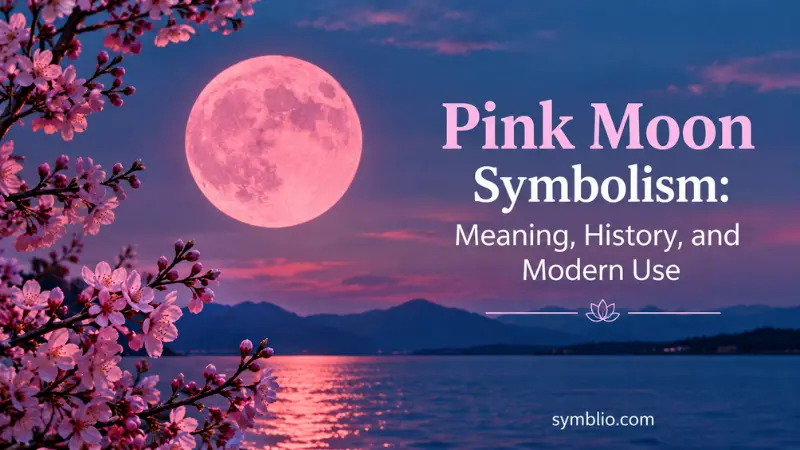
The Pink Moon is the traditional name for April’s full moon, which appears as much of the United States begins to emerge from winter. Pink Moon symbolism commonly represents renewal, fresh beginnings, hope, and the return of life to the natural world. These meanings come mainly from the changing landscape of spring rather than from any unusual color or appearance of the Moon itself.
For generations, people have watched the Moon to mark time, recognize seasonal changes, and organize agricultural activities. April’s full moon became part of this tradition because it coincides with the emergence of new plants, blooming flowers, and changing weather.
Today, the Pink Moon appears in American nature photography, seasonal celebrations, spiritual reflection, astrology, and social media. While some people view it as a reminder to embrace change, others simply appreciate the opportunity to observe the night sky. Understanding its symbolism requires looking at its historical origins alongside the personal meanings people assign to it today.
Quick Answer: What Does the Pink Moon Symbolize?
Pink Moon symbolism most commonly represents renewal, new beginnings, growth, hope, and the arrival of spring in modern American culture. Historically, its name refers to the early blooming of pink wildflowers, while related seasonal traditions connect April’s full moon with planting, changing weather, and the return of life after winter.
TL;DR
- Renewal: The Pink Moon marks nature’s return to active growth.
- New beginnings: Spring encourages people to reconsider goals and welcome change.
- Historical roots: Its name refers to the pink moss phlox wildflower.
- American traditions: Traditional moon names connect lunar cycles with nature and agriculture.
- Spiritual reflection: Some people use the full moon as a personal milestone.
- Modern culture: Photography, jewelry, art, and social media celebrate its seasonal associations.
What Is the Pink Moon?
The Pink Moon is the traditional name for April’s full moon in a widely used American naming system. Like other full moons, it occurs when the Moon’s Earth-facing side appears fully illuminated by sunlight.
Despite its name, the Pink Moon does not normally appear pink. Instead, its name refers to a flowering plant associated with early spring. Depending on atmospheric conditions and its position above the horizon, the Moon may appear golden, orange, or pale yellow. However, these color effects are not unique to April.
The event coincides with seasonal changes across the Northern Hemisphere. In many parts of the United States, April brings budding trees, emerging flowers, longer daylight hours, and gradually warming temperatures. Consequently, people often connect the Pink Moon with renewal and the beginning of a new phase.
Its symbolism therefore reflects both the lunar cycle and the natural changes that accompany spring.
The Origins of the Pink Moon’s Name
The name Pink Moon is commonly associated with Phlox subulata, a low-growing North American wildflower also known as creeping phlox or moss pink. Its small flowers often create bright pink patches across rocky ground, gardens, and open landscapes in early spring.
The timing of these flowers helps explain the name. Their seasonal appearance coincides with April’s full moon, connecting the lunar calendar with a recognizable sign of spring.
Traditional moon names often reflected natural events that people observed throughout the year. For example, communities connected lunar phases with planting seasons, animal behavior, food availability, and changes in the weather.
As a result, April’s full moon became associated with the return of color and plant life. Over time, the name spread through American calendars and publications, gaining additional cultural and personal meanings.
Importantly, the flower inspired the name; the Moon itself does not produce pink light or undergo a special color transformation during this phase.
Renewal and the Return of Life
Renewal is one of the most recognizable meanings associated with the Pink Moon. During April, many landscapes begin to look noticeably different from their winter appearance.
Bare branches develop buds, dormant plants produce new growth, and flowers begin to open. These changes illustrate how a period of apparent inactivity can eventually give way to visible development.
People often apply the same idea to their own lives. For instance, someone adjusting to a new environment, beginning a creative project, or working toward a personal goal might view the Pink Moon as a reminder that change takes time.
Rather than suggesting that the Moon causes personal transformation, this interpretation uses the changing season as a metaphor for progress.
In American culture, spring is closely associated with gardening, spring cleaning, outdoor activities, and fresh starts. Therefore, the Pink Moon fits naturally into the broader seasonal idea of renewal.
New Beginnings and Personal Growth
The Pink Moon also represents new beginnings. As spring replaces the colder months, people often find more opportunities to spend time outdoors, explore new interests, and reconsider their plans.
Its symbolism can reflect the decision to learn a skill, develop a healthier routine, repair a relationship, or approach a familiar problem differently.
However, personal growth does not always require dramatic changes. It may involve becoming more patient, improving communication, or making steady progress toward a long-term goal. In this context, the Pink Moon can serve as a symbolic marker for small but meaningful decisions.
Some people use the full moon as an opportunity to reflect on what they want to continue and what they hope to change. Others simply appreciate the seasonal reminder without following a specific ritual.
Ultimately, the Pink Moon represents possibility. As the natural world enters another phase of growth, it offers a familiar image of human development and the opportunities that come with change.
Hope, Optimism, and Emotional Renewal
The arrival of spring can influence how people experience their surroundings. Longer daylight hours, emerging greenery, and opportunities to spend time outdoors may create a sense of anticipation after winter.
For this reason, the Pink Moon often symbolizes hope and optimism. Its appearance can remind people that seasons change and that present circumstances do not necessarily remain the same.
This association may feel especially meaningful to people who find winter isolating or difficult. The return of flowers and warmer weather provides visible evidence that the environment has entered a different season.
Nevertheless, these associations do not guarantee a particular emotional response. A full moon cannot automatically improve someone’s mood, solve personal problems, or eliminate stress. People experience seasonal changes differently, and spring can bring challenges alongside its pleasures.
As a symbol, the Pink Moon offers a simple reminder that circumstances can change over time. It encourages hope without suggesting that every difficulty disappears overnight.
Pink Moon Symbolism in the United States
In the United States, the Pink Moon connects astronomy, seasonal customs, nature appreciation, and popular spirituality.
Its name appears in moon calendars, gardening content, photography, weather discussions, and seasonal publications. Many Americans encounter it through news articles or social media posts announcing April’s full moon.
The event also fits into the broader American interest in seasonal milestones. For example, spring cleaning, garden preparation, and outdoor recreation all reflect the transition toward warmer weather, although these activities have different historical origins.
The Pink Moon provides a shared point of reference for these seasonal changes. Families might observe it from their backyards, photographers might capture it above a landscape, and astronomy enthusiasts might use it to explain lunar phases.
Meanwhile, people interested in personal reflection may associate it with starting a new chapter or reconsidering their priorities.
There is no single interpretation that every American follows. Instead, its cultural significance comes from its accessibility: anyone with a clear view of the sky can observe the Moon without belonging to a particular religious or spiritual tradition.
Indigenous Traditions and Cultural Context
Indigenous peoples across North America have long used lunar cycles to organize time and recognize seasonal events. However, their traditions differ among nations, languages, regions, and historical records.
Some recorded moon names describe thawing ice, emerging plants, returning birds, or fish moving through waterways. These names reflect the importance of local environments and the seasonal changes that communities observed.
Popular American moon calendars frequently associate the Pink Moon name with Algonquian traditions. However, it would be inaccurate to claim that all Indigenous peoples used this name or assigned it one universal meaning.
Many familiar lists of full-moon names circulated through European-American publications. In some cases, these accounts grouped different Indigenous traditions together or presented translated names without enough information about their specific origins.
A respectful understanding recognizes that Indigenous lunar knowledge represents many distinct cultural traditions. Therefore, readers should interpret individual moon names within the communities and environments from which they originated.
This history also reveals an important point: people have long used observations of the natural world to organize time and understand seasonal change.
The Pink Moon and Christian Easter Traditions
April’s full moon can also relate to the Christian calendar through its connection with Easter.
The term Paschal Moon refers to the ecclesiastical full moon used to determine the date of Easter in Western Christianity. Easter falls on the Sunday following the relevant ecclesiastical full moon, according to established church calendar rules.
However, the Paschal Moon and the Pink Moon do not always refer to the same event. Depending on the year, the ecclesiastical full moon associated with Easter may fall in March or April.
For Christians, Easter celebrates the resurrection of Jesus Christ and carries themes of hope, renewal, and new life. The arrival of spring can complement these themes through seasonal imagery, including new growth and flowering plants.
Nevertheless, the Pink Moon itself does not have one universal meaning within Christianity. Its connection with Easter depends on the calendar, while its name comes from a separate seasonal naming tradition.
Understanding this distinction helps readers separate the astronomical event, the traditional moon name, and the religious observance.
Pink Moon Folklore and Agricultural Traditions
Before modern calendars and weather forecasts became widely available, people often used lunar cycles to track the passing months. A full moon provided an easily recognizable marker, particularly for communities that depended on farming, fishing, or gathering food.
April’s traditional moon names often reflect the practical signs of spring. Emerging plants, thawing waterways, returning fish, and the beginning of planting activities helped people recognize seasonal changes.
Additionally, some European and American folk traditions connected lunar phases with gardening, weather predictions, and crop production. These beliefs varied considerably and developed through local customs rather than one shared system.
Such traditions reveal how people interpreted their surroundings and used recurring natural events to organize everyday life.
However, folklore should not replace scientific evidence. A full moon cannot reliably predict rainfall, guarantee a successful harvest, or identify the ideal planting date for every region. Local climate, soil conditions, frost risk, and plant requirements provide more useful guidance for gardeners.
The agricultural symbolism of the Pink Moon therefore reflects the relationship between lunar timekeeping and the seasonal rhythms of rural life.
What the Pink Moon Means in Other Cultures
The meanings attached to a full moon depend on cultural traditions, local environments, and religious beliefs. Consequently, April’s moon does not carry one universal symbolic interpretation.
In several European naming traditions, seasonal moon names refer to budding plants, new shoots, eggs, or growing vegetation. Although these names differ from the American Pink Moon, they share a connection with the natural changes of spring.
Similarly, some East Asian cultural traditions associate spring flowers such as peonies with prosperity, honor, beauty, or good fortune. These floral meanings do not automatically apply to April’s full moon. Instead, they demonstrate how plants and seasonal imagery can shape cultural symbolism.
In Hindu, Buddhist, and other religious traditions, lunar dates can hold significance within particular calendars and observances. However, their meanings depend on the festival, lunar calculation, and community involved.
These examples reveal a broader pattern: communities use recurring celestial events and seasonal changes to mark time and express cultural values. Nevertheless, each tradition deserves its own historical and cultural context.
Emotional and Psychological Associations
The Pink Moon can represent transition because it coincides with visible changes in the environment. When people notice a seasonal shift, they may use it as an opportunity to reflect on their experiences and priorities.
Several emotional associations commonly accompany this interpretation.
Anticipation: The changing landscape can suggest that something new is approaching.
Reassurance: Seasonal cycles remind people that change is a normal part of life.
Reflection: Observing a familiar natural event can encourage people to pause and consider their priorities.
These associations arise from personal interpretation rather than a proven psychological effect unique to the Pink Moon.
For some people, watching a full moon creates a sense of perspective because it draws attention away from daily routines and toward the wider natural world. Others appreciate the event mainly for its beauty or astronomical interest.
Both responses are valid. Symbolism does not require everyone to feel the same way about an event.
Ultimately, the Pink Moon becomes personally meaningful when someone connects it with an experience, memory, intention, or period of change.
Pink Moon Symbolism in Tattoos, Jewelry, and Art
The Pink Moon’s associations with renewal and new beginnings make it a suitable subject for personal art and design.
Tattoos: A moon combined with flowers may represent personal growth, a new chapter, or a connection with nature. Adding a date or a particular flower can make the design more personal, although moon tattoos carry many meanings beyond April’s full moon.
Jewelry: Moon pendants, pink gemstones, and floral motifs can express an appreciation for nature, seasonal change, or celestial imagery. However, the wearer’s intention determines the personal meaning rather than a fixed traditional rule.
Art and home decor: Illustrations that combine a full moon with spring flowers often evoke calm, renewal, and seasonal change. Such artwork appeals to people who enjoy botanical themes, astronomy, or nature-inspired interiors.
These designs represent modern interpretations rather than proof that the Pink Moon has always carried the same personal meaning. For example, one person might choose a moon-and-flower design to celebrate spring, while another might use it to commemorate an important life event.
Pink Moon Imagery in Fashion and Digital Culture
Online, the Pink Moon often appears in photographs, pastel illustrations, floral graphics, and celestial designs. Its name lends itself to visual compositions that combine a moonlit sky with shades of pink, purple, and soft blue.
During April, social media users may share photographs of the Moon, celebrate the arrival of spring, or encourage followers to reflect on personal goals. Some posts also connect the full moon with astrology or spiritual practices.
However, these interpretations belong to contemporary popular culture and do not necessarily represent historical traditions or widely shared beliefs.
Fashion designers and artists may incorporate moon motifs into clothing, accessories, stationery, and seasonal collections. Depending on the surrounding imagery, a pink lunar design can suggest gentleness, creativity, romance, or renewal.
Meanwhile, digital platforms allow people to share moon names and images across geographical boundaries. Even someone who has never observed the full moon outdoors may encounter its image online and associate it with spring.
As a result, the Pink Moon has become more than a calendar label. It also serves as a recognizable seasonal image in modern visual culture.
Common Misunderstandings About the Pink Moon
Several misconceptions can obscure the Pink Moon’s history and symbolism.
The Moon turns pink. The name refers to the early spring bloom of moss pink, not a special change in lunar color. Although atmospheric conditions can make the Moon appear warmer near the horizon, this effect is not unique to April.
The Pink Moon has one universal spiritual meaning. Renewal and new beginnings are common modern interpretations, but people and communities understand lunar events through different cultural, religious, and personal perspectives.
Every Pink Moon has the same religious significance. April’s full moon may coincide with the Paschal Moon used to calculate Western Christian Easter. However, the two terms do not always refer to the same event.
The Pink Moon determines a person’s future. Astrological and spiritual communities may attach personal interpretations to the full moon, but scientific evidence does not establish that it determines individual outcomes or guarantees changes in fortune.
All Indigenous communities share the same moon names. Indigenous lunar traditions vary across nations, languages, and regions. Popular moon-name lists cannot represent the full range of these traditions.
By distinguishing historical information from modern beliefs, readers can appreciate the Pink Moon without confusing seasonal folklore, personal spirituality, astronomy, and documented cultural practices.
How Pink Moon Symbolism Has Evolved
The Pink Moon’s meaning has expanded as people’s ways of observing and discussing the Moon have changed.
In communities that relied on seasonal observation, lunar names helped organize the year. April’s full moon became associated with the natural signs of spring, including flowering plants and changes in local wildlife.
Later, almanacs and popular publications introduced familiar moon names to broader American audiences. The Pink Moon’s connection with spring flowers made it easy to recognize and remember.
Today, the original seasonal association remains, but additional interpretations have developed. Modern writing and visual art frequently connect the Pink Moon with renewal, personal growth, reflection, and fresh beginnings.
Social media has further encouraged people to treat the full moon as an occasion for photography, seasonal celebration, and personal reflection. Meanwhile, astrology and contemporary spiritual practices have introduced other interpretations that differ from the name’s historical origin.
Consequently, the Pink Moon now carries several layers of meaning. It represents an astronomical event, a traditional seasonal name, a record of human timekeeping, and a modern image of change.
Pink Moon Symbolism at a Glance
| Context | Common Meaning | Main Association | Important Distinction |
|---|---|---|---|
| Nature and seasons | Renewal and growth | Early spring flowers and new plant life | The Moon itself is not normally pink |
| Personal reflection | New beginnings | Goals, transitions, and fresh starts | A personal interpretation, not a universal belief |
| American folklore | Seasonal change | Traditional moon names and rural calendars | Customs vary by region and source |
| Christianity | Resurrection and hope | Easter and the Paschal Moon | The Pink Moon and Paschal Moon are not always identical |
| Tattoos and art | Transformation and nature | Floral and lunar imagery | Meaning depends on the creator or wearer |
| Social media | Seasonal celebration | Photography, reflection, and spring imagery | Modern trends are not necessarily historical traditions |
FAQs
Some modern spiritual interpretations associate the Pink Moon with optimism, opportunity, and positive change. However, there is no universal historical rule that it brings good luck or guarantees favorable outcomes.
A Pink Moon tattoo may represent renewal, personal growth, a new beginning, or an appreciation for nature. Its meaning can become more specific when combined with flowers, stars, dates, or other personal imagery.
The Pink Moon is not assigned one specific meaning throughout the Bible. April’s full moon can coincide with the Paschal Moon used to determine the date of Western Christian Easter, a celebration centered on the resurrection of Jesus Christ.
The name is linked to moss pink, a wildflower that blooms in early spring across parts of eastern North America. Its seasonal appearance helped connect April’s full moon with flowering plants, renewed growth, and the transition away from winter.
People may find the full moon emotionally meaningful because it provides an opportunity to pause, observe nature, or reflect on personal changes. However, there is no reliable evidence that the Pink Moon has a unique emotional effect on everyone.
Not necessarily. The Pink Moon is the traditional name for April’s full moon, while the Paschal Moon is the ecclesiastical full moon used in calculating Western Christian Easter. Depending on the calendar year, the Paschal Moon may occur in March or April.
The Pink Moon is named according to the month in which the full moon occurs, whereas a supermoon is a term commonly used for a full moon occurring near the Moon’s closest approach to Earth. An April full moon can meet the criteria for a supermoon in some years, but the two terms describe different things.
Conclusion
The Pink Moon is best understood as a symbol of spring renewal, new beginnings, hope, and natural growth. Its name originated in the seasonal appearance of moss pink wildflowers, while its wider cultural history connects lunar observation with agriculture, religious calendars, and the changing environment.
Today, pink moon symbolism extends into personal reflection, art, tattoos, jewelry, photography, and modern spiritual practices. These interpretations can be meaningful without being treated as universal truths or supernatural promises.
Ultimately, the Pink Moon offers a simple reminder of how people connect the night sky with the world around them. Whether observed as an astronomical event, appreciated as a seasonal tradition, or used as a personal symbol, it invites us to notice change as it unfolds.