March symbolism is closely connected to new beginnings, growth, courage, and the transition from winter to spring. In the United States, March often represents a fresh start as daylight increases, flowers begin to bloom, and warmer weather gradually arrives.
March also has a long historical background. The month takes its name from Mars, the Roman god of war, and was once the first month of the Roman calendar. This connection gives March additional associations with strength, action, and determination.
Today, March carries several meanings shaped by nature, cultural traditions, and American holidays. From the first signs of spring to Women’s History Month and St. Patrick’s Day, the month represents change, celebration, and the opportunity to move forward.
Quick Answer
March commonly symbolizes renewal, new beginnings, growth, and courage in modern American culture. Historically, it was associated with Mars, the Roman god of war, and the beginning of the agricultural and military year in ancient Rome.
TL;DR
- March represents renewal and fresh beginnings.
- Its Roman origins connect it with courage and action.
- Spring flowers symbolize hope and new growth.
- Women’s History Month celebrates women’s achievements.
- St. Patrick’s Day represents Irish heritage and celebration.
- Changing weather reflects transition and adaptation.
What March Symbolizes in Modern Culture
March represents a period of change and renewed possibility. As winter begins to fade in many parts of the United States, people often associate the month with fresh plans, personal growth, and a more active lifestyle.
The arrival of spring makes March a natural symbol of hope. Trees begin to develop new buds, flowers emerge from the soil, and longer days create more opportunities to spend time outdoors.
For many people, March also represents determination. It arrives at a point when winter may still be present, but signs of change are becoming visible. This makes the month a reminder that progress can begin before circumstances are completely favorable.
March can also carry personal meanings. Someone beginning a new job, returning to an important goal, or celebrating a birthday may associate the month with a new chapter in life.
The Historical Origins of March
March gets its name from Martius, the Latin name associated with Mars, the Roman god of war. In the early Roman calendar, March was the first month of the year.
Mars represented military strength, protection, and the ability to defend the community. As winter ended, conditions became more suitable for military campaigns and outdoor activities, making March an important time for preparation and renewed action.
The month also held religious significance in ancient Rome. Ceremonies connected with Mars reflected the importance of protecting the city and preparing for the coming year.
Although modern March is more closely associated with spring than warfare, its historical roots help explain its connection with courage, ambition, and taking action.
The calendar later changed, placing March in the third position of the year. However, the month’s name and historical associations remained.
March as a Symbol of Spring and Renewal
Spring is one of the most recognizable meanings of March in the Northern Hemisphere. The month often brings warmer temperatures, new plant growth, and the return of familiar seasonal activities.
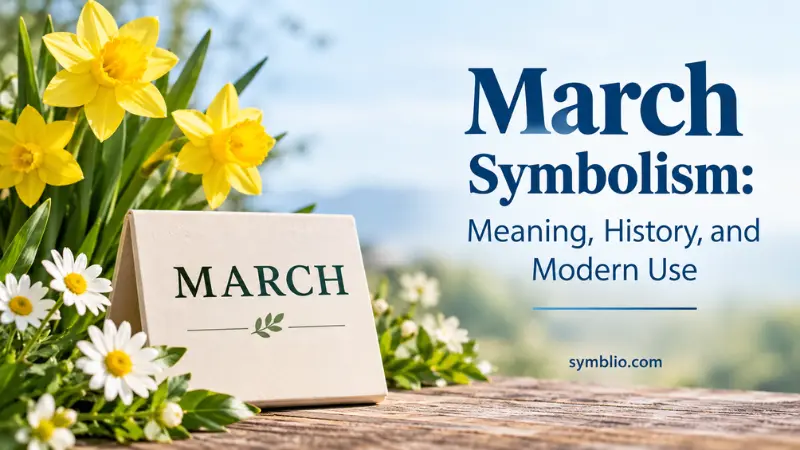
Daffodils, budding branches, and fresh green leaves are common images associated with this transition. They suggest that a period of dormancy is ending and that new growth has begun.
This seasonal change makes March a symbol of renewal. People may connect it with starting a garden, improving daily routines, or making plans for the future.
Spring does not arrive at the same time everywhere. Some parts of the United States may still experience snow and freezing temperatures during March, while warmer regions may already have flowering trees.
For this reason, March can represent hope during a gradual transition rather than an immediate change. It reminds people that growth often begins quietly before its results become obvious.
March Symbolism in the United States
In American culture, March has several meanings shaped by seasonal changes, holidays, and public observances.
The approach of spring connects the month with optimism, outdoor activities, gardening, and fresh beginnings. Families may begin preparing their yards, travelers may plan spring-break trips, and communities may organize seasonal events.
March is also recognized as Women’s History Month. This observance celebrates women’s contributions to American history, culture, science, education, and public life. It adds associations with achievement, leadership, perseverance, and recognition.
St. Patrick’s Day, celebrated on March 17, brings another cultural dimension. Green clothing, shamrocks, parades, and community gatherings connect the holiday with Irish heritage and celebration.
These traditions show that March is more than a seasonal marker. It is also a month in which Americans recognize historical contributions, celebrate cultural identity, and prepare for the changing season.
March and the Symbolism of Courage
March’s historical connection with Mars gives it an association with courage and determination. In modern interpretations, these qualities can represent the willingness to face challenges and take meaningful action.
Courage does not always involve dramatic achievements. It may mean trying something unfamiliar, speaking honestly, continuing an important project, or making a difficult decision.
March fits this symbolism because it represents movement after a period of relative stillness. Even when winter weather continues, the season is gradually changing.
For someone working toward a personal goal, March can serve as a reminder to remain consistent and take practical steps forward.
Its association with courage is not necessarily about conflict or competition. Instead, it can represent self-discipline, confidence, and the ability to act despite uncertainty.
The March Equinox and Its Meaning
The March equinox usually occurs around March 20 in the United States. It marks the beginning of astronomical spring in the Northern Hemisphere.
During the equinox, the Sun crosses the celestial equator, and daylight and darkness are approximately equal in length around the world.
Symbolically, the equinox is often associated with balance, transition, and renewal. The nearly equal periods of day and night can serve as a metaphor for balancing personal responsibilities, work, rest, and relationships.
The equinox also marks a seasonal turning point. After it occurs, daylight continues to increase in the Northern Hemisphere until the June solstice.
Some people incorporate the equinox into personal reflection or seasonal traditions. These interpretations differ from the astronomical explanation and depend on individual beliefs and cultural practices.
Women’s History Month and March Symbolism
Women’s History Month gives March a special place in American public life. It recognizes women’s achievements and encourages greater understanding of their roles in shaping society.
The observance developed from a local Women’s History Week celebration in Santa Rosa, California, in 1978. National recognition followed, and Congress designated March as Women’s History Month in 1987.
Schools, libraries, museums, and community organizations often use the month to highlight women who have contributed to education, science, politics, literature, civil rights, and other fields.
This observance connects March with leadership, progress, equal opportunity, and recognition. It also encourages people to learn about individuals whose achievements may have received limited attention in traditional historical accounts.
Through Women’s History Month, March demonstrates how a calendar month can acquire cultural meaning through shared public observances and continuing efforts to recognize historical contributions.
St. Patrick’s Day and the Meaning of Green
St. Patrick’s Day is celebrated on March 17 and is closely associated with Irish heritage. In the United States, the holiday is marked by parades, green clothing, shamrock decorations, and community celebrations.
Green is the most recognizable color connected with the modern holiday. Shamrocks are also widely used because of their association with Irish tradition and the history of St. Patrick.
For Irish American communities, the celebration can express family heritage, cultural pride, and a sense of belonging. Other people participate because they enjoy the holiday’s festive atmosphere.
St. Patrick’s Day adds a social and celebratory meaning to March. While spring symbolism emphasizes renewal, the holiday highlights cultural identity, community, and the preservation of traditions.
The Emotional Meaning of March
March can represent anticipation, optimism, uncertainty, and the desire for change. These associations often come from the contrast between winter conditions and the approaching spring season.
Some people feel more motivated as daylight increases and outdoor activities become easier. Others may find the unpredictable weather frustrating, particularly when warmer days alternate with cold temperatures.
The month can also encourage reflection. People who established goals earlier in the year may use March to review their progress and make adjustments.
March does not automatically improve someone’s mood or motivation. Personal experiences, local weather, and individual circumstances influence how the month feels.
Its emotional symbolism is best understood as an opportunity to consider what is changing and how to respond. It can represent hope without suggesting that every transition will be easy.
March Birth Flowers and Their Symbolism
Daffodils and jonquils are commonly recognized as March birth flowers. Their appearance during the transition toward spring connects them with hope, renewal, and new beginnings.
Daffodils are especially associated with fresh opportunities because they often bloom when winter begins to give way to warmer weather. Their bright flowers can represent optimism and the return of life to the landscape.
Jonquils are also associated with spring and are sometimes linked with affection and renewed hope. Although people sometimes use the names interchangeably, jonquils belong to a particular group of narcissus plants.
March birth flowers are popular in birthday bouquets, greeting cards, and seasonal decorations. They can celebrate a birthday, mark a new beginning, or express encouragement during a period of change.
Their symbolism is not fixed, however. A flower may carry a personal meaning based on a memory, relationship, or family tradition.
March Weather and the Meaning of Change
March weather can shift quickly in many parts of the United States. Snow, rain, sunshine, wind, and warmer temperatures may occur within a short period.
These changing conditions make the month a natural symbol of transition and adaptation. They reflect the experience of moving from one stage to another without knowing exactly when conditions will settle.
Rain may suggest nourishment and growth, while sunshine can represent warmth and optimism. Late snow may remind people that progress does not always mean every challenge has disappeared.
Such interpretations are symbolic rather than universal. A rainy day may be welcome to a gardener but disappointing to someone planning an outdoor celebration.
March therefore represents the ability to adjust to changing circumstances. Its weather offers a familiar reminder that change can be unpredictable while still moving in a general direction.
March Symbolism in Different Cultures
March has different meanings depending on geography and cultural tradition. In the Northern Hemisphere, it is associated with the beginning of spring, while in the Southern Hemisphere, it marks the approach of autumn.
The Roman connection with Mars is one of the month’s best-known historical associations, but other traditions follow different calendars and seasonal observances.
Nowruz, the Persian New Year, occurs around the spring equinox and celebrates renewal and the beginning of a new year. Its traditions have their own cultural and historical roots, rather than deriving solely from the Western calendar month.
Christian Easter celebrations may also occur in March, depending on the year. Easter centers on the resurrection of Jesus and carries religious meanings that are distinct from the general symbolism of spring.
These differences demonstrate that March does not have one universal meaning. Its interpretation depends on the traditions, beliefs, and seasonal experiences of the people observing it.
March Symbolism in Tattoos, Jewelry, and Decor
March-related symbols are sometimes used in tattoos, jewelry, clothing, and home decorations to express personal meaning.
Daffodils can represent hope and renewal, while shamrocks may express Irish heritage or a connection to St. Patrick’s Day. Images of Mars can symbolize courage, determination, or an interest in Roman mythology.
Spring branches and budding flowers can represent personal growth and the beginning of a new chapter. Designs inspired by the equinox may suggest balance or a meaningful turning point.
A person might choose a March birth-flower tattoo to commemorate a birthday or select floral jewelry as a gift for someone beginning a new stage of life.
The meaning of a design ultimately depends on the person using it. Historical associations can provide context, but personal experiences often give the symbol its greatest significance.
Common Misunderstandings About March Symbolism
March is sometimes treated as though it has one fixed meaning, but its symbolism varies across cultures and individual experiences.
The association with Mars does not mean that March is inherently violent or aggressive. Its ancient history includes military and religious connections, while modern interpretations often emphasize courage and determination.
March also does not guarantee spring weather. Cold temperatures and snowfall can continue in many areas, even after the astronomical beginning of spring.
Similarly, the month is not universally considered lucky or unlucky. Traditional folklore includes different beliefs about dates and seasonal conditions, but these beliefs do not establish that March determines future events.
Spiritual interpretations of the month also differ. Some people associate it with personal renewal, while others focus on religious observances, family traditions, or seasonal activities.
Understanding these distinctions makes March symbolism more meaningful without treating cultural interpretations as universal facts.
How March Symbolism Has Changed Over Time
March has gained different meanings as calendars, traditions, and everyday life have evolved.
In ancient Rome, the month was associated with Mars, religious ceremonies, and the beginning of the year. Its position in the calendar later changed, but its name remained connected to its Roman origins.
In modern American culture, spring renewal has become one of its most familiar associations. Flowers, gardening, changing weather, and longer days encourage people to connect March with new opportunities.
Public observances have added further meanings. Women’s History Month emphasizes recognition and achievement, while St. Patrick’s Day connects March with Irish heritage and community celebration.
The month therefore combines historical traditions with modern experiences. Its meaning has expanded rather than simply replacing its earlier associations.
March remains a reminder that symbols can evolve as societies create new traditions and reinterpret familiar ones.
FAQs
March is often associated with renewal, courage, personal growth, and transition. Spiritual interpretations vary according to individual beliefs and cultural traditions.
Yes, March commonly represents new beginnings because it coincides with the arrival of spring in the Northern Hemisphere. People may associate it with fresh goals, new habits, and personal development.
March represents spring, renewal, and forward movement in American culture. Women’s History Month and St. Patrick’s Day also connect it with recognition, heritage, and community celebrations.
March takes its name from Martius, the Latin name associated with Mars, the Roman god of war. The early Roman calendar placed March at the beginning of the year.
Daffodils and jonquils are commonly recognized as March birth flowers. They symbolize hope, renewal, and the beginning of spring.
March may represent change, anticipation, or a new stage of life in a personal dream interpretation. There is no universally established meaning, so the dreamer’s own experiences and feelings are important.
March is not universally regarded as lucky or unlucky. Some people associate it with opportunity and optimism, while traditional beliefs vary between cultures and regions.
Conclusion
March symbolism centers on renewal, courage, growth, and the transition from winter to spring. Its ancient connection with Mars adds associations with action and determination, while the arrival of spring makes it a familiar symbol of hope and new beginnings in the United States.
Women’s History Month, St. Patrick’s Day, spring flowers, and the March equinox contribute additional meanings related to achievement, cultural identity, balance, and change. These associations show how a single month can carry historical, seasonal, and personal significance.
Ultimately, March represents the possibility of moving forward even when change happens gradually. Its meaning lies in recognizing the first signs of growth and understanding that a new beginning does not require everything to be perfect.