
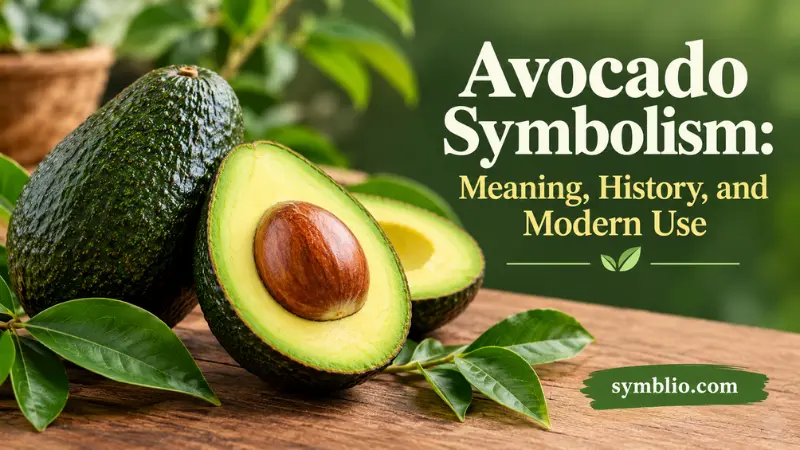
Avocado symbolism reflects ideas of nourishment, abundance, fertility, growth, and healthy living, with older associations rooted in Indigenous cultures of Mesoamerica. Today, the fruit also carries distinctly American meanings connected to wellness, food culture, hospitality, and a relaxed approach to everyday life.
An avocado is easy to recognize: a rounded or pear-shaped fruit with green skin, creamy flesh, and one large central seed. Its appearance has helped shape some of its oldest associations, while its role as a cultivated food has created others. People encounter avocados at family meals, restaurants, grocery stores, celebrations, social-media posts, gardens, and increasingly in personal designs and tattoos.
The meaning becomes especially interesting when the fruit is viewed in context. An avocado on a breakfast plate can suggest nourishment and health, while an avocado tree may represent patience, fertility, or productive growth. In modern American culture, the fruit has also become a recognizable part of lifestyle imagery, especially around fresh food, wellness, California culture, and casual entertaining.
Quick Answer
Avocado symbolism commonly represents nourishment, abundance, health, growth, and fertility in modern American culture, especially in food, wellness, home, and lifestyle settings. Historically, Indigenous peoples of Mesoamerica cultivated and valued the fruit, while its appearance and reproductive associations contributed to older connections with fertility and prosperity.
TL;DR
- Avocados commonly symbolize nourishment, wellness, abundance, and growth.
- Ancient Mesoamerican communities cultivated avocados for thousands of years.
- Fertility became an important historical association because of the fruit’s shape and growth.
- Americans often connect avocados with fresh food and healthy living.
- Green color can add meanings of renewal, nature, and prosperity.
- Modern symbolism appears in food culture, decor, fashion, tattoos, and digital media.
What Does an Avocado Represent?
The avocado can represent several related ideas rather than one fixed meaning.
Nourishment is probably the most straightforward interpretation. The edible flesh inside the thick outer skin makes the fruit a natural image of sustenance and nourishment. In symbolic language, that can extend beyond food to emotional care, family support, and taking care of oneself.
Abundance comes from the fruit’s substantial flesh and productive tree. An avocado tree can produce large quantities of fruit over time, making it a useful image for prosperity and plenty.
Growth is another common association. A seed develops into a tree capable of producing fruit, creating a simple symbolic sequence: potential, patience, maturity, and eventual results.
Fertility has a much older cultural background. The avocado’s shape, large seed, and reproductive role in nature contributed to associations with fertility in parts of Mesoamerica.
Modern interpretations usually combine these ideas. A person may use an avocado image simply because they enjoy the food, while another person may see it as a reminder to nurture health, relationships, or personal growth.
The Physical Features Behind Its Symbolism
The avocado’s physical characteristics help explain why people have attached symbolic meanings to it.
Its large seed is particularly important. Seeds commonly represent beginnings, potential, reproduction, and future growth. An avocado takes that idea a step further because the seed is unusually large and visually prominent.
The thick outer skin creates another useful symbolic contrast. The outside can appear firm, rough, or protective, while the interior is soft and creamy. Symbolically, this can suggest protection surrounding something valuable.
The fruit also changes as it ripens. A hard avocado gradually becomes softer and ready to eat. That natural process can represent patience, timing, maturity, and knowing when preparation has reached its proper stage.
Even the tree contributes to the symbolism. An avocado is not simply a fruit that appears immediately after planting a seed. It develops through a longer process involving roots, branches, flowers, and fruit. For that reason, the tree can represent sustained effort and the rewards of cultivation.
Ancient Roots in Mesoamerica
Avocado cultivation has a very long history in the Americas. Archaeological evidence indicates that people were selecting and cultivating avocado forms thousands of years ago, including evidence from Mexico dating to roughly 8,000 years ago.
The fruit was known in Nahuatl as ahuacatl, a word that became the basis for the modern English word “avocado.” Historical accounts also connected the word with a term referring to a testicle, reflecting the fruit’s shape and the way avocados can grow in pairs.
That linguistic history matters because it helps explain why fertility became associated with the fruit. The connection was not invented by modern advertising. It grew from the fruit’s appearance, reproductive biology, and place within Indigenous food traditions.
At the same time, it is important not to reduce Indigenous avocado traditions to a single symbolic meaning. Different communities had different relationships with the plant, and much of its historical importance came from its value as food and a cultivated resource rather than from symbolism alone.
Why Fertility Became an Avocado Association
Fertility is one of the most frequently mentioned historical meanings attached to avocados, but the reason deserves some explanation.
The fruit’s shape and its large central seed naturally invite reproductive comparisons. Avocados can also grow in pairs, reinforcing that visual association. In traditional societies, observations of plants and animals often contributed to symbolic connections involving reproduction, abundance, and family life.
The avocado tree itself strengthens the fertility metaphor. One seed can become a mature tree capable of producing many fruits. Symbolically, that creates a movement from one beginning to many results.
Today, however, Americans are more likely to interpret an avocado through food, wellness, or lifestyle imagery than through an explicit fertility reference. Fertility remains relevant when discussing historical symbolism, but it is not necessarily the first meaning a modern viewer will recognize.
Avocado Symbolism in the United States
The United States has given the avocado several newer associations.
American food culture often connects the fruit with freshness, nutrition, wellness, and casual social eating. Guacamole has become particularly recognizable at gatherings, parties, restaurants, and sporting events.
California also plays an important role in the American image of the avocado. Commercial avocado production became established in the United States during the nineteenth and early twentieth centuries, with California eventually becoming strongly associated with avocado growing.
That regional connection has influenced popular imagery. An avocado can suggest a relaxed West Coast lifestyle, outdoor meals, farmers’ markets, fresh produce, or health-conscious cooking.
The fruit’s cultural position has expanded far beyond regional agriculture. Avocado toast, guacamole, salads, sandwiches, bowls, and other dishes have made the fruit familiar across the country.
In contemporary America, an avocado image may therefore communicate something as simple as fresh, modern, wholesome food.
Green Avocado Symbolism
Color adds another layer to the interpretation.
Green is commonly associated with nature, renewal, freshness, growth, and vitality. Because the avocado is naturally green both outside and inside, these associations fit comfortably with the fruit’s existing meanings.
A bright green avocado may therefore emphasize freshness and health, while darker green imagery can create a more earthy or natural impression.
Green can also suggest prosperity in certain contexts. When combined with the avocado’s abundance symbolism, the color may reinforce ideas of plenty and productive growth.
Still, color meanings are highly dependent on context. A green avocado on a restaurant menu has a different symbolic purpose from a green avocado used in a personal tattoo or decorative artwork.
The Avocado as a Symbol of Growth
Growth may be the most useful metaphor for personal symbolism.
An avocado begins with a seed and eventually becomes part of a mature tree. The process requires time, suitable conditions, and continued care. That makes the avocado a natural metaphor for projects, relationships, education, creativity, and personal development.
Someone starting a new chapter might use an avocado seed or tree as an image of potential. The emphasis is not on instant transformation but on gradual development.
The symbolism can also apply to setbacks. A seed does not become a productive tree immediately. The image therefore works well for people who want to represent patience and the belief that meaningful results require time.
Nourishment, Self-Care, and Emotional Meaning
Food symbolism often extends beyond physical nourishment.
Because avocados are strongly associated with nutritious meals in contemporary American culture, they can represent self-care and responsible attention to one’s well-being.
That does not mean an avocado image automatically communicates a specific health message. Instead, the fruit can serve as a broader reminder to care for basic needs, make thoughtful choices, or create a healthier daily routine.
Emotionally, nourishment can also mean providing support to others. An avocado-themed kitchen decoration, for example, might evoke home cooking, hospitality, family meals, or the pleasure of preparing food for people you care about.
The symbolism becomes particularly personal when someone associates the fruit with a family recipe, childhood memory, favorite meal, or shared celebration.
Avocado Symbolism in Food and Hospitality
Food is one of the strongest modern contexts for avocado imagery.
A bowl of guacamole can represent sharing because it is commonly served in a group setting. An avocado on toast or in a breakfast bowl can communicate simplicity, freshness, and everyday nourishment.
Restaurants often use avocado imagery because consumers immediately understand the visual message. The fruit can suggest fresh ingredients, contemporary cooking, Mexican-inspired cuisine, vegetarian options, or health-conscious choices.
At home, avocado imagery can take on a warmer meaning. Kitchen prints, serving dishes, towels, mugs, and decorative objects may use the fruit to create an informal atmosphere associated with cooking and gathering.
In this setting, its symbolism is less about ancient tradition and more about food, comfort, sharing, and modern domestic life.
Cross-Cultural Meanings of the Avocado
Avocado symbolism has roots in the Americas, but the fruit eventually traveled far beyond its original growing regions.
Indigenous communities in Mesoamerica cultivated different avocado types long before modern commercial agriculture. Later movement through trade, migration, colonial expansion, and agricultural exchange helped spread the plant internationally.
By the time avocados reached Europe and eventually the United States, their cultural meanings began changing. Agricultural value became increasingly important, while older Indigenous associations were sometimes simplified or overlooked.
Modern countries may emphasize different qualities. Some cultures focus primarily on the fruit as food, while others connect it with agriculture, hospitality, health, or prosperity.
This history is a useful reminder that symbols do not remain fixed. A plant can carry one set of meanings in its original cultural setting and acquire new associations after entering another society.
Avocado Symbolism in Modern Design and Decor
Avocado imagery works especially well in casual, playful design.
Kitchen decor is an obvious example. Prints, dishware, textiles, signs, and illustrations may use avocado shapes to create a cheerful food-related theme.
The imagery can also communicate a particular lifestyle. An avocado illustration may suggest farmers’ markets, plant-based cooking, wellness culture, California-inspired design, or an appreciation for fresh ingredients.
Because the fruit has a simple recognizable shape, it also translates easily into graphic design. A stylized avocado can be understood even when reduced to a few basic shapes and colors.
Its symbolism therefore operates on two levels: the viewer recognizes the object itself, while the surrounding design determines whether it feels humorous, healthy, nostalgic, natural, or fashionable.
Avocado Tattoos and Personal Symbolism
Avocado tattoos tend to be more personal than historical.
Someone might choose the image to represent a love of cooking, a favorite food, a memorable trip, or a connection to a particular place. Others may use it as a playful symbol of growth, nourishment, family, or a healthy lifestyle.
The seed can become especially meaningful. Since seeds commonly represent beginnings and potential, an avocado tattoo may symbolize starting over or developing something gradually.
Pairs of avocados can suggest companionship or partnership, although that meaning comes from the owner’s interpretation rather than a universal tattoo tradition.
For this reason, there is no single “correct” avocado tattoo meaning. The surrounding elements—flowers, leaves, words, colors, dates, or other foods—often reveal more about the intended message.
Common Avocado Meanings by Context
| Context | Meaning in the USA | Common Associations | Notes |
|---|---|---|---|
| Food and cooking | Nourishment and freshness | Meals, guacamole, hospitality | Most familiar modern use |
| Avocado tree | Growth and productivity | Patience, cultivation, abundance | Emphasizes the life cycle |
| Seed | Potential and new beginnings | Growth, development, future | Often used metaphorically |
| Green avocado | Renewal and vitality | Nature, wellness, freshness | Color strengthens the natural theme |
| Tattoo | Personal growth or enjoyment | Identity, memories, lifestyle | Meaning depends on the owner |
Avocado Symbolism in Social Media and Pop Culture
Social media has helped turn certain foods into lifestyle symbols, and the avocado is one of the clearest examples.
Photographs of avocado toast, colorful bowls, guacamole, and brunch plates can communicate more than hunger. They may suggest leisure, wellness, contemporary food culture, or an interest in presentation.
The fruit has also become a humorous cultural object. Its recognizable shape and green color make it easy to turn into cartoons, emojis, illustrations, clothing designs, and playful messages.
This is an important shift from older symbolism. Historical meanings were connected to agriculture, reproduction, and Indigenous cultural practices. Digital culture often treats the avocado more casually, using it as shorthand for food preferences, lifestyle, or humor.
The newer meanings do not erase the older ones. They simply show how symbols change when their social environment changes.
Positive and Negative Associations
Most avocado symbolism is positive, but context can change the message.
Positive interpretations include:
- nourishment
- health
- abundance
- growth
- fertility
- patience
- prosperity
- hospitality
- natural living
- new beginnings
Negative associations are less established. An overripe or damaged avocado might be used metaphorically to represent missed timing, waste, decline, or something that has passed its ideal moment.
That interpretation comes from the fruit’s practical characteristics rather than from a traditional symbolic system.
There is also a broader cultural issue surrounding commercial avocado production. Environmental concerns, water use, agricultural labor, and international supply chains can complicate the modern image of the fruit. These issues do not create a universal negative symbolism, but they demonstrate that even familiar foods can carry different meanings depending on the context in which people encounter them.
Common Misunderstandings About Avocado Symbolism
One common mistake is claiming that avocados have one universal ancient meaning. Their history is much more complicated.
The fruit has been cultivated across different regions, and Indigenous communities had varied relationships with it. Fertility is a documented association worth discussing, but it should not replace the broader agricultural and dietary history of the plant.
Another misunderstanding is assuming that every avocado image represents health. In contemporary America, the fruit often appears in wellness imagery, but it can also represent humor, food preferences, regional identity, family memories, or simple enjoyment.
It is also easy to confuse modern commercial branding with ancient symbolism. A restaurant using an avocado to suggest freshness does not necessarily preserve an ancient cultural meaning. It is using a familiar contemporary association.
How Avocado Meaning Has Changed Over Time
The avocado’s symbolic journey can be understood as a series of overlapping stages.
Its earliest significance was closely tied to the plant’s practical value as a cultivated food. Indigenous communities selected and developed avocado varieties over thousands of years, creating a crop with substantial cultural and agricultural importance.
Older associations involving fertility developed partly from the fruit’s distinctive appearance and reproductive characteristics.
Later, European contact introduced the avocado to new regions. As cultivation expanded, agricultural and commercial meanings became increasingly important.
In the United States, the fruit eventually became associated with California agriculture, fresh produce, restaurant culture, guacamole, and contemporary wellness.
Today, the avocado can simultaneously represent ancient cultivation, fertility, nourishment, growth, California food culture, health-conscious living, and casual enjoyment. The intended meaning depends heavily on where and how the image appears.
FAQs
An avocado does not have one universally recognized spiritual meaning. In personal or spiritual symbolism, people may interpret its seed, growth, and nourishment as signs of potential, renewal, care, or abundance.
Yes, fertility is an important historical association connected with the avocado, particularly because of its shape, large seed, and reproductive symbolism in Mesoamerican contexts. Modern Americans, however, are more likely to associate the fruit with food, wellness, or abundance.
An avocado tattoo can represent personal growth, nourishment, a love of food, humor, or a meaningful memory. The exact interpretation usually comes from the person who chose the design rather than from a fixed tattoo tradition.
In modern American culture, avocados commonly suggest freshness, nourishment, wellness, abundance, and contemporary food culture. California agriculture and popular foods such as guacamole have strengthened these associations.
It can be. The productive tree, substantial fruit, and large edible portion make abundance a natural interpretation, especially when the avocado appears alongside other food or harvest imagery.
An avocado seed can represent potential, beginnings, patience, and future growth. The symbolism comes from the seed’s role as the starting point for a new tree.
Green can reinforce associations with nature, renewal, freshness, growth, and vitality. When combined with the avocado itself, those meanings can make the fruit appear especially connected to wellness and natural living.
Conclusion
Avocado symbolism brings together practical and cultural ideas that have developed over thousands of years. The fruit can represent nourishment, abundance, fertility, growth, patience, and new beginnings, while its modern American image is strongly connected to fresh food, wellness, hospitality, and contemporary lifestyle culture.
Its history also shows why symbols should not be treated as fixed definitions. The avocado moved from ancient Indigenous cultivation in the Americas into global agriculture and modern American food culture, gathering new associations along the way.
Today, avocado symbolism works best when interpreted through context. A seed can suggest potential, a tree can represent sustained growth, a shared bowl of guacamole can evoke hospitality, and a simple avocado illustration can communicate nothing more complicated than enjoyment of a familiar food.


