
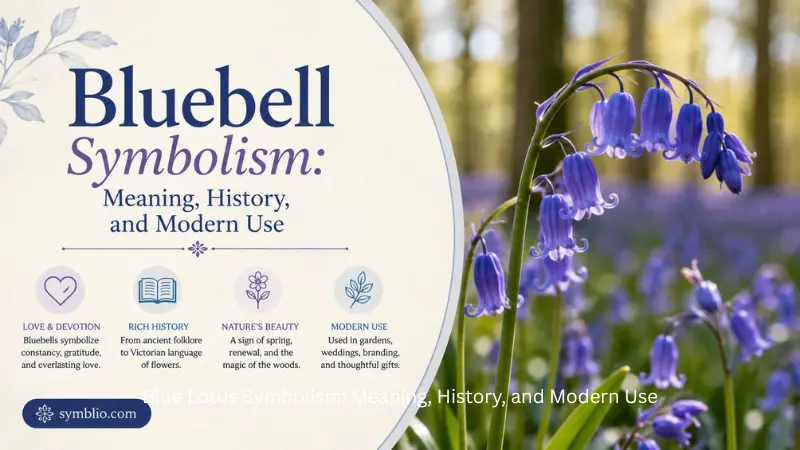
Bluebells are delicate spring flowers known for their curved stems and clusters of bell-shaped blue or violet blooms. Bluebell symbolism most commonly centers on constancy, humility, gratitude, faithful love, and renewal. These associations developed through European folklore, nineteenth-century flower language, and later interpretations of the flower’s appearance and seasonal growth.
For modern Americans, bluebells often communicate gentle rather than dramatic emotions. They can represent a dependable relationship, appreciation for someone important, remembrance of a loved one, or the hope that accompanies a new beginning.
The name “bluebell” can refer to more than one plant. Traditional European symbolism is mainly connected with the English bluebell, while Americans may be more familiar with native Virginia bluebells. Although the species differ, their similar appearance and springtime presence have encouraged overlapping modern interpretations.
Quick Answer
Bluebell symbolism commonly represents constancy, faithful love, humility, and gratitude in modern American culture. Historically, bluebells were associated with constancy in Victorian flower language, while older British folklore connected bluebell woods with fairies, enchantment, and supernatural warnings.
TL;DR
- Bluebells commonly symbolize constancy, humility, gratitude, and faithful love.
- Victorian flower language strongly connected bluebells with constancy.
- British folklore associated bluebell woods with fairies and enchantment.
- Americans often connect bluebells with spring, renewal, and gentle affection.
- Bluebell tattoos may represent loyalty, remembrance, or personal renewal.
- Not every plant called a bluebell shares the same history.
What Bluebells Look Like and Where They Grow
The classic English bluebell has narrow green leaves and arching stems covered with small blue-violet flowers. Each blossom hangs downward like a miniature bell, and large colonies can create dense carpets across woodland floors in spring.
That nodding form has helped shape some of the flower’s symbolism. A downward-facing bloom can suggest modesty or humility, while the bell shape naturally encouraged stories about ringing flowers, hidden messages, and fairy activity.
Bluebells are perennial plants, meaning established colonies can return year after year. Their seasonal reappearance also gives them a natural connection with continuity and renewal.
In the United States, people may encounter Virginia bluebells instead. These native woodland plants produce clusters of pink buds that open into soft blue flowers during spring, especially in moist forests and floodplain environments.
The Core Meanings of Bluebells
Bluebell meanings vary by context, but several interpretations have become especially common.
| Context | Common Meaning in the USA | Association |
|---|---|---|
| Relationships | Faithfulness | Loyalty and lasting affection |
| Personal character | Humility | Modesty and quiet confidence |
| Appreciation | Gratitude | Thanks and recognition |
| Commitment | Constancy | Steadiness and dependability |
| Spring | Renewal | New beginnings and return |
| Folklore | Enchantment | Fairies and woodland mystery |
Among these meanings, constancy has one of the clearest historical connections. Other interpretations, including gratitude, faithful love, and renewal, developed through later floral traditions and modern cultural use.
Why Bluebells Symbolize Constancy
Constancy means remaining loyal, dependable, or emotionally steady over time.
During the nineteenth century, flower-language books assigned symbolic meanings to many plants. Bluebells became particularly associated with constancy, making them suitable symbols of commitment and dependable affection.
The flower’s natural behavior reinforces that interpretation. Bluebells return seasonally and can persist in the same woodland areas for many years when conditions remain favorable.
For modern audiences, constancy can describe more than romantic devotion. A bluebell may represent a long friendship, commitment to family, personal values, or someone who remained dependable during a difficult period.
The symbolism is therefore less about intense emotion and more about reliability.
Humility and Quiet Confidence
Humility is another familiar interpretation of the bluebell.
Much of this association comes from the flower’s physical posture. Its curved stem and downward-facing blossoms create the appearance of a bowed head.
Unlike large flowers that dominate a bouquet or landscape, bluebells create much of their visual effect collectively. A single bloom is delicate, while an entire woodland carpet becomes striking.
That contrast makes the flower a fitting symbol of quiet confidence. Humility in this context does not mean weakness or insecurity. Instead, it can suggest someone who does not need constant attention or recognition to understand their own worth.
A bluebell may therefore suit a person who values modesty, kindness, and strength without display.
Gratitude and Appreciation
Bluebells are also used as symbols of gratitude.
This meaning fits situations where appreciation feels sincere and personal rather than formal. A bluebell-themed gift can represent thanks for someone’s loyalty, kindness, guidance, or long-term support.
Its connection with constancy makes gratitude especially meaningful when directed toward a person who has remained present over time.
For example, bluebell imagery can suit:
- a gift for a close friend
- appreciation for a parent or grandparent
- recognition of a supportive mentor
- a thank-you after a difficult period
- a keepsake honoring a long friendship
Because bluebells are less strongly associated with romance than roses, they can express affection without automatically suggesting romantic intent.
Bluebells and Faithful Love
In romantic symbolism, bluebells commonly represent faithful or enduring love.
This meaning develops naturally from constancy. Romantic constancy suggests remaining devoted to a partner through changing circumstances rather than valuing only excitement or attraction.
That makes the bluebell different from symbols of passionate love.
A red rose often communicates intensity, desire, or direct romance. A bluebell feels quieter. It can represent a relationship built through shared experiences, trust, familiarity, and continued commitment.
For that reason, bluebells can work well in anniversary gifts, wedding details, or personal jewelry.
They may also represent affection that continues after separation or death. In those cases, faithful love becomes closely connected with remembrance.
Bluebells in Victorian Flower Language
Nineteenth-century flower language helped establish many floral meanings that remain familiar today.
People published dictionaries explaining what different flowers could represent, allowing bouquets, illustrations, and floral arrangements to carry sentimental messages.
These systems were never completely standardized. One flower could receive different meanings in different publications or regions.
However, bluebells were clearly connected with constancy in influential Victorian flower-language traditions.
That historical association helps explain why modern meanings such as loyalty and lasting love feel natural rather than arbitrary.
It is important, though, not to describe every modern bluebell interpretation as Victorian. Gratitude, renewal, personal resilience, and some romantic meanings have been expanded through later cultural use.
Bluebells in British Folklore
Bluebells have a very different character in older British folklore.
Bluebell-covered woodlands were sometimes associated with fairies and supernatural activity. In these stories, fairies were not always gentle or harmless creatures. They could be unpredictable, misleading, or dangerous.
Some traditions warned against picking bluebells because doing so might bring bad luck or attract fairy attention. Other stories claimed that people wandering through bluebell woods could become confused or lose their way.
There were also tales involving the imagined ringing of bluebell flowers. Hearing such a bell could be treated as a supernatural warning.
These stories were folklore rather than botanical beliefs, but they gave bluebells an atmosphere of enchantment mixed with caution.
The flower could therefore represent beauty that belonged to a world humans did not fully control.
Fairies, Bells, and Woodland Enchantment
The bluebell’s shape probably helped encourage its connection with fairy stories.
A hanging flower resembling a tiny bell easily invites the idea that something unseen might ring it. When thousands appear beneath old woodland trees, the setting naturally lends itself to stories about hidden worlds.
Modern culture usually treats these associations more gently.
Bluebells now appear in fairy gardens, fantasy illustrations, woodland weddings, jewelry, children’s artwork, and nature-themed decor.
In these settings, enchantment tends to mean wonder, imagination, and closeness to nature rather than danger.
This change shows how symbolism evolves. A flower once connected with supernatural warnings can later become a decorative symbol of fantasy and woodland beauty.
What Bluebells Mean in the United States
Bluebells do not have one official symbolic definition in the United States.
American interpretations usually combine inherited European flower meanings with modern ideas about spring, gardening, relationships, and personal identity.
The most common associations include:
- loyalty
- gratitude
- gentle affection
- humility
- remembrance
- renewal
- emotional steadiness
The American botanical context is also different from the British one.
Virginia bluebells are native to eastern North America and can form impressive spring displays in moist woodland areas. Because they bloom early in the year and disappear later as surrounding vegetation grows, they can feel especially connected with seasonal transition.
As a result, Americans may understand bluebells both as traditional floral symbols and as signs that spring has returned.
Bluebells as Symbols of Spring and Renewal
Spring symbolism is one of the most natural modern interpretations of bluebells.
After winter, their appearance brings visible color back into woodland landscapes. This makes them suitable symbols of return, fresh beginnings, and recovery.
Virginia bluebells strengthen this interpretation in the United States because they appear during early spring and have a relatively short visible growing season.
That pattern can carry personal meaning.
A person might choose a bluebell to mark:
- recovery after hardship
- entering a new stage of life
- rebuilding after loss
- starting a new relationship
- moving to a new place
- returning to something important
The flower does not need to represent dramatic transformation. Its symbolism can be quieter: difficult seasons pass, and life becomes visible again.
Emotional and Psychological Associations
Bluebells often create a softer emotional impression than brighter or larger flowers.
Their cool blue-violet color, small blossoms, curved stems, and woodland setting can suggest calmness, reflection, nostalgia, or gentleness.
These reactions are not universal psychological rules. Personal experiences strongly influence how someone responds to a flower or color.
Still, bluebells work especially well for expressing emotions that are steady rather than loud.
They may suggest:
- affection without possessiveness
- loyalty without display
- sadness mixed with gratitude
- comfort in familiar traditions
- sensitivity balanced by endurance
- peaceful remembrance
This emotional subtlety explains why bluebells often appeal to people looking for meaningful botanical imagery that does not feel overly dramatic.
Bluebell Tattoo Meaning
A bluebell tattoo can carry several personal meanings depending on the wearer.
Common interpretations include loyalty, constancy, humility, gratitude, remembrance, and renewal.
A single flower can feel private and understated. A larger cluster may represent family, friendship, community, or several important relationships.
Other design elements can shift the interpretation.
A bluebell combined with a name or date may become a memorial tattoo. Pairing it with butterflies can emphasize transition. Woodland imagery can highlight nature and fairy folklore, while a growing stem may suggest progress or recovery.
The tattoo does not have one universal definition.
For most wearers, the strongest meaning comes from the personal story attached to the design.
Bluebells in Jewelry, Gifts, and Home Decor
Bluebell imagery works well in objects intended to carry sentimental meaning.
A pendant may represent a dependable relationship. Earrings may celebrate spring or a love of woodland plants. Botanical prints can evoke calmness, nostalgia, or a connection with nature.
Bluebells can also make thoughtful gifts for people associated with loyalty or support.
Someone might choose a bluebell-themed object to thank a friend who remained present during a difficult period or to remember a relative who loved gardening.
In American home decor, bluebell designs fit especially well with botanical, cottage-inspired, woodland, vintage, and nature-focused styles.
Not everyone who sees the image will know its symbolism, which can make the meaning more personal to the owner.
Bluebells in Weddings
Bluebells can work naturally in wedding symbolism because of their association with constancy and faithful love.
They are particularly appropriate for couples who prefer understated floral symbolism rather than dramatic romantic imagery.
Bluebell-inspired details may appear in:
- wedding invitations
- table decorations
- bridal accessories
- floral illustrations
- jewelry
- spring garden ceremonies
The flower’s seasonal character also supports the idea of beginning a new stage of life together.
Rather than representing passion alone, bluebells can communicate the intention to remain dependable after the excitement of the wedding day has passed.
Bluebells in Memorials and Remembrance
Bluebells can also carry a quiet memorial meaning.
They are not traditionally defined primarily as funeral flowers, but their associations with constancy and gratitude can make them appropriate symbols of remembrance.
In a memorial context, constancy may represent love that continues after someone’s death. Gratitude can express appreciation for the time, care, or influence that person gave others.
Their seasonal return adds another layer.
A flower that disappears and returns each spring can become a reminder of recurring memory. Certain dates, seasons, places, or flowers may bring a loved one back into someone’s thoughts even years later.
This gives the bluebell a reflective memorial quality without making death its primary meaning.
Common Misunderstandings About Bluebell Symbolism
Several claims about bluebells are often presented too simply.
One mistake is describing every bluebell meaning as ancient. Different interpretations developed during different periods.
Fairy associations mainly belong to British folklore. Constancy has strong connections with nineteenth-century flower language. Renewal and resilience are largely modern extensions of the flower’s spring growth.
Another misunderstanding is assuming that every plant called a bluebell is botanically identical.
English bluebells and Virginia bluebells are different plants. The shared common name does not mean they have the same cultural history.
It is also important to separate folklore from factual claims. Stories about bluebells ringing or fairies punishing people belong to traditional storytelling, not literal explanations of the plant.
Finally, decorative symbolism should never be treated as proof that a plant is safe to eat. Some plants commonly called bluebells contain compounds that can be harmful if ingested.
How Bluebell Meaning Changed Over Time
Bluebell symbolism developed in layers.
Older British folklore connected woodland bluebells with fairies, enchantment, secrecy, and supernatural danger.
Nineteenth-century flower language gave the bluebell a clearer sentimental association with constancy.
Later interpretations expanded that idea toward faithful love, loyalty, gratitude, and humility.
Modern audiences added meanings related to renewal, personal recovery, remembrance, and spring because of the plant’s seasonal life cycle.
In American culture, these meanings have become especially flexible because people may encounter several different plants called bluebells.
What connects most modern interpretations is not one ancient rule but a consistent emotional theme: something gentle can still be dependable.
FAQs
What does a bluebell symbolize?
Bluebells commonly symbolize humility, gratitude, loyalty, constancy, and everlasting love. Their delicate, downward-facing flowers also connect them with modesty and gentleness.
What is the spiritual meaning of bluebells?
Spiritually, bluebells are often associated with gratitude, inner peace, faithfulness, and renewal. Some traditions also connect them with protection and the mysterious qualities of nature.
What do bluebells symbolize in love?
In love, bluebells can represent loyalty, devotion, lasting affection, and constancy. They are especially meaningful when expressing a quiet but enduring emotional bond.
What do bluebells symbolize in folklore?
British and European folklore often links bluebells with fairies, enchantment, and ancient woodland mysteries. Some traditional stories warned people not to disturb bluebell-covered places.
What does a bluebell tattoo mean?
A bluebell tattoo may symbolize humility, loyalty, gratitude, remembrance, enduring love, or a personal connection with nature. The exact meaning usually depends on the wearer’s intention.
Are bluebells a symbol of good luck?
Bluebells can carry positive meanings such as gratitude, hope, and faithful love. However, folklore surrounding them varies, so they are not universally considered a traditional good-luck symbol.
Conclusion
Bluebell symbolism most commonly centers on constancy, humility, gratitude, faithful love, and renewal. These meanings come from several distinct sources: British folklore contributed fairy associations, Victorian flower language emphasized constancy, and modern culture broadened the flower’s meaning through tattoos, weddings, memorials, gardens, and personal symbolism.
In the United States, bluebells also have a strong connection with spring because native Virginia bluebells appear in eastern woodlands as the season changes. That makes the flower equally suited to representing a dependable relationship, an appreciated person, a remembered loved one, or a fresh stage of life.
The bluebell’s clearest message is simple: gentleness and steadiness can exist together.


