Magnolias are known for their large, fragrant flowers, glossy leaves, and striking spring displays. In the United States, magnolia symbolism is most often connected with dignity, perseverance, beauty, hospitality, and the cultural identity of the American South.
These meanings come from several places. The flower’s appearance suggests elegance and composure, while the tree’s long botanical history encourages associations with endurance. Regional traditions have also shaped the magnolia into a symbol of home, family roots, and Southern identity.
Today, magnolias appear in gardens, weddings, tattoos, memorials, jewelry, home decor, artwork, and civic imagery. Their meaning changes with the setting, making the magnolia a flexible symbol that can express both personal emotion and cultural belonging.
Quick Answer
Magnolia symbolism commonly represents dignity, perseverance, beauty, grace, and hospitality in modern American culture. Historically and cross-culturally, magnolias have also been associated with purity, nobility, endurance, renewal, and strong connections to home and place.
TL;DR
- Magnolias commonly represent dignity, grace, perseverance, and beauty.
- Southern magnolias strongly symbolize regional identity and hospitality.
- White blossoms often suggest purity, peace, and sincerity.
- Their ancient lineage encourages associations with endurance and survival.
- Magnolias appear in tattoos, weddings, memorials, decor, and civic imagery.
- Context determines whether the flower represents love, memory, strength, or home.
What Magnolias Look Like and Why Their Appearance Matters
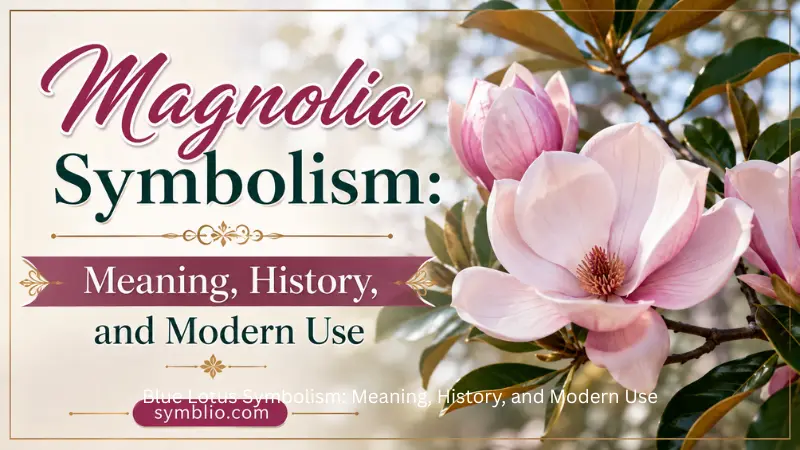
Magnolias include trees and shrubs with some of the most recognizable flowers in ornamental gardening. Depending on the species, the blossoms may be white, cream, pink, purple, or yellow. Some are broad and cup-shaped, while others have narrower petals that create a star-like appearance.
Certain deciduous magnolias bloom before their leaves fully emerge. The flowers can appear dramatically against bare branches, creating a natural visual connection with spring, renewal, and new beginnings.
The southern magnolia is especially distinctive. It is an evergreen tree with dark, glossy leaves and large white flowers that often carry a noticeable fragrance.
Physical appearance plays an important role in symbolism. Large, balanced flowers can suggest dignity and refinement, while strong branches and long-lived trees naturally encourage ideas of stability and perseverance.
The contrast is especially important. Magnolia blossoms look soft and delicate, yet they grow on substantial trees. That combination helps explain why magnolias often symbolize gentleness paired with inner strength.
What Magnolias Commonly Symbolize in the United States
There is no single official meaning for every magnolia. Instead, several interpretations have developed through American regional culture, floral traditions, design, and personal symbolism.
| Context | Meaning in the USA | Common Associations | Notes |
|---|---|---|---|
| Southern culture | Hospitality and regional identity | Homes, gardens, heritage | Especially strong in the Southeast |
| Personal symbolism | Strength and perseverance | Tattoos, gifts, artwork | Often suggests quiet resilience |
| White magnolias | Purity and sincerity | Weddings, remembrance | Can also suggest peace |
| Pink magnolias | Affection and tenderness | Romance, friendship, decor | Softer emotional tone |
| Mature trees | Stability and continuity | Family homes, gardens | Often linked with roots and legacy |
| Spring blossoms | Renewal and beginnings | Seasonal celebrations | Strongest with early bloomers |
These meanings often overlap, but the context changes the message. A magnolia on a state emblem does not communicate exactly the same idea as a magnolia in a wedding bouquet or memorial tattoo.
Why Magnolias Symbolize Dignity and Grace
Dignity is one of the strongest modern associations with magnolias.
The flower has a composed appearance. Its petals are usually broad, balanced, and visually substantial rather than playful or chaotic. This gives magnolias a formal quality that works naturally in traditional gardens, elegant arrangements, and ceremonial settings.
Grace has a similar connection.
In this case, grace does not mean weakness or fragility. It suggests calmness, self-respect, and the ability to remain composed through difficult circumstances.
Someone who chooses a magnolia to represent personal grace may be expressing confidence without aggression or strength without losing tenderness.
This balance has helped make the flower especially meaningful in stories about women, family, perseverance, and emotional resilience.
Ancient Botanical Origins and the Meaning of Endurance
Magnolias belong to one of the older evolutionary lineages among flowering plants. Their ancestors existed far earlier than many familiar modern flowering plants, and magnolia flowers developed relationships with ancient insect pollinators.
This biological history has influenced modern symbolic interpretation.
The idea of endurance does not mean ancient civilizations universally treated magnolias as a symbol of survival. That would be too broad. Instead, modern readers often connect the plant’s long evolutionary history with persistence and adaptation.
The symbolism makes intuitive sense.
A magnolia can represent surviving difficult conditions, continuing through change, or remaining rooted during periods of uncertainty.
This makes the flower particularly suitable for personal milestones such as recovery, rebuilding after hardship, major life transitions, or honoring a family tradition that has continued across generations.
Its symbolism is less about dramatic victory and more about staying present, growing, and continuing to flower.
Magnolia Symbolism in the American South
The magnolia has an especially strong relationship with the southeastern United States.
Southern magnolias naturally grow across parts of the region, where their evergreen foliage, large white flowers, and fragrance made them familiar features of gardens, streets, homes, and public landscapes.
Over time, the tree became closely tied to Southern visual identity.
Magnolia imagery began appearing in decorative art, literature, regional branding, garden design, public spaces, and representations of traditional Southern homes.
Because of this association, the flower often symbolizes hospitality, home, family continuity, regional pride, and belonging.
For someone raised in Mississippi, Louisiana, Alabama, Georgia, or another Southern state, a magnolia may carry a personal meaning connected to childhood, family property, grandparents, neighborhood trees, or a familiar landscape.
In these situations, the flower is not simply an abstract symbol of beauty. It represents place.
That sense of geographic belonging is one of the most distinctive parts of magnolia meaning in American culture.
Mississippi and Louisiana Made the Magnolia a Civic Symbol
The magnolia’s Southern connection became even stronger when states adopted it as an official emblem.
Mississippi has one of the closest public associations with the flower. Magnolia imagery became part of the state’s identity through official recognition and later appeared prominently on the modern state flag.
For many Mississippians, the flower therefore represents more than a native or ornamental tree. It can suggest community, state identity, renewal, hospitality, and attachment to home.
Louisiana also recognizes the magnolia as an official state flower.
In both states, official recognition helped transform a familiar landscape plant into a civic emblem.
That gives the magnolia a dual role.
It can represent deeply personal feelings such as family, remembrance, or resilience while also serving as a public symbol of regional identity.
Strength, Resilience, and the “Steel Magnolia” Meaning
The magnolia is often used to represent a person who combines softness with exceptional strength.
This idea is captured in the expression steel magnolia.
The phrase describes someone, often a woman, who appears graceful, warm, refined, or gentle but possesses strong determination and emotional toughness.
Popular American culture made the expression especially recognizable, and it now fits naturally with the flower’s broader symbolism.
The magnolia does not represent strength in the same way as a lion, sword, or mountain. Its strength is quieter.
It can suggest:
- remaining compassionate during hardship
- staying composed under pressure
- protecting family without becoming hardened
- rebuilding after loss
- maintaining dignity during difficult circumstances
For this reason, people sometimes use magnolia imagery to honor mothers, grandmothers, sisters, mentors, or other women known for resilience.
The flower communicates admiration without making toughness look harsh.
What Different Magnolia Colors Symbolize
Color can change the emotional tone of a magnolia, although these meanings are flexible rather than strict rules.
White Magnolia
White magnolias commonly symbolize purity, sincerity, dignity, peace, and respectful affection.
They are especially suitable for weddings, remembrance, memorial arrangements, and elegant home decor.
In a wedding, white magnolias may suggest honest commitment or a fresh beginning. In a memorial setting, they can express peace and enduring respect.
Pink Magnolia
Pink magnolias usually represent tenderness, affection, kindness, romance, and emotional warmth.
Their symbolism is often softer than the intense passion associated with red flowers.
A pink magnolia can therefore work well for friendship, romance, family affection, or gentle expressions of love.
Purple Magnolia
Purple magnolias can suggest dignity, individuality, creativity, distinction, and refined beauty.
Because purple has long carried associations with status and ceremony, darker magnolia varieties can feel more dramatic or formal than pink ones.
Yellow Magnolia
Yellow magnolias are commonly connected with optimism, friendship, warmth, joy, and spring.
Their bright color naturally reinforces ideas of hope and positive change.
Because yellow magnolias are less dominant in traditional symbolism, personal interpretation often plays a larger role.
Magnolia Symbolism in Love and Weddings
Magnolias can carry romantic meaning without functioning exactly like roses.
A red rose usually communicates passion very directly. Magnolia symbolism tends to be broader and more restrained.
In weddings, magnolias can represent sincerity, lasting affection, dignity, stability, and the beginning of a shared future.
The flower also works especially well in Southern-style ceremonies because of its cultural connection with hospitality and traditional gardens.
White magnolias often create a formal or classic mood, while pink blossoms feel warmer and more romantic.
The tree itself adds another symbolic layer.
Planting a magnolia after a marriage, anniversary, or move into a new home can represent putting down roots and building a life together.
Magnolias are also appropriate for non-romantic love.
They can symbolize family bonds, loyalty, parental love, friendship, and relationships that grow stronger over time.
Magnolia Meaning in Grief and Remembrance
Magnolias are not strictly funeral flowers, but they can carry meaningful symbolism in memorial settings.
White blossoms naturally communicate peace, sincerity, dignity, and respect.
A magnolia tree planted after someone’s death can also become a living memorial.
Unlike a temporary floral arrangement, a tree changes over time. It grows, flowers, and becomes part of a home or landscape.
That can symbolize continuation.
The person is no longer present, but memories, values, family influence, and emotional connections remain.
Magnolia tattoos can serve a similar purpose.
Someone may use the flower to remember a parent, grandparent, partner, friend, or family member who loved magnolias or had a personal connection with the South.
In this context, the flower represents memory rather than death itself.
Magnolia Meaning in Chinese Culture
Magnolias also hold important cultural associations outside the United States.
Several magnolia species have long histories in China, where they have been cultivated in gardens and appreciated for their appearance and fragrance.
White magnolias in particular developed associations with purity, refinement, dignity, and elevated social or artistic settings.
Magnolia imagery also appeared in traditional decorative art, sometimes alongside other flowers and objects. In these combinations, the overall meaning could relate to prosperity, rank, beauty, family success, or an honored household.
It is important not to reduce all Chinese magnolia symbolism to a single definition.
Different flowers, artistic periods, regional traditions, and combinations could carry different meanings.
It is therefore more accurate to say that magnolias became associated with refinement and purity in particular Chinese cultural contexts, while their Southern identity developed separately in the United States.
Emotional and Psychological Meaning
Magnolias often represent quiet confidence.
They do not usually communicate rebellion, aggression, or dramatic triumph. Their emotional tone is calmer.
The flower can symbolize remaining steady when life changes.
For someone going through recovery, separation, career change, relocation, or another difficult transition, the magnolia can represent the ability to adapt without losing a sense of identity.
It can also communicate emotional maturity.
A person may choose magnolia imagery to express the belief that kindness and strength can exist together.
That distinction is important because modern personal symbolism often rejects the idea that resilience requires emotional hardness.
A magnolia can represent someone who remains gentle but is not easily defeated.
It may also symbolize roots, belonging, and connection to family.
For people who associate the tree with a childhood home or a specific relative, the emotional meaning can be stronger than any general floral definition.
Why Magnolias Are Popular in Tattoos
Magnolia tattoos are popular because the flower can support several personal meanings without being overly specific.
Common interpretations include resilience, femininity, dignity, renewal, family roots, remembrance, and connection to Southern heritage.
Design choices can change the message.
A single blossom may represent simplicity, personal dignity, or an individual turning point.
A branch covered with flowers may suggest growth, family, or multiple stages of life.
A magnolia paired with a name or date often becomes memorial imagery.
Color also matters.
White can suggest peace or sincerity, pink can emphasize affection, and purple can create a stronger sense of individuality.
For many people, however, the tattoo’s meaning comes primarily from personal experience rather than traditional symbolism.
That flexibility is one reason magnolias work so well in body art.
Magnolia Symbolism in Home Decor and Modern Design
Magnolia imagery is extremely common in American home decor, particularly in styles influenced by traditional Southern interiors and modern farmhouse design.
Wreaths made from magnolia leaves can suggest welcome and hospitality.
Botanical prints often communicate natural elegance, while large white artificial blossoms are used to create a calm, polished appearance.
Magnolia branches also work well in seasonal decor because they can look formal without seeming overly ceremonial.
In interior design, the symbolic meaning is usually subtle.
Most people are not displaying a magnolia wreath because they consciously want to communicate perseverance. Instead, the flower contributes ideas of warmth, tradition, welcome, nature, and restrained beauty.
That is an important distinction between decorative symbolism and intentional personal symbolism.
A tattoo usually carries a chosen message. Home decor may create an emotional atmosphere without expressing a specific belief.
Southern Nostalgia and the Complicated Side of Magnolia Imagery
The magnolia’s connection to Southern culture is not always simple.
For many Americans, the flower represents home, family, hospitality, gardens, and regional pride.
At the same time, magnolias sometimes appear in romanticized images of the historical South that focus on large homes, graceful gardens, and social elegance while ignoring slavery, racial inequality, and violence.
The flower itself does not carry an inherently harmful meaning.
The complication comes from context.
A magnolia growing in a family yard can simply represent home. A magnolia used in nostalgic imagery about the antebellum South may carry additional historical associations.
Modern interpretation therefore benefits from separating the plant from the stories placed around it.
It is possible to appreciate magnolia symbolism as a representation of Southern identity while also recognizing that idealized versions of Southern history can leave important realities out.
Context determines whether the flower is functioning as a personal symbol, regional emblem, decorative motif, or part of a larger historical narrative.
Common Misunderstandings About Magnolia Symbolism
One of the biggest mistakes is treating every floral meaning found online as an ancient universal belief.
Magnolias do not have one meaning shared by every culture.
Some interpretations developed recently from the flower’s appearance, regional identity, modern art, gardening culture, and personal symbolism.
Color meanings are also flexible.
A white magnolia can symbolize purity, but it might just as reasonably represent peace, remembrance, elegance, or personal preference.
Another common misunderstanding involves religion.
Magnolias can be used in churches, spiritual artwork, gardens, funerals, or personal religious symbolism, but the flower does not have one fixed biblical meaning.
Cross-cultural interpretations should also remain separate.
Chinese artistic traditions involving magnolias are not interchangeable with modern Southern American symbolism.
The best way to interpret a magnolia is to ask three questions:
What type of magnolia is being shown? What cultural context surrounds it? Why is the flower being used?
Those questions usually reveal more than a one-word definition.
How Magnolia Meaning Has Evolved
Magnolia meaning developed gradually rather than coming from one ancient symbolic system.
At first, magnolias were simply plants encountered, cultivated, appreciated, and sometimes used by different societies.
As botanical knowledge expanded, the flower gained another association through awareness of its ancient evolutionary lineage.
Regional culture then created additional meanings.
In parts of China, magnolias became connected with cultivated gardens, refinement, and decorative art.
In the American South, the southern magnolia became a recognizable symbol of landscape, hospitality, home, and regional identity.
Official state adoption strengthened the flower’s public role.
Popular culture later reinforced the idea of the magnolia as a symbol of graceful strength.
Today, personal symbolism has expanded the meaning further.
People now use magnolias to represent healing, resilience, family, motherhood, remembrance, weddings, new beginnings, personal identity, and regional heritage.
The meaning has therefore accumulated over time.
The modern magnolia can carry several ideas at once without requiring them all to be present in every use.
FAQs
What does a magnolia symbolize?
Magnolias commonly symbolize purity, dignity, beauty, perseverance, love, and strength. Their long history and resilient blooms also connect them with endurance and lasting grace.
What is the spiritual meaning of a magnolia flower?
Spiritually, magnolias can represent inner peace, personal growth, renewal, purity, and emotional strength. Interpretations vary by culture and personal belief.
What does a white magnolia symbolize?
White magnolias are often associated with purity, innocence, peace, sincerity, and spiritual clarity. They are popular in ceremonies and meaningful floral arrangements.
What does a pink magnolia symbolize?
Pink magnolias commonly represent love, tenderness, femininity, affection, and gentle beauty. They can be given as a thoughtful expression of admiration or care.
What does a magnolia tree symbolize?
A magnolia tree often symbolizes endurance, stability, dignity, longevity, and strength. Its ability to return with striking blooms each season reinforces ideas of resilience and renewal.
What does magnolia symbolize in love?
In romantic contexts, magnolia symbolism can suggest devotion, lasting affection, sincerity, and enduring love rather than temporary attraction.
Are magnolias considered good luck?
In some cultural and personal interpretations, magnolias are associated with prosperity, positive beginnings, harmony, and good fortune, although these meanings are not universal.
Conclusion
Magnolias combine beauty with endurance in a way few flowers do. Their blossoms can represent dignity, sincerity, affection, and renewal, while the tree itself suggests stability, perseverance, roots, and continuity.
In the United States, magnolia symbolism is especially tied to the American South, where the flower represents hospitality, landscape, family, and regional identity. Beyond that setting, it has also become a personal symbol of resilience, remembrance, love, and new beginnings.
The magnolia’s meaning ultimately depends on context, but its most recognizable message remains clear: grace and strength do not have to be opposites.