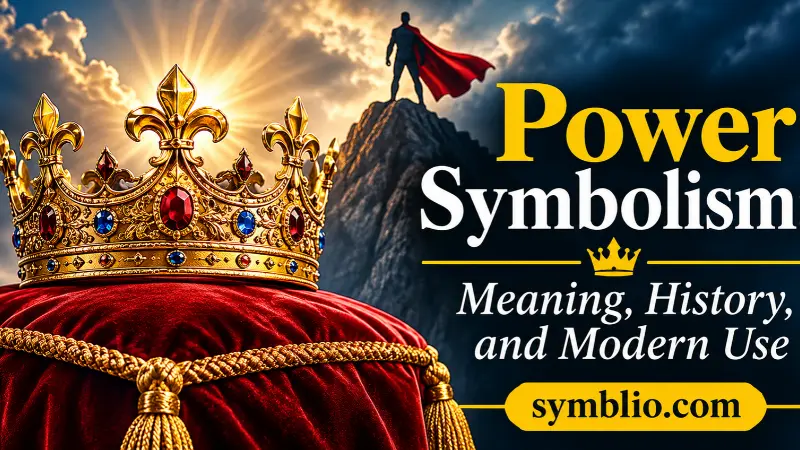
Power symbolism refers to the objects, images, animals, colors, and gestures that communicate strength, authority, leadership, influence, and control. In American culture, these symbols appear in national emblems, government buildings, corporate branding, religious traditions, personal fashion, and everyday design. A crown, an eagle, a lion, or even a raised fist can communicate power without requiring an explanation.
People have used visual symbols to represent power for thousands of years. Ancient rulers displayed crowns and elaborate clothing to establish their authority, while military leaders used standards, shields, and distinctive emblems to identify their positions. Religious institutions also developed symbols that represented spiritual authority and moral leadership.
Today, the idea extends beyond kings, governments, and military institutions. Americans associate power with personal independence, professional achievement, financial success, confidence, resilience, and the ability to influence positive change. Understanding these symbols reveals how different societies communicate authority and how individuals express their own values.
Quick Answer
Power symbolism commonly represents strength, authority, leadership, confidence, and influence in modern American culture. Symbols such as crowns, lions, eagles, mountains, and the color gold communicate different forms of power, while historical traditions connect these images with sovereignty, protection, military authority, and spiritual leadership.
TL;DR
- Crowns represent sovereignty, leadership, and legitimate authority.
- Lions and eagles communicate strength, courage, and dominance.
- Gold commonly represents wealth, achievement, and prestige.
- Ancient civilizations used symbols to establish political and religious authority.
- Modern Americans connect power with independence and personal confidence.
- Tattoos and fashion express individual interpretations of strength and resilience.
What Does Power Look Like as a Symbol?
Power does not have one universally recognized appearance. Instead, it is communicated through familiar images that suggest strength, position, control, or influence.
A crown is one of the clearest examples. Its association with monarchy makes it recognizable as a sign of leadership and sovereignty. A lion communicates physical strength and courage, while an eagle suggests freedom, vision, and national authority.
Other representations are less literal. A mountain can suggest endurance and achievement because reaching its summit requires effort. A rising sun may represent renewal and the ability to begin again. A strong tree can communicate stability through its roots and resilience through its ability to withstand changing conditions.
People encounter these images in several places:
- Government seals and national monuments.
- Company logos and professional branding.
- Religious artwork and historical architecture.
- Jewelry, clothing, and decorative objects.
- Tattoos, posters, and social media graphics.
The meaning depends on the setting. An eagle on a government building communicates national identity, while the same bird in a personal tattoo might represent independence or determination.
The Historical Origins of Power Symbols
The relationship between visual symbols and authority developed alongside organized societies. As communities established political systems, religious institutions, and social hierarchies, leaders needed recognizable ways to communicate their positions.
Ancient Egyptian rulers used crowns, ceremonial clothing, staffs, and royal insignia to distinguish themselves from ordinary citizens. These objects represented more than personal wealth. They communicated the ruler’s recognized position within the political and religious structure.
In ancient Mesopotamia, royal imagery connected kingship with divine approval and the responsibility to maintain order. Monumental sculptures and inscriptions presented rulers as protectors of their communities.
Ancient Greece and Rome developed their own visual language of authority. Roman officials used ceremonial clothing and insignia to communicate rank and public responsibility. The Roman fasces, a bundle of rods bound together, represented the authority of certain magistrates and the power of the state.
The influence of these classical traditions continued in later European architecture, government buildings, and official emblems. Library of Congress Information Bulletin+2
Over time, the representation of power expanded beyond inherited royal authority. Military leadership, religious influence, political office, wealth, and individual achievement all developed recognizable visual associations.
What Crowns, Scepters, and Thrones Represent
Royal objects remain among the most recognizable representations of authority.
Crowns symbolize sovereignty, leadership, responsibility, and royal status. Their association with monarchies makes them familiar images of legitimate authority. In modern American culture, crowns also appear in personal designs to represent self-respect, confidence, and the idea of taking responsibility for one’s own life.
Scepters traditionally represent the authority to govern. Often decorated with precious materials, they communicate the official position of the person carrying them.
Thrones represent institutional leadership and the position from which a ruler exercises authority. Their elevated construction and elaborate decoration distinguish the occupant from other members of society.
These objects have also influenced contemporary fashion and popular culture. Crown-shaped jewelry, decorative throne imagery, and royal-inspired clothing frequently communicate ambition, prestige, and confidence.
However, their meanings are not always positive. Royal objects can also suggest privilege, inequality, and concentrated authority, particularly when viewed through the history of hereditary government.
Animal Symbols Associated With Power
Animals communicate power through their physical characteristics, behavior, and roles in cultural traditions. Different animals represent different forms of strength rather than one identical idea.
Lion: The lion is associated with courage, leadership, dominance, and authority. Its traditional title as the king of beasts has made it a popular emblem in heraldry, literature, and institutional branding.
Eagle: Eagles represent vision, freedom, strength, and authority. In the United States, the bald eagle has a particularly important national meaning. It appears on the Great Seal, which Congress adopted in 1782, and remains a familiar emblem of American identity. Library of Congress+1
Bear: Bears can represent protection, physical strength, independence, and endurance. Their ability to survive challenging environments contributes to their association with resilience.
Wolf: Wolves are often associated with independence, determination, intelligence, and group leadership. Their social behavior also makes them symbols of loyalty and collective strength.
Elephant: Elephants frequently represent stability, wisdom, memory, and protective strength. Their size and social relationships contribute to these associations.
The interpretation of an animal depends on cultural traditions and personal experience. A lion may represent courageous leadership to one person and aggressive dominance to another.
Color Symbolism: Which Colors Represent Power?
Colors are important in the visual communication of authority and influence. Their meanings develop through cultural traditions, historical associations, and common design practices.
Black is frequently associated with authority, formality, sophistication, and control. In American fashion, black clothing often communicates professionalism, seriousness, or confidence.
Gold represents wealth, achievement, prestige, and success. Its historical association with precious metals makes it a familiar choice for awards, medals, ceremonial objects, and luxury branding.
Purple has a long association with royalty and high social status. Historically, some purple dyes were expensive and difficult to produce, making purple garments markers of wealth and privilege.
Red can communicate strength, courage, determination, urgency, and leadership. Its emotional intensity makes it especially noticeable in flags, uniforms, and public imagery.
Silver is associated with refinement, modernity, precision, and achievement. It frequently appears in medals, trophies, and formal decorative designs.
| Color | Common Power Association | Modern American Context |
|---|---|---|
| Black | Authority and sophistication | Formal clothing and professional design |
| Gold | Wealth and achievement | Awards, luxury products, and medals |
| Purple | Royalty and prestige | Fashion and ceremonial decoration |
| Red | Courage and determination | Sports, public campaigns, and branding |
| Silver | Excellence and refinement | Trophies, jewelry, and technology |
No color communicates power in every situation. Its meaning changes with the surrounding imagery, cultural background, and purpose of the design.
Power Symbolism in American Culture
The United States has developed a distinctive visual language around authority, freedom, national identity, and collective strength.
The bald eagle is among its most recognizable examples. Congress adopted the Great Seal in 1782, featuring an eagle holding an olive branch and arrows. These objects communicate two different responsibilities: the pursuit of peace and the ability to defend the nation.
The olive branch represents peaceful intentions, while the arrows represent military strength. Together, they communicate the relationship between diplomacy and national defense. Library of Congress+1
Other American symbols communicate different aspects of power:
- The American flag: Represents national identity, independence, and unity.
- The Statue of Liberty: Represents freedom, opportunity, and the ideals associated with American independence.
- The Liberty Bell: Is associated with liberty and the nation’s founding ideals.
- The presidential seal: Communicates the authority and responsibilities of the executive office.
- The Capitol: Represents the legislative institutions of the federal government.
These symbols appear in public ceremonies, schools, government buildings, historical celebrations, and national commemorations.
Their interpretations can differ. Some Americans see national symbols primarily as expressions of pride and unity, while others use them to question whether the country is fulfilling its stated ideals.
That difference illustrates an important point: a symbol can represent both an aspiration and an ongoing public debate.
Religious and Spiritual Interpretations of Power
Power also has an important place in religious and spiritual traditions. However, spiritual authority is not necessarily understood in the same way as political or physical dominance.
In Christianity, the cross represents faith, sacrifice, redemption, and the teachings of Jesus Christ. It can also communicate the belief that spiritual strength comes through compassion, service, and perseverance.
In Hindu traditions, several deities represent different dimensions of divine authority. Images of Durga, for example, communicate protection and the defeat of destructive forces. Her traditional attributes express the ability to overcome challenges and restore balance.
In Buddhism, the Dharma wheel represents the Buddha’s teachings and the path toward understanding. Its significance relates more closely to spiritual discipline and wisdom than to worldly control.
In ancient Greek religious traditions, Zeus was associated with divine kingship and authority. His imagery frequently included the thunderbolt, which communicated his position among the Olympian gods.
These examples demonstrate that spiritual power can represent wisdom, moral responsibility, protection, and the ability to overcome personal limitations.
Religious symbols should always be understood within their own traditions rather than treated as interchangeable decorations.
Mountains, Trees, and Natural Symbols of Strength
Nature provides some of the most widely understood representations of strength and endurance.
Mountains represent ambition, stability, achievement, and the ability to overcome obstacles. Their height makes them natural images of reaching goals and gaining perspective.
Oak trees are associated with durability, wisdom, and resilience. Their strong trunks and extensive roots have made them recurring symbols of stability in European folklore and decorative traditions.
The ocean represents enormous natural force, emotional depth, and unpredictability. Its changing conditions can communicate both freedom and the limits of human control.
Waterfalls often symbolize movement, renewal, and the continuous expression of natural strength.
These symbols are particularly relevant in modern American outdoor culture. National parks, wilderness photography, adventure clothing, and environmental artwork frequently use mountains, forests, and water to communicate endurance and independence.
A mountain tattoo, for example, may represent a personal achievement or a reminder to continue working toward a difficult goal.
Psychological and Emotional Meaning of Power
Power has an emotional dimension because people associate it with their ability to make decisions, influence circumstances, and respond to challenges.
In personal symbolism, power often represents self-confidence. Someone who chooses a lion or mountain design may be expressing a desire to remain determined when circumstances become difficult.
It can also communicate independence. Images associated with freedom, such as an eagle in flight, may represent the importance of making personal choices and developing an individual identity.
Another important association is protection. Shields, strong trees, and protective animals can communicate the desire to create safety for oneself or others.
However, power does not always mean controlling other people. It can also represent:
- The confidence to express personal opinions.
- The ability to establish healthy boundaries.
- The determination to pursue meaningful goals.
- The willingness to accept responsibility.
- The resilience to adapt to changing circumstances.
- The ability to support and protect others.
These interpretations distinguish personal strength from domination. Someone can express power through patience, thoughtful leadership, and responsible decision-making rather than force.
Why Power Symbols Appear in Tattoos and Personal Style
Power-related imagery is common in tattoo culture because it provides a visual way to communicate personal values and identity.
A lion tattoo may represent courage, leadership, or confidence. Some people choose this image to recognize a personal achievement or remind themselves to approach difficult situations with determination.
An eagle tattoo may represent freedom, independence, and a connection to American identity. Its meaning can also be personal, especially when associated with family traditions or military service.
A crown tattoo can represent self-respect, ambition, or the responsibility to direct one’s own life. It does not necessarily communicate a desire for social status.
A mountain tattoo may symbolize endurance, personal growth, or overcoming obstacles.
A tree tattoo can communicate stability, family connections, and the importance of maintaining strong foundations.
Power-related designs also appear in clothing, accessories, and jewelry. Rings, watches, bold colors, and structured clothing can communicate professionalism, achievement, or confidence.
The intended meaning ultimately belongs to the person choosing the design. The same image can communicate different experiences to different people.
Power in Architecture, Government, and Public Design
Architecture has long been used to communicate authority. Large buildings, elevated entrances, symmetrical layouts, columns, and monumental sculptures can make institutions appear permanent and influential.
In the United States, government architecture draws heavily on classical Greek and Roman design. The Capitol and the Supreme Court Building use columns, pediments, and monumental proportions associated with ancient civic institutions.
The Lincoln Memorial offers another example. Its architectural design connects Lincoln’s presidency with ideas of national unity, leadership, and the preservation of the Union.
One particularly interesting feature is the use of Roman fasces throughout the memorial. These bundles of rods originally represented Roman official authority. In the American setting, the bound rods also communicate unity through collective strength. National Park Service+1
Corporate architecture uses similar visual principles in different ways. Tall buildings, impressive entrances, and carefully designed reception areas can communicate financial success, organizational stability, and institutional influence.
The appearance of a building does not prove that an institution is trustworthy or effective. Rather, architecture helps shape how people perceive its authority.
Power in Business, Fashion, and Modern Media
In modern American life, power is often communicated through professional identity, public visibility, and achievement.
Businesses use visual symbols to establish recognition and communicate their values. An eagle may suggest reliability and strength, while a mountain may represent ambition and perseverance. A gold emblem can communicate prestige or high-quality service.
Fashion also plays an important role. Formal suits, structured jackets, carefully chosen accessories, and distinctive colors can communicate professionalism and confidence.
In entertainment, power frequently appears through recognizable visual characteristics. Superheroes may wear emblems that represent their responsibilities, while fictional rulers use crowns, distinctive clothing, and ceremonial objects to establish their positions.
Social media has expanded these associations. Images of mountains, luxury interiors, trophies, watches, and achievement-related graphics frequently communicate success and ambition.
However, appearance and actual influence are different things. Expensive clothing or luxury objects may suggest financial status, but they do not automatically demonstrate leadership, knowledge, or personal strength.
Political Power and the Controversial Use of Symbols
Political symbols can unite communities, establish institutional identity, and communicate shared values. They can also be used to promote exclusion, unquestioning loyalty, or authoritarian ideologies.
The fasces provides an important historical example.
In ancient Rome, the fasces represented the official authority of certain magistrates. American architects and political designers later incorporated the image into government buildings, where it could represent civil authority and unity.
However, the Italian Fascist movement adopted the fasces as its emblem during the twentieth century. The movement used the image to communicate centralized authority, nationalism, and political domination.
This later association changed how many people interpret the symbol today. Its appearance on an American historical monument does not automatically indicate support for fascism; historical context matters. National Park Service+1
Other symbols can also become politically controversial when groups reinterpret them or attach new ideological meanings to familiar images.
Understanding the original historical context helps prevent inaccurate assumptions. It is equally important to recognize that symbols can acquire additional meanings through later political use.
How the Meaning of Power Has Changed Over Time
The meaning of power has changed considerably as political institutions, social expectations, and cultural values have developed.
In ancient societies, power was frequently connected with kingship, military success, religious approval, and inherited status. Crowns, ceremonial staffs, and monumental statues made these positions visible.
During medieval and early modern European history, heraldic animals, royal coats of arms, and elaborate insignia became important ways to identify noble families and political institutions.
The American Revolution introduced a different emphasis. The new nation adopted symbols that communicated republican government, independence, and national unity rather than hereditary monarchy.
The bald eagle became particularly important because it offered a recognizable image of national authority without relying on royal imagery. Library of Congress+1
During the nineteenth and twentieth centuries, industrialization, economic expansion, political movements, and mass media created additional associations with power. Wealth, business leadership, public influence, and professional achievement became increasingly visible in popular culture.
Today, power has a broader personal meaning. Americans may associate it with financial independence, education, confidence, leadership, creativity, and the ability to contribute to society.
This evolution does not mean older meanings have disappeared. Traditional images of crowns, lions, and eagles remain recognizable, but their interpretation continues to change.
Common Misunderstandings About Power Symbols
Power symbols are sometimes misunderstood because people assume that every image has one fixed meaning.
Several distinctions are worth remembering.
Power does not always mean aggression. Strength can represent patience, responsibility, protection, and the ability to make thoughtful decisions.
Wealth is not the same as authority. Gold, luxury objects, and expensive clothing may communicate financial success, but they do not necessarily represent genuine leadership.
Historical meaning differs from modern interpretation. An emblem may have been used for one purpose in an ancient society and later acquire an entirely different political association.
Religious authority differs from political control. Spiritual symbols frequently represent wisdom, moral responsibility, or divine protection rather than the power to govern others.
A symbol does not have an identical meaning across cultures. The eagle, lion, crown, and color purple can communicate different ideas depending on historical and religious traditions.
Understanding the setting, historical background, and intended message makes symbolic interpretation more accurate.
FAQs
The crown is one of the most widely recognized symbols of power because of its historical association with monarchy, sovereignty, and leadership. Eagles and lions are also common representations of authority, courage, and strength.
The lion is traditionally associated with courage, dominance, and leadership, while the eagle represents strength, freedom, and vision. Bears and elephants can also symbolize endurance and protective strength.
Black, gold, purple, and red are frequently associated with power. Black communicates authority, gold suggests achievement and wealth, purple represents prestige, and red can communicate courage and determination.
A power tattoo commonly represents confidence, independence, resilience, or personal determination. Its specific meaning depends on the selected image, such as a lion, eagle, crown, mountain, or tree.
In the United States, power can represent national authority, freedom, independence, professional achievement, and personal responsibility. National symbols such as the bald eagle communicate institutional identity, while personal symbols often express confidence and ambition.
No. Power can represent protection, leadership, and achievement, but it can also suggest domination, inequality, and excessive control. The surrounding historical and cultural context determines how an image is understood.
Strength generally refers to the ability to withstand challenges or overcome resistance, while power refers more broadly to the ability to influence decisions, circumstances, or other people. The two concepts overlap, but they do not have identical meanings.
Conclusion
Power symbolism represents much more than physical strength or political authority. Through crowns, animals, colors, natural landscapes, religious imagery, and national emblems, societies communicate ideas about leadership, freedom, protection, achievement, and responsibility.
In the United States, these meanings have developed from historical traditions into modern expressions of national identity and personal confidence. The bald eagle, American flag, crown, lion, and mountain all communicate different forms of influence and strength, depending on how people use and interpret them.
Ultimately, power symbolism reminds us that genuine influence is not measured only by status, wealth, or control. It can also be expressed through courage, wisdom, responsibility, and the ability to make a positive difference.