
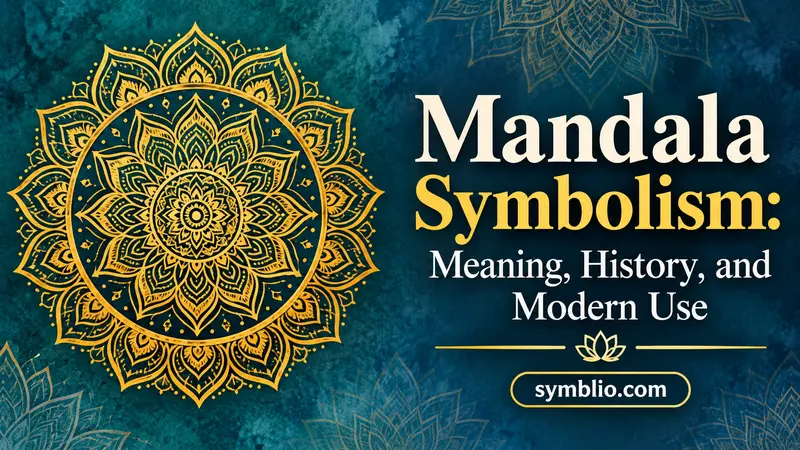
Mandala symbolism is commonly associated with balance, harmony, unity, and spiritual reflection. Mandala symbolism represents balance, harmony, unity, and spiritual reflection. A mandala is a geometric design that places a central point at the heart of circles, squares, and repeating patterns. Its symmetrical appearance creates an organized composition that connects individual shapes within one complete design.
Mandalas have important religious and cultural roots in Hinduism and Buddhism. Practitioners have used these designs in meditation, religious ceremonies, sacred architecture, and spiritual teachings. Their patterns often represent the universe, divine principles, and the relationship between different aspects of existence.
Today, mandalas appear in American tattoos, jewelry, coloring books, home decoration, and wellness activities. Some people appreciate their artistic beauty, while others connect them with mindfulness and personal growth. Learning about their origins helps explain why these geometric designs continue to attract attention.
Quick Answer
Mandala symbolism commonly represents balance, harmony, unity, and spiritual reflection in modern American culture. Hindu and Buddhist traditions also connect mandalas with the universe, sacred spaces, divine order, and spiritual understanding.
TL;DR
- Mandalas represent balance, unity, harmony, and spiritual order.
- Their historical roots connect closely with ancient Indian traditions.
- Hinduism uses mandala-related designs in sacred geometry and worship.
- Buddhism uses mandalas in meditation and religious ceremonies.
- Americans associate mandalas with creativity, mindfulness, and personal expression.
- Mandala tattoos often represent personal growth and spiritual reflection.
What Is a Mandala?
A mandala is a geometric design that usually features a central point surrounded by circles, squares, and repeating patterns. Its symmetrical arrangement brings different shapes together to create one complete composition.
The word mandala comes from Sanskrit, an ancient Indian language, and generally means circle. However, traditional mandalas represent much more than circular artwork. Hindu and Buddhist communities use them to express ideas about sacred spaces, cosmic structures, and spiritual principles.
Some mandalas contain only a few simple shapes, while others feature detailed patterns, lotus petals, religious figures, and symbolic colors.
People encounter mandalas in religious paintings, temple decorations, meditation materials, jewelry, and modern decorative artwork. Although their appearance varies, most designs organize their elements around a central point.
The Main Symbolic Meanings of Mandalas
Mandalas communicate several important ideas. Their meanings depend on cultural traditions, religious beliefs, and personal interpretations.
Balance and harmony: The symmetrical arrangement creates a sense of visual order. Modern viewers often associate this structure with emotional balance and harmony in everyday life.
Unity and wholeness: The central point and surrounding patterns work together to form one complete design. This arrangement can represent the connection between individual elements and a larger whole.
Spiritual development: Hindu and Buddhist traditions use mandalas to represent sacred environments, religious teachings, and spiritual understanding.
Reflection and concentration: Their detailed patterns give practitioners a visual focus during meditation and contemplation.
Other common interpretations include:
- Personal growth and transformation
- Connection with the universe
- Completeness and continuity
- Spiritual awareness
- Order and organization
- Inner reflection
These associations explain why mandalas appeal to people with different religious beliefs, artistic interests, and personal experiences.
Ancient Origins of Mandala Symbolism
Mandalas have important historical roots in ancient India, where geometric arrangements became part of religious art, ritual practices, and spiritual traditions.
The Sanskrit word refers to a circle, but Indian religious communities developed more complex designs to represent sacred spaces and cosmic order. Artists and religious practitioners used these arrangements for specific spiritual purposes rather than decoration alone.
Hindu traditions developed geometric diagrams for worship, meditation, and representations of divine principles. Buddhist communities also adopted mandalas and developed elaborate systems, particularly within Vajrayana Buddhism.
As Buddhism spread beyond India, different Asian communities developed their own mandala traditions. Tibet, Nepal, China, and Japan each contributed distinctive artistic styles and religious interpretations.
Over many centuries, these designs became important elements of Asian religious art. Their development shows how geometric patterns can communicate complex ideas about the universe, spiritual understanding, and religious belief.
Mandala Symbolism in Hinduism
Hinduism connects mandala-related designs with sacred geometry, divine presence, worship, and cosmic organization.
One important example is the Sri Yantra, a geometric diagram that features interlocking triangles around a central point. Hindu traditions associate this design with the goddess Tripura Sundari and ideas about creation and divine reality.
Another example is the Vastu Purusha Mandala, a traditional geometric plan that guides certain Hindu architectural systems. It helps organize buildings and sacred spaces through principles involving direction, proportion, and cosmic order.
These designs demonstrate the importance of geometry in Hindu religious traditions. Their shapes and arrangements express relationships between deities, directions, and different aspects of existence.
In modern American culture, people sometimes describe Hindu-inspired geometric designs simply as mandalas. However, their original religious meanings often extend beyond general ideas of peace or balance.
Mandala Symbolism in Buddhism
Buddhism has some of the best-known mandala traditions, particularly within Vajrayana Buddhism.
In this tradition, a mandala can represent a sacred palace, an enlightened realm, or the structure of the universe. Its central figure often represents a Buddha or another enlightened being, while surrounding figures and geometric patterns create an organized spiritual environment.
Buddhist practitioners use certain mandalas during meditation, visualization, and religious ceremonies. These designs help communicate spiritual teachings and provide a structured focus for contemplation.
Traditional Buddhist mandalas may contain several layers of meaning:
- Outer structure: Represents the universe or sacred environment.
- Inner structure: Relates to spiritual understanding and the practitioner’s mind.
- Central figure: Represents an enlightened being or important religious principle.
The meaning of each mandala depends on its Buddhist tradition and the teachings associated with it. Practitioners do not treat these designs as ordinary decorative pictures because they serve specific religious purposes.
Tibetan Sand Mandalas and the Meaning of Impermanence
Tibetan sand mandalas offer one of the most recognizable examples of traditional mandala art.
Buddhist monks create these intricate designs by carefully arranging colored sand into detailed geometric patterns. The process requires patience, concentration, artistic skill, and religious knowledge.
The completed design often represents a sacred palace or an organized spiritual universe. Its shapes, colors, and figures follow established religious arrangements.
One of the most important lessons behind Tibetan sand mandalas concerns impermanence. After completing the ceremony, monks traditionally dismantle the mandala and collect the sand according to their religious practice.
This process reflects a central Buddhist teaching: physical things change, and nothing in the material world remains permanent. Even an artwork that requires considerable time and effort will eventually disappear.
Modern American audiences often interpret this practice as a reminder to appreciate the present moment and accept change. However, the traditional ceremony connects directly with Buddhist teachings rather than general ideas about relaxation.
What Mandalas Symbolize in the United States
In the United States, mandalas commonly represent harmony, mindfulness, creativity, and personal expression.
Many Americans encounter them through yoga studios, meditation spaces, adult coloring books, tattoos, and decorative artwork. Their geometric patterns make them recognizable even to people who know little about their religious history.
Some people use mandala artwork as a reminder to slow down and focus on the present. Others choose these designs because they represent balance or complement their home decorations.
Mandalas also appear in modern interior design. Artists and manufacturers incorporate them into wall hangings, rugs, cushions, paintings, and decorative accessories.
Their meaning in American culture does not always involve religion. Someone may purchase mandala artwork simply because they appreciate its appearance without following Hinduism or Buddhism.
Nevertheless, understanding the religious origins of traditional mandalas helps people appreciate their cultural background and distinguish sacred artwork from ordinary geometric decoration.
Emotional and Psychological Meaning of Mandalas
Mandalas communicate emotional ideas through their symmetrical arrangements and repeating patterns.
Their organized appearance often suggests calmness, balance, and concentration. When people examine a detailed mandala, they can focus on its shapes, colors, and relationships between different elements.
Swiss psychiatrist Carl Jung also explored mandala imagery in his psychological work. He associated these patterns with psychological wholeness and the process of bringing different aspects of the self into a more organized relationship.
Jung’s ideas introduced mandalas to Western audiences interested in dreams, creativity, and personal development. However, his psychological interpretation differs from the religious meanings found in Hindu and Buddhist traditions.
Today, mandala coloring offers another way to explore creativity. People use coloring books and drawing exercises to complete detailed patterns and enjoy a focused artistic activity.
These activities may help some people relax, but mandalas do not guarantee relief from anxiety or other health conditions.
Mandala Color Symbolism
Color contributes to the appearance and interpretation of mandalas. Traditional religious artwork may follow specific color systems, while modern designs often reflect artistic preferences and personal associations.
| Color | Common Symbolic Meaning | Modern Association |
|---|---|---|
| Blue | Wisdom and spaciousness | Calmness and reflection |
| Red | Energy and transformation | Passion and courage |
| Yellow | Knowledge and illumination | Optimism and clarity |
| Green | Growth and balance | Renewal and harmony |
| White | Purity and clarity | Peace and simplicity |
| Purple | Spirituality and contemplation | Creativity and reflection |
These associations offer general interpretations rather than universal rules. Traditional Buddhist artwork, for example, connects particular colors with specific deities, directions, and spiritual qualities.
Modern American artists often select colors according to the mood they want to create. Blue and green may suggest a calming atmosphere, while red and yellow can give a design a brighter appearance.
The cultural background and artistic purpose determine how viewers should interpret a mandala’s colors.
Mandala Symbolism in Art and Interior Design
Mandalas have become popular in modern American art because their geometric arrangements work well across different visual styles.
Artists use symmetrical patterns to create compositions that attract attention without relying on realistic images. Circular structures also introduce balance into designs that contain many small details.
Common examples include:
Wall decorations: Mandala paintings and prints add geometric detail to bedrooms, living rooms, and meditation spaces.
Textile patterns: Designers incorporate mandala-inspired artwork into blankets, rugs, cushions, and clothing.
Jewelry: Circular mandala patterns appear in pendants, earrings, and bracelets.
Graphic design: Artists use mandala patterns in posters, digital illustrations, and decorative backgrounds.
Creative projects: Drawing and painting mandalas attract people who enjoy decorative arts and geometric designs.
In these settings, mandalas may represent harmony and personal expression. Some people simply appreciate their geometric beauty.
Why Mandalas Are Popular in Tattoos
Mandala tattoos attract attention because their symmetrical patterns suit different artistic preferences and body placements.
Some people choose simple designs with clean geometric lines, while others prefer detailed patterns featuring lotus flowers, repeated shapes, and decorative elements.
Common interpretations of mandala tattoos include:
- Balance and harmony
- Personal growth
- Spiritual reflection
- Unity and completeness
- Connection with meditation
- Appreciation of geometric artwork
Some individuals choose mandala tattoos to mark important personal experiences or represent particular stages of their lives.
However, a tattoo does not have one fixed meaning. Two people can select similar designs for completely different reasons.
Certain mandalas also function as sacred religious diagrams. Anyone considering a tattoo based on a specific Hindu or Buddhist design should learn about its original purpose and cultural significance before choosing it.
Mandalas in Meditation and Mindfulness
Mandalas have an important place in traditional meditation practices, particularly within certain Buddhist traditions.
In Vajrayana Buddhism, practitioners use mandalas in visualization exercises and religious ceremonies. These designs represent sacred environments and provide a structured way to contemplate religious teachings.
Modern American wellness communities also use mandala drawing and coloring as creative mindfulness activities.
A person may choose a design, select colors, and gradually complete its patterns. Concentrating on the activity can provide an opportunity to step away from everyday distractions.
However, contemporary mandala coloring does not replace traditional Buddhist meditation. Both activities may involve visual patterns, but their purposes and religious contexts differ.
Understanding this distinction allows people to appreciate mandalas as both traditional religious artwork and modern creative activities.
Mandala Symbolism Across Different Cultures
Mandalas have developed different meanings as they have spread across religious and cultural traditions.
Tibetan Buddhism: Mandalas represent sacred realms, enlightened beings, and the organization of spiritual space. Practitioners use them in meditation and religious ceremonies.
Hinduism: Mandala-related designs and yantras represent divine principles, sacred geometry, and cosmic organization.
Japanese Buddhism: Esoteric Buddhist traditions developed elaborate mandala paintings, including the Womb World and Diamond World mandalas. These designs represent important aspects of Buddhist teachings and cosmology.
Western psychology: Carl Jung interpreted mandala imagery as an expression of psychological wholeness and personal integration.
Modern American culture: Mandalas commonly represent creativity, mindfulness, balance, and artistic expression.
These interpretations demonstrate why cultural background matters when people discuss mandala symbolism. Similar geometric patterns can communicate different ideas depending on the traditions that use them.
Common Misunderstandings About Mandalas
The growing popularity of mandalas has created several misunderstandings about their origins and meanings.
One common misconception claims that every mandala represents the same spiritual idea. In reality, traditional designs can have specific religious meanings, figures, and purposes that differ considerably.
Another misconception treats mandalas as exclusively Buddhist symbols. Their history also includes important Hindu traditions and later developments within different Buddhist communities.
Some commercial products claim that mandalas automatically attract positive energy, guarantee healing, or produce spiritual transformation. These statements reflect personal beliefs or marketing claims rather than established facts.
Cultural appropriation also deserves attention. When people use sacred religious imagery without understanding its background, they can separate a design from the traditions that give it meaning.
Artists can still appreciate and adapt mandala-inspired patterns. They should simply recognize their origins and treat sacred imagery with respect.
How Mandala Symbolism Has Changed Over Time
Mandalas have changed in appearance and purpose as different cultures and historical periods adopted them.
Their early development in Indian religious traditions connected geometric patterns with sacred space, worship, and spiritual understanding. Hindu and Buddhist communities developed distinct systems in which mandalas represented particular religious ideas.
As Buddhism spread across Asia, artists created distinctive regional styles. Tibetan sand mandalas and Japanese Buddhist paintings demonstrate this artistic and cultural development.
Later, Western interest in Asian religions and Carl Jung’s psychological interpretations introduced mandalas to new audiences. People began exploring their artistic and psychological meanings outside traditional religious settings.
During the twenty-first century, mandalas gained popularity through coloring books, tattoos, wellness activities, and digital artwork.
Today, people may use mandalas to represent religious teachings, personal reflection, artistic creativity, or decorative beauty. Their original cultural meanings remain important even as modern interpretations continue to develop.
FAQs
A mandala can represent the universe, sacred order, divine presence, and the relationship between the individual and a larger reality. Its exact spiritual meaning depends on the religious tradition and the particular design.
Mandalas have important historical connections to both Hinduism and Buddhism. Hindu traditions use mandala-related diagrams and yantras, while Buddhist traditions developed elaborate mandalas for meditation and religious ceremonies.
A mandala tattoo commonly represents balance, unity, personal growth, and spiritual reflection. Its meaning may also depend on additional design elements, colors, and the personal reasons behind choosing it.
The circular arrangement reflects the meaning of the Sanskrit word mandala, which generally translates as circle. In religious artwork, the circle can represent the universe, completeness, and the organization of sacred space.
Mandalas are generally associated with positive ideas such as harmony, balance, spiritual development, and completeness. However, traditional religious interpretations are more specific than simply representing good luck or positive energy.
In Jungian psychology, mandala imagery is associated with psychological wholeness and the integration of different aspects of the self. This is a Western psychological interpretation rather than the complete meaning of traditional religious mandalas.
Mandalas provide visual structures that help practitioners focus their attention and contemplate spiritual teachings. In some Buddhist traditions, they are also used as part of detailed visualization practices.
Conclusion
Mandala symbolism represents balance, unity, harmony, spiritual order, and the relationship between individual experience and the wider universe. Its historical roots are closely connected to Hinduism and Buddhism, where geometric designs became important elements of worship, meditation, and religious teaching.
In modern American culture, mandalas have developed additional associations with creativity, mindfulness, personal growth, and artistic expression. Their appearance in tattoos, jewelry, coloring books, and interior design shows how traditional artwork can acquire new interpretations in contemporary life.
Understanding a mandala requires looking beyond its geometric appearance. Its meaning comes from the cultural traditions, religious beliefs, artistic choices, and personal intentions behind the design.


