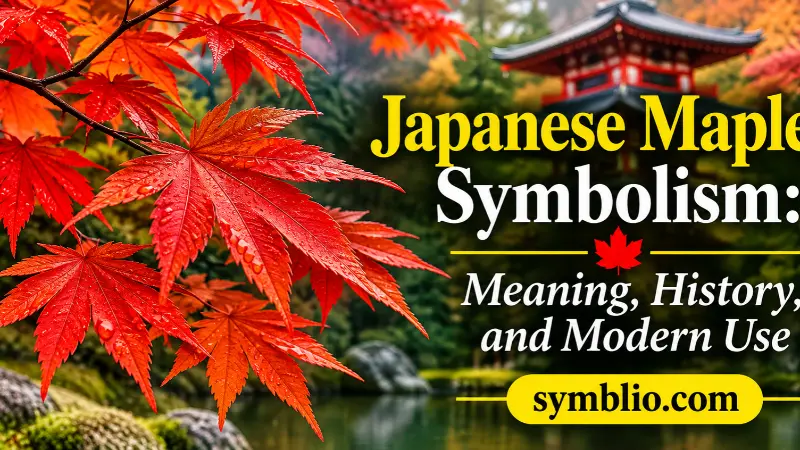
The Japanese maple is admired for its delicate leaves, graceful branches, and brilliant seasonal colors. Japanese maple symbolism is commonly associated with transformation, balance, peace, beauty, and the passing of time. Its changing foliage offers a natural reminder that life moves through different stages, each with its own character and value. In Japan, the tree also has a long connection with autumn traditions, poetry, garden design, and the appreciation of seasonal beauty.
In the United States, Japanese maples have become popular ornamental trees in residential gardens, public parks, botanical collections, and landscape designs. Their distinctive shapes and colorful leaves make them more than decorative plants. For many people, they represent a peaceful environment, thoughtful living, and an appreciation for nature.
The tree’s meaning becomes especially interesting when its Japanese cultural background is considered alongside its modern American use. Although different people may interpret it in different ways, its seasonal changes provide a natural foundation for several widely recognized symbolic associations.
Quick Answer
Japanese maple symbolism commonly represents transformation, peace, balance, beauty, and the acceptance of change in modern American culture. In Japanese traditions, its autumn leaves are associated with seasonal appreciation, reflection, impermanence, and the beauty of nature.
TL;DR
- Japanese maples represent transformation and the changing stages of life.
- Their autumn foliage reflects beauty, impermanence, and seasonal transitions.
- Japanese gardens connect the tree with balance and thoughtful landscape design.
- Red leaves commonly suggest warmth, vitality, and autumn beauty.
- In American gardens, Japanese maples represent tranquility and natural elegance.
- Their changing appearance makes them meaningful gifts and personal symbols.
What a Japanese Maple Looks Like and Why Its Appearance Matters
The Japanese maple, scientifically known as Acer palmatum, is a small deciduous tree native to Japan, Korea, and parts of China. It belongs to the maple family and is particularly recognizable for its distinctive leaves, which usually have five to seven pointed lobes.
Unlike many larger shade trees, Japanese maples often have an elegant, spreading structure. Some varieties grow upright, while others develop cascading branches that create a waterfall-like appearance.
Their foliage comes in several colors, including green, burgundy, red, orange, yellow, and purple. Depending on the variety, leaves may change dramatically as the seasons progress.
These physical characteristics contribute to the tree’s symbolic associations.
Its changing foliage suggests transformation, while its graceful branches encourage associations with balance and harmony. The small, carefully shaped appearance of many cultivated varieties also makes the tree a natural symbol of attention to detail.
The Japanese maple does not have one universally established symbolic definition. Its meanings develop through cultural traditions, seasonal observations, and personal experiences.
The Core Symbolism of the Japanese Maple
Japanese maple symbolism centers on the relationship between change and beauty. The tree develops throughout the year, displaying different colors and forms as the seasons change.
Several interpretations emerge from this natural cycle.
Transformation: The changing foliage represents personal development and the ability to move through different stages of life.
Peace: Its graceful structure and colorful leaves make it a familiar feature in peaceful garden settings.
Balance: Its carefully branching structure suggests harmony between different elements of nature.
Beauty: Its distinctive foliage represents the appreciation of natural details and seasonal scenery.
Impermanence: Its autumn leaves remind observers that beautiful experiences are temporary.
Resilience: Its ability to grow through changing seasons can suggest patience and adaptation.
These meanings are not equally important in every culture. In particular, transformation and seasonal appreciation have strong connections to the tree’s natural appearance and Japanese autumn traditions.
Ancient Japanese Roots and the History of Maple Appreciation
Japanese maple cultivation has a long history in Japan. Gardeners developed and selected different varieties for their distinctive leaf shapes, colors, and growth patterns.
The cultivation of Japanese maples became particularly developed during the Edo period (1603–1868). Historical horticultural traditions encouraged the selection of trees with unusual foliage and attractive forms. Over time, numerous cultivars became valued additions to Japanese gardens.
The cultural appreciation of maple leaves also developed through seasonal customs.
One important tradition is momijigari, which means going out to appreciate autumn foliage. The practice became popular among Japanese aristocrats during the Heian period (794–1185). People traveled to scenic locations to admire changing leaves, compose poetry, and enjoy the autumn landscape. The tradition eventually spread to broader sections of Japanese society. Japan National Tourism Organization+2
This history helps explain why maple leaves carry associations with reflection, seasonal beauty, and the passage of time.
Rather than treating the tree as a symbol with one fixed religious meaning, it is more accurate to understand it as part of a wider Japanese tradition of appreciating nature and seasonal change.
What Japanese Maple Symbolism Means in the United States
In the United States, Japanese maples are widely appreciated as ornamental trees. Homeowners, landscape designers, and gardening enthusiasts value them for their attractive foliage and relatively manageable size.
Their American symbolism often develops through their appearance and the places where people encounter them.
A Japanese maple in a residential garden may suggest a peaceful home environment. Its graceful shape can create a quiet focal point without overwhelming the surrounding landscape.
In botanical gardens, the tree often represents horticultural craftsmanship and the appreciation of unusual plant varieties.
Its seasonal colors also connect it with American autumn traditions. Although Japanese maple leaves are not an official symbol of American fall celebrations, they naturally complement the familiar seasonal themes of harvest, changing weather, and colorful landscapes.
For many Americans, the tree communicates a preference for thoughtful design rather than excessive decoration.
It can also represent an interest in Japanese gardening traditions and the influence of Asian landscape design on American gardens.
Transformation and the Changing Stages of Life
One of the clearest symbolic associations of the Japanese maple comes from its changing leaves.
During spring, fresh foliage appears and gradually develops. Summer brings fuller growth, while autumn introduces striking colors before the leaves fall.
This cycle provides a natural comparison with human experiences.
People also move through different stages. Childhood, education, relationships, personal development, and later life each bring different responsibilities and opportunities.
The Japanese maple can therefore represent the idea that change is a normal part of development.
A person who chooses this tree as a personal symbol may associate it with starting a new chapter, accepting an important transition, or recognizing how past experiences have influenced personal growth.
Its seasonal cycle also offers a reminder that change does not always mean losing something. Sometimes, it creates the conditions for a new beginning.
Impermanence and the Beauty of Autumn Leaves
Japanese maple leaves are especially recognizable during autumn, when green foliage may become bright red, orange, or yellow.
In Japanese cultural traditions, autumn foliage is closely connected with the appreciation of temporary beauty.
The concept of mono no aware describes an awareness of life’s impermanence and the emotions that arise when people recognize that beautiful experiences do not last forever.
The autumn maple offers a natural illustration of this idea.
Its leaves become especially attractive just before they fall. Their beauty is therefore connected with a brief moment in the tree’s yearly cycle.
This interpretation is particularly relevant to the Japanese tradition of momijigari. People do not simply observe autumn colors; they make time to experience them before the season passes.
For American readers, this meaning can connect with memories of changing seasons, family outings, and appreciating ordinary experiences.
The tree reminds people that temporary moments can still be valuable.
Peace, Balance, and Harmony in Japanese Garden Design
Japanese maples frequently appear in traditional and contemporary Japanese garden designs.
Their naturally attractive forms make them suitable for carefully arranged landscapes containing stones, water, moss, pathways, and other plants.
In these settings, the tree contributes to an overall feeling of balance.
Its branches may extend over a pond, frame a pathway, or create a focal point near a garden entrance. The surrounding elements help establish a composition in which each feature has a purpose.
This connection has influenced how Japanese maples are understood in American gardens.
People often associate them with:
- Quiet surroundings and peaceful reflection.
- Balance between natural and designed spaces.
- Appreciation of simplicity.
- Careful attention to landscape details.
- A closer connection with the natural world.
It is important to distinguish these garden associations from claims that every Japanese maple has a specific spiritual meaning. Its peaceful impression often comes from the way it is cultivated and incorporated into its surroundings.
The Symbolism of Japanese Maple Colors
Japanese maples are available in numerous varieties, and their foliage colors contribute to different personal interpretations.
Although color meanings are not universal cultural rules, they offer useful ways to understand the tree’s visual symbolism.
Red Japanese Maple
Red foliage is commonly associated with vitality, warmth, passion, and seasonal transformation.
In autumn, its brilliant appearance can suggest the richness of life’s experiences and the beauty of change.
Green Japanese Maple
Green leaves are often connected with growth, renewal, balance, and natural harmony.
A green Japanese maple may represent a preference for simplicity and an appreciation of everyday natural beauty.
Orange Japanese Maple
Orange foliage can suggest warmth, creativity, energy, and the transition from summer to autumn.
Its appearance often creates associations with seasonal celebrations and the changing landscape.
Yellow Japanese Maple
Yellow leaves may represent optimism, clarity, happiness, and the brightness of autumn.
Their lighter appearance offers a different interpretation of seasonal change from the dramatic red varieties.
Purple and Burgundy Japanese Maple
Purple and burgundy foliage can suggest individuality, refinement, dignity, and distinctive personal taste.
These interpretations are influenced by broader color associations rather than a single traditional Japanese maple belief.
Japanese Maple Symbolism in Different Cultural Contexts
The Japanese maple has its strongest historical and cultural associations in East Asia, particularly Japan. However, its meaning can change when people encounter it in other cultural settings.
In Japan, maple foliage is closely connected with autumn appreciation, traditional art, seasonal poetry, and garden culture.
In the United States, it is often associated with peaceful landscaping, ornamental gardening, and the beauty of fall foliage.
In other parts of East Asia, maple leaves also appear in decorative and artistic traditions. Their autumn colors can serve as seasonal imagery in paintings, textiles, and landscape compositions.
The important distinction is that the tree does not carry an identical meaning in every culture.
Its modern popularity around the world has created additional personal interpretations, especially among people who associate it with travel, Japanese gardens, or memories of a particular place.
Emotional and Psychological Meaning of the Japanese Maple
People often develop emotional connections with trees through memories and repeated experiences.
A Japanese maple may remind someone of a childhood garden, a favorite park, a visit to Japan, or a peaceful place where they enjoyed spending time.
These personal associations help explain why the tree can carry emotional meaning beyond its appearance.
Its seasonal changes may encourage reflection about personal growth. Its graceful structure may create an impression of calmness, while its autumn colors can bring feelings of nostalgia.
There is also an important connection between nature and emotional well-being. Spending time in green spaces and natural environments can support relaxation and reduce everyday stress for many people.
The Japanese maple is not a special treatment for emotional difficulties, but it can serve as a meaningful reminder to make time for outdoor experiences.
For some individuals, its symbolism is simply about having a peaceful place to pause and appreciate the surroundings.
Japanese Maple Symbolism in American Homes and Gardens
Japanese maples became increasingly familiar in American horticulture following the introduction of Japanese plants to North America during the nineteenth century.
Plant collectors and nurseries helped introduce and distribute Japanese species, including Acer palmatum, to American gardeners. The Arnold Arboretum and commercial horticultural networks played important roles in expanding the availability of Japanese plants. Squarespace+2
Today, Japanese maples are commonly used as specimen trees, meaning they are planted where their individual appearance can become a landscape feature.
Their symbolic associations often complement their practical decorative role.
For example, a homeowner might plant one near a patio to create a peaceful outdoor setting. Another person might choose a red-leaved variety because its seasonal colors complement the design of the house.
Some gardens use Japanese maples near ponds, stone arrangements, or winding pathways to create a more natural and balanced appearance.
The tree can also represent a long-term investment in a garden. Many varieties grow gradually and reward careful attention over time.
Japanese Maple Symbolism in Art, Tattoos, and Personal Expression
Japanese maple leaves have appeared in traditional Japanese visual arts, textiles, and decorative designs.
Their recognizable shape makes them suitable for artistic compositions, especially those representing autumn.
In modern American culture, maple leaves may also appear in tattoos, clothing, jewelry, wall art, and decorative accessories.
A Japanese maple tattoo can represent several personal ideas:
- Transformation: A reminder of personal development and changing circumstances.
- Acceptance: An expression of comfort with life’s natural transitions.
- Peace: A visual connection with quiet surroundings and balance.
- Japanese heritage or interest: An appreciation of Japanese art, gardening, or cultural traditions.
- Memories: A way to remember a meaningful place, season, or experience.
Some tattoo designs feature a single red maple leaf, while others depict entire branches with falling foliage.
A falling leaf can suggest a transition or the completion of one stage of life. A flourishing branch may communicate growth and continued development.
People should also remember that a Japanese maple leaf is not automatically a religious or spiritual symbol. Its meaning depends on the individual and the cultural context in which it appears.
Japanese Maple as a Gift and What It Can Represent
A Japanese maple can make a thoughtful gift for someone who enjoys gardening, landscape design, or unusual ornamental plants.
Unlike a temporary decorative arrangement, a living tree can become part of someone’s home or garden for many years.
Its symbolic associations make it appropriate for several occasions.
Housewarming: It can represent the creation of a peaceful and welcoming home.
Birthdays: Its continued growth may suggest personal development and new experiences.
Retirement: It can represent a new stage of life and an opportunity to appreciate everyday surroundings.
Anniversaries: Its seasonal changes may serve as a reminder of the different stages a relationship has experienced.
Garden celebrations: It can express appreciation for nature and thoughtful landscape design.
The meaning of a gifted Japanese maple is not fixed. A short personal message explaining why the tree was chosen can make the gesture more meaningful.
It is also worth considering the recipient’s climate and available garden space before choosing a particular variety.
Common Misunderstandings About Japanese Maple Symbolism
Japanese maples are sometimes described using broad spiritual or cultural claims that are not supported by their documented history.
Understanding a few distinctions helps keep their symbolism accurate.
One common misunderstanding is that Japanese maples have one official meaning in Japanese religion. In reality, their cultural importance is strongly connected with seasonal appreciation, horticulture, and artistic traditions.
Another misconception is that every red Japanese maple represents love or romance. Red foliage may encourage associations with passion and warmth, but these interpretations are not universal traditional meanings.
Some people also assume that the tree symbolizes immortality because it returns with new foliage each year. Its seasonal cycle can certainly suggest renewal, but that does not establish immortality as a traditional meaning.
Finally, the Japanese maple should not be confused with Canada’s national maple leaf symbolism. Both belong to the maple family, but their cultural associations are different.
Recognizing these distinctions allows people to appreciate the tree without assigning it meanings that do not have a clear cultural foundation.
How Japanese Maple Symbolism Has Evolved in Modern Culture
The Japanese maple has developed from a culturally valued ornamental tree in Japan into a familiar landscape feature in many countries.
Its history reflects changes in horticulture, international plant exchange, garden design, and public interest in seasonal scenery.
In Japan, the tradition of appreciating autumn foliage continues through visits to temples, parks, mountains, and historic gardens.
In the United States, Japanese maples have become popular choices for residential landscaping and botanical collections.
Their symbolism has also expanded beyond traditional seasonal associations.
Today, people may choose a Japanese maple to represent personal change, a peaceful lifestyle, an interest in Japanese culture, or a connection with a particular memory.
Social media has helped make the tree’s colorful foliage more visible, especially during autumn. Photographs of red maple leaves and carefully designed gardens frequently appear in seasonal nature and gardening content.
Despite these changes, the tree’s most recognizable associations remain connected with its natural appearance: beauty, seasonal transformation, balance, and the temporary character of life.
Japanese Maple Symbolism by Context: A Quick Comparison
The following table summarizes common interpretations of the tree in different settings.
| Context | Common Symbolism | Main Association |
|---|---|---|
| Japanese autumn traditions | Impermanence and seasonal beauty | Momijigari |
| American gardens | Peace and natural elegance | Landscape design |
| Red foliage | Vitality and transformation | Autumn colors |
| Tattoos and artwork | Personal growth and acceptance | Individual expression |
| Gift giving | New beginnings and appreciation | Long-term growth |
These interpretations provide a starting point rather than a universal set of rules. Personal experiences and cultural backgrounds can influence how someone understands the tree.
FAQs
A Japanese maple can represent harmony, reflection, renewal, and the acceptance of life’s natural changes. These are common personal and cultural interpretations rather than a single officially established spiritual meaning.
Some people associate Japanese maples with positive qualities such as growth, balance, and a peaceful home. However, good luck is not a universally established traditional meaning specifically attached to this tree.
A red Japanese maple commonly suggests vitality, warmth, transformation, and the beauty of autumn. Its changing foliage also makes it a natural symbol of life’s temporary experiences.
A Japanese maple tattoo can represent personal growth, acceptance of change, peace, or appreciation for Japanese culture. Its meaning usually depends on the design and the personal experiences of the individual wearing it.
Japanese maple leaves are strongly connected with momijigari, the traditional practice of appreciating autumn foliage. The changing leaves also appear in Japanese artistic and seasonal traditions as reminders of beauty and impermanence.
Yes, peace and harmony are common modern interpretations, particularly because Japanese maples frequently appear in carefully designed gardens. Their graceful branches and distinctive foliage contribute to their association with balanced natural surroundings.
A Japanese maple can represent growth, new beginnings, appreciation, and a peaceful home. It is particularly suitable for someone who enjoys gardening or values meaningful connections with nature.
Conclusion
Japanese maple symbolism brings together several ideas connected with nature, seasonal change, and personal reflection. Its changing leaves represent transformation and impermanence, while its graceful shape and garden presence encourage associations with peace, balance, and natural beauty.
Its Japanese cultural history provides an important foundation for these interpretations, particularly through the tradition of momijigari and the appreciation of autumn foliage. In modern American culture, the tree has also become a familiar symbol of thoughtful landscaping, personal expression, and a connection with nature.
Ultimately, the Japanese maple reminds us that change is a natural part of life. Its beauty is not limited to one season, and its different stages offer their own reasons for appreciation.