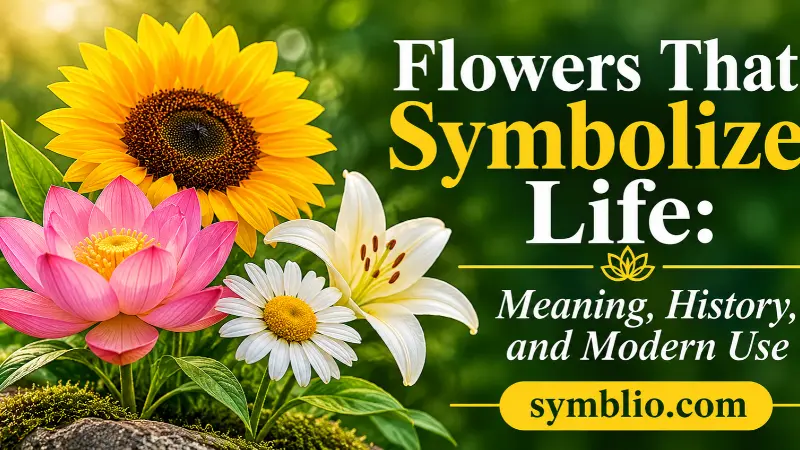
Flowers that symbolize life represent some of the most meaningful experiences people share: birth, growth, renewal, happiness, hope, and the ability to begin again. From bright yellow daffodils appearing after winter to sunflowers turning toward the light, different blooms have become recognizable expressions of life’s energy and beauty.
People have used flowers to celebrate important moments for centuries. They appear at birthdays, weddings, graduations, religious ceremonies, memorials, and family gatherings. Their colors, growing patterns, and seasonal changes often give them meanings beyond their physical appearance.
In the United States, flowers are especially common in celebrations of new beginnings and personal milestones. A bouquet can welcome a newborn, congratulate someone starting a new chapter, or express appreciation for someone who makes life meaningful.
Although individual flowers carry different associations across cultures, many share one central idea: life continues to grow, change, and renew itself.
Quick Answer:
Flowers that symbolize life commonly represent growth, vitality, renewal, hope, happiness, and new beginnings in modern American culture. Historically, flowers have also represented fertility, resurrection, spiritual renewal, immortality, and the connection between human life and nature.
TL;DR
- Sunflowers represent vitality, happiness, and the warmth of life.
- Daffodils symbolize rebirth, fresh beginnings, and renewed hope.
- Lotus flowers represent spiritual growth and transformation.
- Cherry blossoms remind people to appreciate life’s temporary beauty.
- Tulips express renewal, affection, and the arrival of spring.
- Marigolds connect life, remembrance, and cultural traditions.
Why Flowers Have Become Symbols of Life
Flowers have a natural connection to the cycle of life. They begin as buds, open into blossoms, produce seeds, and eventually fade. Their development reflects processes people recognize in their own experiences, including childhood, maturity, change, and renewal.
Seasonal flowering makes this connection especially noticeable. After months of cold weather, spring brings new growth to gardens, parks, and landscapes. The appearance of colorful blossoms suggests that nature is becoming active again.
Flowers also produce seeds that can develop into new plants. This ability to continue a life cycle makes them natural symbols of fertility, continuity, and future generations.
Their visual qualities contribute to their meaning as well. Bright colors suggest energy and celebration, while delicate blossoms can represent tenderness and the value of each passing moment.
People do not need to follow a particular religious or cultural tradition to recognize these associations. The connection between flowers and life comes partly from observing the natural world.
Sunflower Symbolism: Vitality, Happiness, and Positive Living
Sunflowers are among the clearest floral representations of life and vitality. Their large golden petals, prominent centers, and association with sunlight make them natural symbols of warmth, optimism, and energy.
In American culture, sunflowers frequently appear in summer gardens, seasonal decorations, greeting cards, and celebratory arrangements. Their bright appearance communicates friendliness and happiness without requiring an elaborate explanation.
Sunflowers also have an interesting relationship with light. Young sunflower plants can track the sun’s movement across the sky, a behavior called heliotropism. Mature flower heads generally face east.
This relationship has helped establish the sunflower as an image of optimism, direction, and looking toward better possibilities.
Sunflowers are also associated with abundance because their centers contain numerous seeds. These seeds provide food for birds, wildlife, and people, connecting the flower with nourishment and the continuation of life.
A sunflower bouquet can therefore express appreciation, encouragement, friendship, or a celebration of someone’s achievements.
Daffodil Symbolism: Rebirth and New Beginnings
Daffodils are strongly associated with rebirth, hope, and the return of life after difficult periods. Their appearance in early spring makes them familiar signs of seasonal change.
Unlike flowers that require consistently warm conditions, daffodils emerge from underground bulbs after winter dormancy. Their return demonstrates how living things can remain dormant before producing new growth.
This natural process explains much of their symbolic association with fresh starts.
Daffodils also have historical connections to resurrection in Christian traditions. Their spring flowering helped establish associations with Easter and the celebration of renewed life.
In the United States, daffodils frequently appear in spring gardens, public landscapes, and Easter decorations. They can also represent encouragement after a challenging experience.
Giving someone daffodils can communicate that a new chapter is beginning and that better days are possible.
Lotus Flower Symbolism: Spiritual Life and Transformation
The lotus is one of the most recognizable flowers associated with spiritual growth, renewal, and transformation.
Its growing environment contributes significantly to its symbolism. Lotus plants develop in muddy water, yet their flowers rise above the surface and open into distinctive blossoms.
This contrast has inspired associations with overcoming difficulties, maintaining personal integrity, and developing wisdom.
In Hinduism, the lotus is associated with several important deities, including Lakshmi and Brahma. It represents purity, creation, and spiritual development.
In Buddhism, the flower is closely connected with enlightenment, compassion, and the journey toward awakening.
Ancient Egyptian traditions also connected water lilies commonly called lotuses with creation, the sun, and the renewal of life. These associations should be distinguished from the botanical lotus, although both plants became important in Egyptian imagery.
Today, Americans encounter lotus symbolism in meditation spaces, spiritual artwork, jewelry, tattoos, and decorative designs.
For someone who has experienced personal change, the lotus can represent the ability to develop and move forward despite difficult circumstances.
Cherry Blossom Symbolism: The Beauty and Fragility of Life
Cherry blossoms represent renewal, beauty, and the temporary nature of life. Their short flowering season makes them especially meaningful in Japanese culture.
The blossoms appear in spring, creating beautiful displays before their petals fall. This brief period reminds people that meaningful experiences do not necessarily last forever.
Japanese traditions connect cherry blossoms, or sakura, with the appreciation of the present moment and the changing nature of existence.
In the United States, cherry blossoms are particularly recognizable because of Washington, D.C.’s National Cherry Blossom Festival. The annual celebration commemorates the 1912 gift of Japanese cherry trees to the American capital.
The flowers have consequently become symbols of friendship, international cultural exchange, springtime, and renewal.
Cherry blossoms also appear in paintings, clothing, photography, and tattoo designs. Their symbolism can express gratitude for life, appreciation of nature, and awareness that every stage of life deserves attention.
Tulip Symbolism: Growth, Love, and Fresh Starts
Tulips are widely associated with spring, renewal, affection, and new beginnings.
Their flowering season arrives when many gardens begin returning to life. This makes them natural symbols of change and the excitement that accompanies a fresh start.
Tulips originally grew across parts of Central Asia before becoming especially important in Ottoman gardens and later European horticulture. Their popularity spread widely during the early modern period.
In contemporary America, tulips are popular gifts for birthdays, Mother’s Day, anniversaries, and spring celebrations.
Different colors also create additional associations:
- Red tulips commonly express love and affection.
- Yellow tulips often suggest cheerfulness and friendship.
- White tulips can represent forgiveness and sincerity.
- Pink tulips frequently communicate appreciation and happiness.
- Purple tulips are often associated with admiration and elegance.
Although these meanings are not universal rules, they help explain why tulips are frequently selected for occasions involving emotional connection and personal growth.
Marigold Symbolism: Life, Remembrance, and Celebration
Marigolds have a distinctive relationship with life and remembrance. Their bright orange and yellow blossoms communicate warmth, celebration, and the continuing connection between living people and those they remember.
In Mexican traditions, marigolds are particularly important during Día de los Muertos, or Day of the Dead.
Known as cempasúchil in Mexico, these flowers are commonly used to decorate ofrendas, the altars created to honor deceased family members and friends.
Their colors, fragrance, and traditional use help create a welcoming setting for remembering loved ones.
This tradition demonstrates that floral symbolism does not always separate life and death into opposing ideas. Sometimes, flowers represent the continuing importance of family relationships and cultural memory.
In American gardens, marigolds are also familiar summer and autumn flowers. Their warm colors make them popular in seasonal decorations and celebratory arrangements.
Their meaning can therefore include both the enjoyment of everyday life and the importance of remembering those who came before us.
Rose Symbolism: Love, Beauty, and the Value of Life
Roses are best known as symbols of love, but they can also represent the value, beauty, and emotional importance of life.
Their long history in art, literature, gardens, and religious imagery has produced a wide range of interpretations.
In American culture, roses are particularly common at weddings, anniversaries, Valentine’s Day celebrations, and other occasions involving affection.
Their colors influence their associations:
- Red roses represent romantic love and passion.
- Pink roses express appreciation, gratitude, and admiration.
- Yellow roses often communicate friendship and happiness.
- White roses can represent innocence, remembrance, and new beginnings.
- Orange roses suggest enthusiasm and excitement.
Roses also have an important place in memorial traditions. Their presence at funerals and remembrance ceremonies can express affection for someone whose life has ended.
This combination of celebration and remembrance makes roses relevant to different stages of human experience.
Lily Symbolism: Purity, Renewal, and the Continuity of Life
Lilies have long been associated with purity, renewal, beauty, and spiritual life.
In Christian artwork, the white Madonna lily is particularly connected with the Virgin Mary and ideas of purity and devotion.
Some lilies also appear in religious and cultural ceremonies as symbols of hope and renewal.
In the United States, lilies are common in weddings, religious celebrations, Easter arrangements, and memorial services.
Their associations depend partly on the occasion. At a wedding, they may communicate a fresh beginning and commitment. At a funeral, they can express sympathy, remembrance, and hope.
Lilies also demonstrate an important aspect of flower symbolism: a single type of flower can communicate different ideas depending on its color, cultural background, and setting.
Iris Symbolism: Hope, Wisdom, and the Journey Through Life
The iris represents hope, wisdom, faith, and personal development.
Its name comes from the Greek word associated with the rainbow. In Greek mythology, Iris was the goddess and messenger who connected the gods with humanity.
This connection helped establish the flower’s association with communication, messages, and the relationship between different worlds.
Irises come in numerous colors, including purple, blue, yellow, and white. Their varied appearance has made them popular in gardens, floral artwork, and decorative designs.
In the United States, iris flowers can represent encouragement during important life transitions. Their associations with wisdom and hope make them suitable for graduation celebrations, personal milestones, and thoughtful gifts.
The iris is also the state flower of Tennessee, giving it a recognizable place in American botanical and cultural identity.
Chrysanthemum Symbolism: Longevity and the Appreciation of Life
Chrysanthemums are associated with longevity, happiness, honor, and remembrance.
Their ability to flower during cooler seasons makes them especially noticeable in autumn gardens. This seasonal persistence contributes to associations with endurance and the continuation of life.
In China, chrysanthemums have historically been connected with longevity and noble character. In Japan, the flower has a special relationship with the imperial family and national cultural traditions.
American interpretations differ depending on the setting. Chrysanthemums are familiar autumn decorations, particularly around seasonal celebrations and garden displays.
They also appear in funeral arrangements and memorial traditions, where they can communicate respect and remembrance.
Their different cultural meanings demonstrate why it is important to understand the context in which a flower is used rather than assuming that every tradition interprets it identically.
Other Flowers Associated With Life and Renewal
Several additional flowers communicate related ideas through their appearance, seasonal growth, or cultural associations.
Peonies: Peonies are associated with prosperity, happiness, honor, and good fortune. Their full blossoms make them popular in wedding arrangements and celebrations of family life.
Magnolias: Magnolias often represent dignity, perseverance, and natural beauty. Their large blossoms and long history in southern American landscapes make them recognizable symbols of strength and renewal.
Crocuses: Crocuses are among the early flowers to emerge after winter. They commonly represent hope, cheerfulness, and the return of spring.
Zinnias: Zinnias are associated with friendship, endurance, and lasting affection. Their colorful flowers make them popular in American summer gardens.
Each flower offers a slightly different interpretation of life, allowing people to select one that reflects a particular experience or emotion.
How Different Flowers Represent Stages of Life
Flowers can represent more than life in general. Their individual characteristics make them useful symbols for different stages of human experience.
| Flower | Symbolic Meaning | Life Association | Common American Use |
|---|---|---|---|
| Sunflower | Vitality and happiness | Energy and personal growth | Celebrations and gifts |
| Daffodil | Rebirth and hope | New beginnings | Spring decorations |
| Lotus | Transformation and purity | Spiritual development | Tattoos and meditation artwork |
| Cherry blossom | Renewal and impermanence | Appreciating the present | Festivals and photography |
| Marigold | Remembrance and celebration | Family connections | Memorial traditions |
| Tulip | Affection and renewal | New chapters | Birthdays and anniversaries |
These associations provide a useful starting point, but personal experiences and cultural traditions can influence what an individual flower means.
Historical Origins of Flowers as Symbols of Life
Floral symbolism existed long before modern greeting cards and commercial flower arrangements.
Ancient civilizations used flowers in religious ceremonies, burial practices, artistic decoration, and seasonal celebrations.
In ancient Egypt, water lilies were connected with the sun, creation, and the renewal of life. Their daily opening and closing helped establish associations with recurring cycles and regeneration.
In Greek mythology, flowers frequently appeared in stories about transformation, love, beauty, and mortality. The myth of Narcissus, for example, explained the origins of the flower associated with his name.
Religious traditions also contributed to floral meanings. Christian art frequently used lilies, roses, and other blossoms to represent purity, devotion, and resurrection.
During the nineteenth century, floriography, commonly called the language of flowers, became especially popular in Europe and America. Floral dictionaries assigned emotional meanings to individual plants, allowing people to communicate through carefully selected bouquets.
However, these dictionaries did not always agree. The meaning of a particular flower could change between publications, regions, and historical periods. Cornell University Library Exhibits+2
Flowers That Symbolize Life in American Culture
Flowers have an important place in American celebrations and everyday traditions.
They appear at baby showers, birthdays, graduations, weddings, retirement parties, and memorial gatherings. Each occasion gives flowers a slightly different purpose.
At a graduation, sunflowers or tulips may communicate encouragement and excitement about the future. At a baby shower, soft-colored roses and lilies can represent affection, innocence, and the beginning of a new family chapter.
Spring celebrations also give flowers a strong association with renewal. Daffodils, tulips, and other seasonal blooms are common in Easter arrangements and public gardens.
American communities also use flowers to recognize cultural heritage. Cherry blossom festivals celebrate Japanese-American friendship, while marigolds play a central role in many Día de los Muertos observances.
These traditions show that floral symbolism is not limited to private relationships. Flowers can also represent shared memories, cultural identity, and community values.
Emotional and Psychological Meaning of Life-Symbolizing Flowers
Flowers communicate emotions partly through their colors, shapes, fragrance, and associations with particular occasions.
Bright yellow and orange flowers are frequently used to create cheerful arrangements. Their warm appearance can suggest happiness, encouragement, and enthusiasm.
Pink blossoms often communicate affection and appreciation, while white flowers may suggest peace, sincerity, or remembrance.
Flowers can also help people express feelings that are difficult to communicate directly.
A sunflower might be given to encourage a friend. A bouquet of tulips might celebrate an important achievement. A lotus image might represent personal development or a commitment to spiritual reflection.
Their emotional meaning is not determined by appearance alone. Memories matter too. Someone may associate a particular flower with a family garden, a childhood home, or an important celebration.
As a result, a flower can become a personal symbol even when its traditional meaning is different.
Flowers That Symbolize Life in Tattoos and Personal Style
Floral designs are popular in tattoos, jewelry, clothing, and personal artwork because they combine attractive natural forms with recognizable meanings.
People may choose flowers to represent important experiences, personal values, or relationships.
Some common interpretations include:
- Sunflower tattoos represent optimism, vitality, and appreciation for life.
- Lotus tattoos represent personal development and spiritual growth.
- Daffodil tattoos express hope and new beginnings.
- Cherry blossom tattoos represent life’s temporary beauty.
- Rose tattoos communicate love, affection, and remembrance.
- Iris tattoos can represent wisdom and faith.
Floral jewelry offers another way to express these ideas. A lotus pendant, sunflower necklace, or rose-shaped accessory can carry personal significance without requiring a permanent design.
The most meaningful choice is often the flower that connects with someone’s own experiences rather than the one with the most widely recognized symbolic definition.
Common Misunderstandings About Flowers That Represent Life
One common misunderstanding is that every flower has a single fixed meaning.
In reality, floral symbolism changes across cultures, religions, historical periods, and personal experiences. A chrysanthemum, for example, can represent longevity in one tradition and mourning in another.
Another misconception is that flower colors always communicate the same message. Red is frequently associated with love, but the meaning of a red flower also depends on its type and the occasion.
Some people also assume that all flowers associated with life must have positive meanings. However, flowers can represent both the beauty and temporary nature of existence.
Cherry blossoms are a good example. They celebrate renewal while reminding people that beauty and life are constantly changing.
Finally, Victorian flower dictionaries should not be treated as universal historical authorities. They were products of particular social settings, and their interpretations sometimes differed considerably. libguides.nybg.org+1
How the Meaning of Life-Symbolizing Flowers Has Changed
Floral symbolism has evolved alongside changes in religion, literature, art, and everyday social customs.
In ancient societies, flowers were frequently connected with gods, creation, fertility, and religious ceremonies. Their presence in temples and burial settings helped establish associations with both earthly life and spiritual continuation.
During the nineteenth century, flower dictionaries introduced more elaborate emotional meanings. People could select blossoms to express admiration, affection, friendship, and other sentiments.
In the twentieth century, commercial flower arrangements and popular celebrations made flowers increasingly familiar as gifts for important personal occasions.
Today, digital photography, social media, tattoo culture, and modern interior design have introduced additional ways to communicate through floral imagery.
Despite these changes, several associations remain recognizable. Daffodils still suggest spring and fresh starts, sunflowers communicate cheerfulness, and lotus flowers remain connected with spiritual development.
The meanings have expanded, but their relationship with growth, change, and human experience continues.
FAQs
Sunflowers are among the most recognizable flowers associated with vitality, happiness, and the energy of life. Their golden appearance and connection with sunlight make them popular symbols of optimism and positive living.
Daffodils are particularly associated with new beginnings because they emerge from underground bulbs in early spring. Tulips and crocuses also represent renewal and the return of life after winter.
The lotus is traditionally associated with spiritual renewal, creation, and continuity in several Eastern religious and cultural traditions. Ancient Egyptian water lilies also carried associations with regeneration and the recurring cycle of life.
The lotus is a common symbol of overcoming difficulties and developing personal strength. Its growth in muddy water before producing an elevated blossom provides the natural imagery behind this interpretation.
Marigolds, roses, lilies, and chrysanthemums can connect celebrations of life with remembrance of deceased loved ones. Their meanings depend on cultural traditions and the occasions in which they appear.
Chrysanthemums are associated with longevity, happiness, and good fortune in several East Asian traditions. Sunflowers also communicate happiness and vitality, although their traditional associations differ.
Daffodils, tulips, sunflowers, and crocuses are excellent choices for celebrating fresh beginnings. They are associated with spring, optimism, personal growth, and the excitement of moving forward.
Conclusion
Flowers that symbolize life represent growth, vitality, hope, renewal, and the experiences that connect people to nature. Sunflowers communicate happiness and energy, daffodils represent fresh beginnings, lotus flowers express spiritual development, and cherry blossoms remind people to appreciate the present.
Their meanings come from a combination of natural characteristics, historical traditions, religious beliefs, and personal experiences. Although interpretations vary between cultures, flowers remain familiar ways to celebrate important moments and express emotions.
Whether chosen for a birthday, wedding, memorial, garden, or personal design, a flower can communicate something meaningful about the value of life. Sometimes, the simplest blossom is a reminder that every new season brings another opportunity to grow.