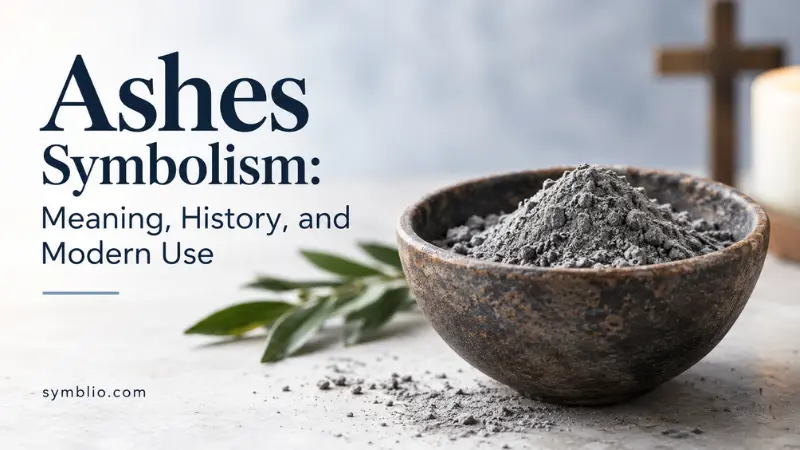
Ashes symbolism connects one of the most ordinary substances left after a fire with some of life’s most serious questions: loss, change, memory, mortality, and the possibility of beginning again. Ashes are the fine gray or black remains of burned material, including wood, paper, plants, and other organic matter. Although they may look insignificant, their presence often marks the end of something that once existed in a different form.
In the United States, ashes appear in religious ceremonies, memorial practices, literature, art, and popular culture. They can represent grief after a death, humility before God, the consequences of destruction, or the remains of a past that cannot be recovered. In stories about renewal, ashes may also suggest that an ending can become the starting point for something new.
The meaning depends heavily on context. Ashes scattered after a forest fire carry a different emotional weight from the ashes used on Ash Wednesday or those kept in a memorial urn. Understanding these differences helps explain why ashes remain such a recognizable symbol in American life.
Quick Answer
Ashes symbolism commonly represents mourning, mortality, humility, and the end of a chapter in modern American culture. Historically, ashes have also been associated with religious repentance, grief, purification, destruction, and renewal, with meanings shaped by the traditions and circumstances in which they appear.
TL;DR
- Ashes often represent death, grief, and the temporary nature of life.
- Christian traditions use ashes to express repentance and human mortality.
- Fire ashes can symbolize destruction, consequences, or the end of something familiar.
- Ashes from memorial cremation may represent remembrance and continuing family bonds.
- Phoenix stories connect ashes with rebirth, recovery, and new beginnings.
- Their meaning depends on cultural traditions, personal experiences, and the surrounding circumstances.
What Ashes Represent as a Symbol
Ashes can carry several meanings at once, but their most common associations are loss, mortality, humility, and change. Each interpretation comes from a recognizable feature of ashes: they remain after something has burned, they have lost the form of the original material, and they often mark a moment when the past cannot be restored exactly as it was.
Mourning is one of the oldest associations. Ashes can represent the emotional weight of losing someone or something important. In religious and literary settings, they may express sorrow that words cannot adequately communicate.
Mortality comes from the relationship between ashes, dust, and the physical limits of life. Ashes remind people that human existence is finite and that possessions, status, and achievements do not last forever.
Humility emerges when ashes are used to acknowledge human limitations. In religious settings, they can represent the recognition that people are not all-powerful and must confront their mistakes, responsibilities, and dependence on something greater than themselves.
Transformation is another important meaning. Because ashes are what remain after a major physical change, they can mark the boundary between an earlier state and whatever follows. That next stage might involve rebuilding, remembering, or simply accepting that life has changed.
These meanings are related, but they are not interchangeable. Ashes left by a devastating fire may emphasize loss, while ashes used in a religious ceremony may emphasize reflection and repentance.
Ancient Roots and Early Symbolism
Ashes acquired symbolic meaning long before modern memorial practices, photography, or contemporary art. In ancient societies, people regularly encountered ashes through cooking fires, burned offerings, household heating, and the destruction caused by conflict or accidents.
Their physical qualities made them useful in religious and social expressions. Ashes could be placed on the body, scattered on the ground, or encountered in the remains of a burned place. Such actions made grief, humiliation, or repentance visible to other people.
In the ancient Near East, including the world described in the Hebrew Bible, sitting in ashes or placing them on the head could communicate profound distress. The biblical accounts of Job, Mordecai, and the people of Nineveh connect ashes with suffering, mourning, humility, or a change of heart.
These practices were not simply decorative gestures. They communicated a person’s condition to a community. Someone covered in ashes was visibly expressing distress or submission rather than maintaining the appearance of ordinary life.
Ashes also appeared in ritual settings. In some ancient religious practices, burned materials had a designated role in purification or sacrifice. The meaning depended on the ritual and the beliefs surrounding it, rather than on ashes having one universal spiritual quality.
Over time, these practical associations became part of a broader symbolic vocabulary. Ashes came to represent not only what fire leaves behind but also the human experiences of loss, accountability, and the limits of control.
Ashes in the Bible and Christian Tradition
Christian symbolism is one of the most familiar sources of ashes imagery in the United States. Biblical passages connect ashes with grief, repentance, humility, and the recognition of human mortality.
The Book of Job uses ashes in the context of suffering and the struggle to understand hardship. In the Book of Esther, Mordecai expresses his grief over a grave threat against his people through visible signs of mourning. Meanwhile, the Book of Jonah describes the people of Nineveh wearing sackcloth and sitting in ashes as they respond to a warning and demonstrate their repentance.
These accounts establish a pattern: ashes express an inner condition through an outward sign. They can communicate sorrow, but they can also acknowledge wrongdoing and the desire to make a different choice.
Why Christians receive ashes on Ash Wednesday
Ash Wednesday marks the beginning of Lent in many Western Christian traditions. Worshippers may receive a cross of ashes on their foreheads as a reminder of mortality, repentance, and the need for spiritual reflection.
In many churches, the ashes come from palm branches used during the previous year’s Palm Sunday observance. This connects two moments in the Christian calendar: the celebration of Jesus’s entry into Jerusalem and the reflective season leading toward Easter.
For American Catholics and many Anglicans, Episcopalians, Lutherans, Methodists, and other Christians who observe the day, the forehead mark is a public expression of faith. Practices vary among denominations and individual congregations.
The ashes do not necessarily communicate despair. Instead, they invite worshippers to examine their conduct, acknowledge human limitations, and consider how they want to live.
The Christian meaning therefore includes both an acknowledgment of mortality and an opportunity for moral renewal. Ashes remind believers that life is limited, while the wider Lenten season emphasizes reflection, repentance, and preparation for Easter.
What Ashes Symbolize in American Culture
In the United States, ashes have no single cultural meaning. Religious traditions, family customs, environmental experiences, and popular storytelling all influence how people interpret them.
For some Americans, ashes immediately bring Ash Wednesday to mind. For others, they suggest cremation, a house fire, a wildfire, a fireplace, or the remains of something destroyed. Someone who has experienced a devastating fire may associate ashes with displacement and grief, while another person may connect them with the comfort of a family hearth.
American memorial culture provides another important context. Cremation has become a familiar funeral option, and cremated remains may be kept in an urn, buried, or handled according to the deceased person’s wishes and applicable rules. In this setting, ashes can represent an enduring family connection and a tangible reminder of a person who has died.
Ashes also appear in public expressions of loss after disasters. Images of burned homes, blackened landscapes, or ash-covered belongings can communicate the scale of a tragedy without showing every detail of what happened.
At the same time, American entertainment often uses ashes to tell stories about survival. A character who rebuilds a life after a major failure may be described figuratively as rising from the ashes.
These meanings can coexist because ashes are connected to both endings and what people do afterward. Their interpretation depends on whether the emphasis falls on grief, faith, destruction, memory, or recovery.
Ashes as a Symbol of Grief and Mourning
Ashes are closely associated with mourning because they make absence visible. A burned object no longer has its original shape, and the remaining material offers a physical reminder of what has been lost.
In historical mourning practices, placing ashes on the head or sitting among them could express sorrow in a way the surrounding community recognized. The gesture could signal that ordinary social behavior had been interrupted by grief.
Modern American mourning customs vary widely, so ashes are not a universal sign of bereavement. Black clothing, flowers, photographs, memorial services, and personal keepsakes may play more prominent roles in many families. Nevertheless, ashes remain recognizable in religious art, literature, and memorial imagery.
The symbolism can also apply to losses unrelated to death. Someone might describe the ashes of a failed business, a broken relationship, or a destroyed childhood home. In such cases, the word communicates the feeling that a meaningful part of life has ended.
Ashes do not require a person to stop remembering. They can instead represent the difficult relationship between memory and absence: something has changed permanently, but its importance remains.
This distinction matters because mourning is not the same as forgetting. Ashes can mark what is gone while preserving the significance of what once existed.
Mortality, Humility, and the Limits of Life
Ashes often symbolize mortality because they make the consequences of physical change difficult to ignore. They are a reminder that living things, possessions, buildings, and accomplishments are not permanent.
In religious language, ashes are sometimes paired with dust to emphasize human frailty. The image places human beings within the natural limits of existence rather than above them.
Humility follows naturally from this association. A person who reflects on mortality may become more aware that wealth, authority, beauty, and reputation cannot provide complete control over life. Ashes can therefore symbolize a willingness to recognize limits rather than pretend that they do not exist.
In modern American culture, this interpretation may appear during memorial services, personal reflection, or discussions about what makes a life meaningful. The image can encourage people to consider relationships, responsibilities, and values rather than focusing exclusively on possessions or public recognition.
However, humility does not have to mean self-rejection. Symbolically acknowledging that life is finite can coexist with respect for one’s own worth and the worth of others.
Ashes make this message concrete: they represent a material remainder, but their significance comes from what people understand about the life, object, or event that preceded them.
Destruction, Consequences, and Irreversible Change
Ashes can symbolize destruction when fire has removed something that cannot easily be replaced. A burned letter, a destroyed home, or the remains of a forest may leave ashes as evidence of a decisive break with the past.
In this context, ashes can communicate consequences. They may remind viewers that an action, disaster, or conflict has changed the world in a lasting way.
Literature and political rhetoric sometimes use the phrase reduced to ashes to describe the complete destruction of a place, institution, or way of life. The phrase is usually figurative when applied to ideas or relationships, but it borrows its force from the physical effects of fire.
The symbol can also represent the aftermath of personal mistakes. A story about a person rebuilding after a serious failure may use ashes to mark the point when old assumptions no longer work.
Not every destruction narrative leads to a happy ending, however. Ashes may represent permanent loss, environmental damage, or a reminder that rebuilding requires time and resources. The symbol becomes misleading when it suggests that every tragedy automatically produces something better.
Sometimes ashes simply represent what was lost. Their meaning does not depend on finding a positive lesson in every painful event.
Renewal and the Idea of Rising from the Ashes
One of the most recognizable modern associations with ashes is renewal. This meaning appears in the familiar expression rising from the ashes, which describes recovery after a major setback.
The image is especially clear in stories about a person who loses a career, a community that rebuilds after a disaster, or an organization that changes after failure. Ashes represent the remains of the previous situation, while rebuilding represents the possibility of a different future.
The mythical phoenix provides a related image. In versions of the story, the bird dies or is consumed by fire and a new phoenix emerges from the remains or ashes. Details vary across literary traditions and retellings, but the modern phoenix is widely associated with rebirth, endurance, and renewal.
In American popular culture, this imagery appears in fiction, motivational language, visual art, and personal narratives about overcoming adversity. It gives people a concise way to describe recovery without pretending that the earlier loss never happened.
There is an important distinction between symbolic renewal and literal destruction. Ashes do not naturally guarantee that something better will follow, and real disasters can leave lasting consequences. The metaphor expresses hope and determination, not a promise that every loss will resolve positively.
The most thoughtful use of this symbolism recognizes both sides: something has ended, and a future may still be possible.
Ashes Across Other Cultural and Religious Traditions
Ashes have appeared in multiple cultural settings, but their meanings differ according to religious teachings, historical circumstances, and ritual practices.
In Jewish tradition, biblical and later religious literature associate ashes with mourning, humility, and repentance. Ashes also have a specific role in the biblical red-heifer ritual described in Numbers, where they are used in a purification process. That ritual meaning should not be confused with every other use of ashes in Jewish life.
In Christian traditions, as discussed earlier, ashes are particularly associated with Ash Wednesday and the acknowledgment of mortality and sin. The ceremony is common in several Western Christian denominations, although not all Christians observe it.
In Hindu traditions, sacred ash, often called vibhuti in particular devotional contexts, can be applied to the body as a religious mark. Its significance varies by tradition and may relate to devotion to Shiva, spiritual discipline, and the impermanent nature of worldly existence. It should not be treated as identical to ordinary fireplace ash.
In Buddhist contexts, the remains of cremation and the preservation of relics may carry religious significance, depending on the community and practice. However, Buddhist traditions are diverse, and ashes do not have one universal meaning across them.
These examples show why cultural context matters. A substance that represents mourning in one ceremony may express devotion, purification, or religious identity in another. Respectful interpretation begins by asking how the particular community understands the practice rather than assigning one meaning to all ashes.
The Emotional and Psychological Meaning of Ashes
Ashes can evoke mixed feelings because they represent both physical remains and the absence of an earlier form. A person looking at ashes may feel sadness, relief, fear, gratitude, or hope, depending on the experience associated with them.
For someone grieving a loved one, ashes may become connected to memory and continuing family bonds. A memorial object containing cremated remains, for example, can provide a tangible focus for remembrance. The object does not contain the whole relationship; its importance comes from what the person associates with it.
For someone recovering from a difficult period, ashes may represent a turning point. The image can help express the difference between an earlier life and a new direction, even when the transition remains painful or incomplete.
Ashes can also represent emotional exhaustion. Phrases about feeling burned out or having nothing left may draw on the same imagery, although burnout is a real experience that should not be reduced to a literary metaphor.
The emotional response is personal rather than automatic. Two people can see the same ashes and understand them differently because of their histories, beliefs, and relationships.
That flexibility is part of the symbol’s usefulness.
Ashes in Tattoos, Jewelry, and Personal Style
Ashes imagery appears in modern tattoos and personal objects because it can communicate a life experience without requiring a long explanation.
A phoenix rising from ashes is a common design for people who want to represent recovery, resilience, or a new chapter. The image may relate to overcoming a personal challenge, rebuilding after a setback, or marking a significant life transition.
Other tattoo designs use small ash-like particles, smoke, fading shapes, or burned branches. These images can suggest impermanence, remembrance, or the end of an earlier stage of life. Their meaning depends on the accompanying imagery and the person’s own explanation.
Memorial jewelry offers another form of personal symbolism. Some pieces are designed to hold a small amount of cremated remains, while others use engraved names, dates, or symbols associated with the deceased. For the wearer, such an object may represent love and remembrance rather than death alone.
Ashes can also appear in fashion and graphic design through distressed textures, gray gradients, charred surfaces, or images of smoke. Designers may use these elements to communicate seriousness, age, destruction, or a stripped-back aesthetic.
A visual association is not a universal code. A phoenix tattoo does not prove that someone has experienced a particular hardship, and gray or ash-like imagery does not automatically signal grief. Personal context remains essential.
Ashes in Art, Literature, Film, and Popular Culture
Artists and storytellers use ashes because they can establish a mood and communicate change quickly. A scene filled with ash may suggest that a disaster has just occurred, that a once-familiar place has become unrecognizable, or that a character must confront the consequences of an earlier decision.
In post-apocalyptic fiction, ashes often represent the remains of a failed civilization. The visual landscape tells viewers that ordinary life has been disrupted and that survival may require new social arrangements.
In personal dramas, ashes may serve as a metaphor for the end of a relationship, a shattered ambition, or the loss of an earlier identity. The image is effective because it makes an abstract experience feel physical.
Fantasy stories frequently use phoenix imagery to contrast destruction with renewal. A character or kingdom may appear defeated, only to return in a changed form. This storytelling device offers a recognizable way to explore perseverance without requiring the audience to know every detail of the symbol’s history.
Artists may also use ashes to explore memory. A burned photograph or letter can represent the tension between wanting to preserve the past and recognizing that some things cannot be recovered.
The context of the work determines whether ashes communicate tragedy, warning, hope, or acceptance. Their appearance alone does not establish a single interpretation.
What Different Ashes Mean in Everyday Contexts
The source of the ashes can strongly influence their interpretation. The following table compares common contexts in American life and culture.
| Context | Common symbolic meaning | Important distinction |
|---|---|---|
| Ash Wednesday | Repentance, humility, mortality | Meaning comes from Christian religious practice |
| Cremated remains | Remembrance, family connection, mourning | Personal beliefs shape the meaning |
| Wildfire or house fire | Loss, destruction, consequences | May refer to an actual disaster rather than a metaphor |
| Phoenix imagery | Renewal, recovery, transformation | Mythological symbolism, not a literal process |
| Fireplace ashes | The end of a fire or activity | May have no intended symbolic meaning |
| Ashes in literature | Grief, impermanence, aftermath | The surrounding story determines the interpretation |
This comparison highlights an important principle: ashes do not carry a fixed emotional message independent of their source. Religious ceremony, personal memory, physical destruction, and artistic imagery each create a different interpretive setting.
Common Misunderstandings About Ashes Symbolism
Several misconceptions can make the symbolism of ashes seem more uniform than it really is.
Ashes do not always symbolize something negative. They may represent grief or destruction, but they can also mark repentance, devotion, remembrance, or the possibility of recovery.
Ashes do not automatically mean rebirth. The phoenix has helped establish the modern connection between ashes and renewal, but this is a symbolic association rather than a universal belief. In many real situations, ashes simply mark loss.
Religious meanings should not be treated as interchangeable. Ash Wednesday, Jewish mourning imagery, Hindu sacred ash, and other traditions have distinct histories and practices. Similar materials do not make their meanings identical.
Ashes are not always spiritual. They can appear in ordinary domestic life, environmental events, art, and scientific contexts without carrying a religious or emotional message.
A person who keeps ashes is not necessarily unable to move forward. Memorial practices vary, and keeping cremated remains or other mementos may be one way a person maintains a connection with someone who has died. The object alone does not explain the person’s emotional state.
A careful interpretation considers the circumstances, the tradition involved, and the meaning assigned by the people closest to the symbol.
How the Meaning of Ashes Has Evolved
The symbolism of ashes has developed through changing religious practices, social customs, and storytelling traditions. Their physical association with fire and remains has stayed consistent, but the emphasis placed on that association has changed.
In ancient religious settings, ashes could communicate grief, humility, repentance, or participation in a ritual. Christian practices later gave ashes a recognizable place in the annual observance of Lent, while other traditions developed their own uses and interpretations.
In modern American life, ashes have become connected with a wider range of experiences. Cremation and memorial objects provide one setting; environmental disasters and public memorials provide another. Film, literature, and fantasy have helped make the ashes-to-renewal metaphor familiar even to people who do not participate in religious ceremonies.
Digital culture also spreads symbolic imagery through illustrations, profile graphics, tattoos shared online, and brief personal stories. A phoenix or a field of gray ash can communicate a narrative of recovery or loss without extensive explanation.
Yet the older meanings have not disappeared. Ashes still appear in religious observance, mourning practices, and reflections on mortality. Modern interpretations have expanded the symbol rather than completely replacing its earlier associations.
The result is a symbol that can communicate a difficult ending, an act of remembrance, or a willingness to begin again. Its meaning remains grounded in the relationship between what has been lost and what remains.
FAQs
Ashes commonly symbolize mortality, humility, repentance, and the recognition that human life is limited. Their spiritual meaning varies by tradition, so the same material may serve different purposes in different ceremonies.
Ashes in a dream may personally evoke loss, change, exhaustion, or the end of a situation, but there is no scientifically established universal interpretation. The dreamer’s experiences and feelings about the imagery matter more than a fixed symbolic definition.
Ashes in a tattoo may represent recovery after hardship, remembrance, impermanence, or the closing of a chapter. A phoenix rising from ashes particularly emphasizes renewal, although the wearer’s personal meaning may be different.
Ashes are placed on the foreheads of worshippers in many Christian traditions to mark the beginning of Lent. The practice recalls human mortality and encourages repentance, reflection, and preparation for Easter.
Yes. Ashes can represent the remains of a difficult experience while also suggesting the possibility of rebuilding. The phoenix is a familiar example, although the hopeful meaning comes from the story associated with it rather than from ashes alone.
Biblical references often associate ashes with mourning, repentance, humility, and human frailty. Particular passages also use ash-related imagery to communicate destruction or contrast sorrow with restoration.
Keeping cremated remains may represent remembrance, love, family connection, or a personal memorial practice. There is no single emotional meaning, and people differ in whether they keep, bury, scatter, or otherwise memorialize the remains.
Conclusion
Ashes symbolism brings together several human experiences: mourning what has ended, recognizing the limits of life, reflecting on mistakes, and deciding how to respond to change. In American culture, these meanings appear in religious observances, memorial practices, environmental experiences, art, and stories about rebuilding after loss.
The symbol does not always promise renewal, nor does it always represent despair. Its meaning depends on what burned, what remains, and how people understand the experience behind it.
Ultimately, ashes remind us that the end of something can be acknowledged without erasing its importance. They can preserve the memory of what was lost while leaving room to consider what comes next.