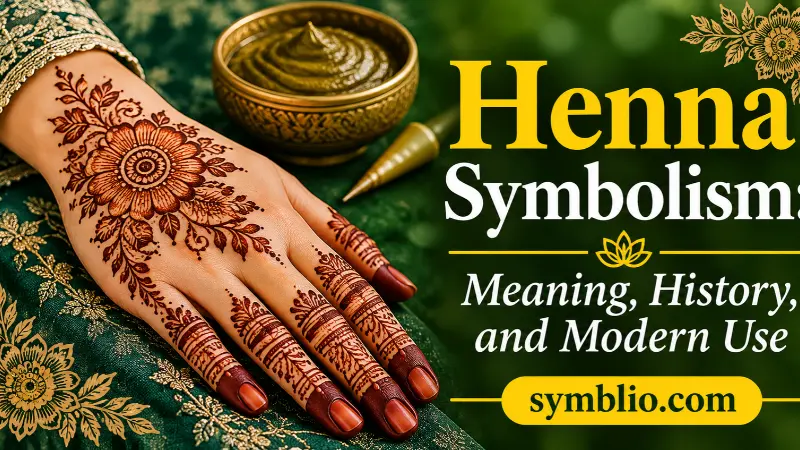
Henna symbolism is closely connected to celebration, beauty, good fortune, love, and cultural identity. Made from the leaves of the henna plant (Lawsonia inermis), henna has been used for centuries to decorate the skin, particularly the hands and feet. Its reddish-brown color and intricate patterns make it recognizable at weddings, festivals, and traditional celebrations.
In the United States, henna is commonly associated with weddings, cultural festivals, artistic expression, and temporary body decoration. People encounter it at South Asian weddings, community events, beauty gatherings, and henna-design studios. For some, it represents a connection to family heritage; for others, it is an appreciation of traditional body art.
Henna is more than a decorative practice. Its meaning depends on the culture, occasion, design, and people involved. Understanding its symbolism means looking beyond the patterns to the traditions and relationships that give them significance.
Quick Answer
Henna commonly symbolizes celebration, beauty, love, good fortune, and protection in modern American culture, especially at weddings, cultural festivals, and personal celebrations. Historically, it has also represented joy, blessings, fertility, and positive beginnings in several North African, Middle Eastern, and South Asian traditions.
TL;DR
- Henna represents celebration, beauty, happiness, and good fortune.
- Wedding traditions connect it with love, blessings, and new beginnings.
- Its history spans North Africa, the Middle East, and South Asia.
- Intricate patterns can express cultural identity and personal creativity.
- Modern Americans use henna for festivals, weddings, and temporary body art.
- Cultural respect matters when appreciating traditional henna practices.
What Henna Looks Like and How It Is Made
Henna comes from the leaves of the henna plant, scientifically known as Lawsonia inermis. The plant grows in warm climates and produces small, fragrant flowers. Its leaves contain a natural coloring compound called lawsone, which creates the familiar reddish-brown stain associated with henna.
To prepare traditional henna paste, dried leaves are ground into a fine powder and mixed with suitable liquid ingredients. The resulting paste can be applied to the skin using a small cone or another applicator. Artists use these tools to create delicate patterns ranging from simple lines to elaborate floral compositions.
The designs often include flowers, leaves, paisleys, circles, dots, and geometric shapes. Once the paste dries and is removed, the skin gradually develops an orange, reddish, or brown stain. The color becomes more noticeable over time and eventually fades as the skin naturally renews itself.
Unlike permanent tattoos, traditional henna designs provide temporary decoration. This makes them popular for weddings, festivals, and special occasions.
The Historical Origins of Henna Symbolism
Henna has a long history across North Africa, the Middle East, and parts of Asia. Its exact place of origin is difficult to establish because early records of everyday plant use are incomplete. However, historical evidence suggests that people in these regions used henna in ancient times for coloring hair, decorating the body, and preparing for special occasions.
Ancient Egyptian remains provide evidence of henna use in the ancient world. People used the plant for cosmetic purposes, including coloring hair and nails. Its availability in warm regions made it a practical natural dye long before modern cosmetic products existed.
As trade and cultural exchange connected different regions, henna traditions spread and developed distinct local forms. Communities incorporated it into wedding celebrations, religious festivals, family gatherings, and seasonal customs.
Over time, the plant acquired meanings beyond decoration. Its use at joyful events helped associate it with celebration, good wishes, and positive transitions. These meanings passed through generations, often through family gatherings and traditional ceremonies.
Why Henna Symbolizes Joy and Celebration
Joy is one of the most widely recognized meanings of henna. Its presence at weddings, births, festivals, and other important occasions connects it with happiness and shared experiences.
In many traditional communities, applying henna is not simply an individual beauty treatment. It is a social activity in which relatives and friends gather, prepare the paste, create designs, exchange stories, and celebrate together.
This communal aspect helps explain why henna represents more than an attractive pattern. It can mark an occasion as special and bring people together through a familiar cultural practice.
In modern American settings, the same association appears at wedding celebrations, cultural festivals, and family events. A person wearing henna may be celebrating a milestone, participating in a traditional ceremony, or expressing happiness through art.
Henna’s connection with joy also reflects its role in marking positive life changes. It often accompanies moments when families and communities come together to recognize something meaningful.
Wedding Henna and the Symbolism of Love
Wedding ceremonies are among the strongest cultural associations of henna. In several South Asian, Middle Eastern, and North African communities, applying henna forms an important part of the celebrations leading up to marriage.
In South Asian traditions, the mehndi ceremony commonly takes place before the wedding. The bride’s hands and feet are decorated with detailed designs, while female relatives and friends may also receive smaller patterns. Music, dancing, food, and family participation turn the application into a festive gathering.
Henna in these settings can symbolize:
- Love and affection between partners.
- Blessings for a successful marriage.
- Happiness during a new stage of life.
- Family support and community participation.
- Good wishes for the couple’s future.
Some Indian wedding customs include the belief that a darker henna stain reflects stronger affection or good fortune in marriage. These interpretations are traditional beliefs rather than established facts, and they differ between families and regions.
Henna also appears in Jewish wedding traditions, particularly among some Sephardic and Mizrahi communities. Moroccan, Yemeni, and other Jewish families have maintained pre-wedding henna celebrations that combine traditional clothing, songs, blessings, and family customs.
Although the ceremonies are not identical, many share a common purpose: welcoming the couple into married life with joy, goodwill, and community support.
Henna Symbolism in South Asian Traditions
South Asia has some of the most recognizable and elaborate henna traditions. In India, Pakistan, Bangladesh, and neighboring communities, the art is commonly known as mehndi.
Its importance extends beyond wedding ceremonies. Families may apply mehndi during religious festivals, seasonal celebrations, and other social occasions.Bridal designs can cover much of the hands and feet, sometimes incorporating the initials or names of the couple.
Bangladeshi communities also maintain mehndi traditions during weddings and festive gatherings. The designs and customs vary according to family background and regional influences.
Although the patterns may look similar to an outside observer, the meaning is not always identical. Some designs reflect regional artistic styles, while others communicate personal preferences or family traditions.
For many South Asian Americans, mehndi offers a visible connection to ancestry. Wearing it at a wedding or cultural gathering can express belonging, family continuity, and pride in inherited traditions.
Henna in Middle Eastern and North African Cultures
Henna also holds an important place in Middle Eastern and North African cultural life. In these regions, it has traditionally been used for body decoration, hair coloring, celebrations, and certain customary practices.
Moroccan henna designs often feature bold geometric shapes, symmetrical arrangements, and detailed lines. In some communities, the practice is associated with blessings, protection, and good fortune.
In Sudanese traditions, henna can be connected with happiness, marriage, and social identity. Its use may communicate participation in a celebration or a particular stage of family life.
Across parts of the Arabian Peninsula, henna has traditionally appeared at weddings, religious holidays, and family gatherings. Patterns and application methods differ between communities, reflecting local artistic preferences and inherited customs.
Some traditions associate henna with baraka, an Arabic concept commonly understood as blessing or divine favor. In these settings, its application may be accompanied by prayers, songs, or expressions of goodwill.
The practice is not limited to one religion. Muslim, Jewish, and Christian communities in different parts of the Middle East and North Africa have developed their own henna customs.
This shared cultural history is important because henna should not be treated as the property of one religious group or one modern nation.
Henna Symbolism in the United States
In the United States, henna carries several overlapping meanings. Its interpretation often depends on whether it appears at a cultural wedding, a public festival, a beauty event, or an individual artistic gathering.
For many South Asian, Middle Eastern, and North African Americans, henna represents family heritage and cultural continuity. It can preserve traditions that parents, grandparents, and earlier generations practiced in their countries of origin.
For people without a family connection to these traditions, henna may represent an appreciation of decorative art, temporary self-expression, or participation in a multicultural event.
Henna artists can be found at cultural festivals, community celebrations, weddings, and private events. University cultural organizations may also organize mehndi activities as part of international festivals or heritage celebrations.
Its American interpretation can be summarized through several common associations:
| Context | Meaning in the USA | Common Associations |
|---|---|---|
| Weddings | Love and celebration | Marriage, blessings, family |
| Cultural festivals | Heritage and community | Identity, tradition, belonging |
| Personal body art | Creativity and beauty | Individual expression |
| Religious celebrations | Festive preparation | Family customs, joy |
| Artistic events | Cultural appreciation | Design, craftsmanship |
American culture has helped introduce henna to wider audiences, but its traditional meanings remain important. Understanding the practice requires recognizing both its popularity as body art and its continuing role within the communities that have preserved it.
Flowers, Paisleys, and Other Henna Design Meanings
Henna designs contain many recognizable shapes, but individual motifs do not have one universal meaning. Their interpretations depend on the artistic tradition, regional style, and personal intention.
Nevertheless, certain patterns have developed commonly recognized associations.
Flowers: Floral designs are frequently associated with beauty, happiness, growth, and new beginnings. They are particularly popular in bridal mehndi because their decorative appearance suits celebratory occasions.
Paisleys: The curved, teardrop-shaped paisley motif appears in several South Asian decorative traditions. In some modern interpretations, it suggests fertility, abundance, or natural growth.
Leaves and vines: These patterns can suggest renewal, connection with nature, and continuing growth. Their flowing arrangement also allows artists to create designs that follow the shape of the hands and arms.
Circles and mandalas: Circular patterns often suggest completeness, balance, and harmony in contemporary interpretations. However, their meaning depends on the tradition in which they appear.
Peacocks: In South Asian decorative art, peacocks are associated with beauty, elegance, and celebration. Their appearance in bridal mehndi often reflects the artistic richness of the occasion.
Geometric patterns: Repeated lines, triangles, and symmetrical shapes can represent order, craftsmanship, and visual balance. In some regional traditions, particular geometric arrangements also carry protective associations.
A design’s meaning should not be assumed from appearance alone. The artist or wearer may have chosen it for family significance, aesthetic preference, or a particular cultural connection.
Henna as a Symbol of Protection and Good Fortune
In some cultural traditions, henna has been associated with protection against misfortune and harmful influences. These beliefs are especially visible in certain North African and Middle Eastern customs.
Moroccan traditions, for example, have connected henna with blessings and protection from the evil eye. In these settings, decorative patterns may be understood as part of a broader collection of customs intended to support the well-being of individuals and families.
The concept of the evil eye appears in many societies and refers to the belief that envy or harmful attention can bring misfortune. Henna sometimes appears alongside other traditional protective symbols, jewelry, or ceremonial practices.
It is important to distinguish cultural belief from scientific evidence. Henna designs do not have a scientifically established ability to prevent misfortune or protect someone from supernatural harm.
Nevertheless, the symbolism remains meaningful to people who inherit or participate in these traditions. Wearing henna can represent a family’s hopes for happiness, safety, and a positive future.
The Emotional and Psychological Meaning of Henna
Henna can communicate emotions that are difficult to express through ordinary decoration. Because it often appears during important family events, it can become connected with memories, relationships, and personal identity.
For someone preparing for a wedding, henna may represent excitement about marriage and appreciation for family traditions. For someone attending a cultural festival, it may create a sense of belonging and connection with a wider community.
Its temporary nature also contributes to its emotional appeal. Unlike permanent body art, henna allows people to enjoy a design for a limited time. This makes it suitable for special occasions and moments that people want to celebrate without making a permanent change to their appearance.
Henna can also communicate confidence and creativity. People choose different patterns according to their tastes, cultural backgrounds, and personal experiences.
Its emotional associations commonly include:
- Happiness: Participation in weddings and festive gatherings.
- Belonging: Connection with family and cultural heritage.
- Affection: Sharing a meaningful tradition with loved ones.
- Creativity: Appreciating decorative art and personal style.
- Anticipation: Preparing for an important life event.
These meanings are not universal psychological responses. They develop through personal experience, family traditions, and cultural understanding.
Religious Connections and Spiritual Interpretations
Henna appears in communities belonging to several religious traditions, but it does not have one universal religious meaning.
In Muslim communities, henna is commonly associated with weddings, Eid celebrations, and personal adornment. Its use is influenced by regional customs and family traditions rather than one single religious requirement.
In Hindu communities, mehndi is an established part of many wedding celebrations and festivals. Its presence during ceremonies such as weddings and Karva Chauth connects it with celebration, marital traditions, and family participation.
Some Jewish communities, particularly those with Sephardic and Mizrahi heritage, maintain pre-wedding henna celebrations. These gatherings may include traditional songs, blessings, clothing, and ceremonial decorations.
Christian communities in parts of the Middle East and North Africa have also participated in local henna customs.
The distinction between religion and culture matters. A person may wear henna because of a family tradition without attaching a particular religious belief to it. Another person may understand the same practice through a spiritual or ceremonial perspective.
In American multicultural settings, these different interpretations often exist side by side. Respecting them means allowing communities to explain their own traditions rather than assigning one religious meaning to every henna design.
Why Henna Remains Popular in Modern Fashion and Art
Henna has moved beyond traditional ceremonies into modern fashion, beauty, and artistic expression. Its recognizable color and detailed patterns appeal to people who enjoy decorative body art.
In the United States, modern henna designs may appear at:
- Wedding celebrations and bridal events.
- Music and cultural festivals.
- Community art gatherings.
- Beauty and fashion events.
- Personal photography sessions.
- Traditional holiday celebrations.
Some people prefer elaborate patterns that cover the hands and wrists, while others choose small floral designs or simple finger decorations.
Social media has also influenced how people encounter henna. Photographs and videos of bridal mehndi, artistic demonstrations, and contemporary designs allow artists to share their work with international audiences.
Modern henna artists often combine traditional motifs with individual artistic styles. Some maintain recognizable regional patterns, while others experiment with minimalism, contemporary geometry, and decorative compositions.
Despite these changes, the traditional connection with celebration remains important. Modern fashion has expanded the settings in which people encounter henna without eliminating its cultural associations.
Henna, Cultural Appreciation, and Common Misunderstandings
Henna’s growing popularity outside its traditional communities has created conversations about cultural appreciation and appropriation.
One common misunderstanding is that henna belongs exclusively to Indian culture. Although South Asian mehndi is internationally recognizable, henna traditions also exist throughout North Africa, the Middle East, and other regions.
Another misconception is that every henna design carries a fixed spiritual meaning. In reality, many patterns are selected for their visual appearance, while others have specific associations within particular communities.
Some people also assume that henna is simply another type of permanent tattoo. Traditional henna creates a temporary stain rather than inserting permanent pigment into the skin.
Cultural appreciation becomes more meaningful when people understand the history behind an art form. Recognizing the communities that developed and maintained henna traditions is more respectful than treating the designs as anonymous decorations.
There is also a distinction between appreciating an artistic practice and presenting another community’s ceremonial customs without understanding their significance.
For example, someone attending a traditional wedding can appreciate the artistry while recognizing that the ceremony may carry family, religious, and cultural importance beyond its appearance.
Respectful participation begins with curiosity, accurate information, and acknowledgment of the people who preserve these traditions.
Natural Henna, Black Henna, and Important Misconceptions
The term henna is sometimes used loosely for different products, which can create confusion about its traditional appearance and safety.
Natural henna typically produces an orange, reddish-brown, or brown stain. A very dark or immediate black stain is not characteristic of traditional natural henna.
Products marketed as black henna may contain additional coloring ingredients, including para-phenylenediamine (PPD), a chemical used in some hair dyes. PPD can cause serious allergic reactions when applied directly to the skin.
The U.S. Food and Drug Administration explains that henna is approved as a hair dye, not as a color additive for direct application to the skin. It has also received reports of adverse reactions involving products marketed as henna and black henna.
Several misconceptions deserve clarification:
- Natural henna is not naturally jet black.
- Traditional henna is not a permanent tattoo.
- Different products advertised as henna may contain additional ingredients.
- Cultural traditions should not be confused with medical claims.
- A temporary design is not automatically free from safety concerns.
Understanding these distinctions is important when discussing henna as both a cultural practice and a modern beauty product. Its symbolic value should not distract from the importance of understanding what a product actually contains.
How Henna Symbolism Has Changed Over Time
Henna’s meaning has developed through centuries of cultural exchange, family traditions, and changing artistic preferences.
In earlier societies, its practical uses included coloring hair, nails, and skin. Its availability as a plant-based dye made it useful in everyday life as well as ceremonial settings.
As communities incorporated henna into weddings and celebrations, it acquired stronger associations with happiness, blessings, and important life transitions. Different regions developed their own patterns and customs, giving the practice distinctive local identities.
During later periods, migration helped introduce henna traditions to new communities. Families carried their customs to Europe, North America, and other parts of the world, where younger generations continued practicing them.
In the United States, henna gradually became familiar beyond immigrant communities. Cultural festivals, artistic businesses, weddings, and social media contributed to its wider visibility.
Today, its meanings can operate at several levels simultaneously. A design might represent cultural heritage to one person, wedding happiness to another, and artistic creativity to someone else.
This evolution demonstrates how traditional symbols adapt to new environments without necessarily losing their original cultural importance.
FAQs
Henna can symbolize blessings, happiness, protection, and positive beginnings in certain cultural and spiritual traditions. Its specific interpretation depends on the community, ceremony, and beliefs of the person wearing it.What does henna symbolize at a wedding?
Some communities traditionally believe henna brings blessings and protects against misfortune. Its association with good luck developed through ceremonial customs and cultural beliefs rather than scientific evidence.
A henna tattoo can represent creativity, cultural identity, celebration, or personal expression. Its meaning may also reflect traditional motifs or an important occasion, depending on the person wearing it.
No. Henna is used by people from different religious backgrounds, including Muslim, Hindu, Jewish, and Christian communities. Its traditions are closely connected with regional cultures and family customs rather than belonging to one religion.
Floral patterns are commonly associated with beauty, growth, happiness, and renewal. Their specific meanings can vary, and many people choose flowers simply because they appreciate their decorative appearance.
In some North African and Middle Eastern traditions, henna is associated with protection from the evil eye and harmful influences. This is a cultural and spiritual belief, not a scientifically established effect.
Conclusion
Henna symbolizes celebration, love, beauty, good fortune, and cultural belonging. Its historical connections with weddings, family gatherings, religious celebrations, and traditional body decoration have helped establish its place in many communities around the world.
In the United States, henna represents both cultural heritage and modern artistic expression. Some people wear it to honor family traditions, while others appreciate its decorative patterns and temporary nature. Its meaning depends on the occasion and the cultural experiences of the person wearing it.
Ultimately, henna symbolism is best understood through the traditions and relationships that give it meaning. It is an art form through which people celebrate important moments, maintain cultural connections, and express personal creativity.