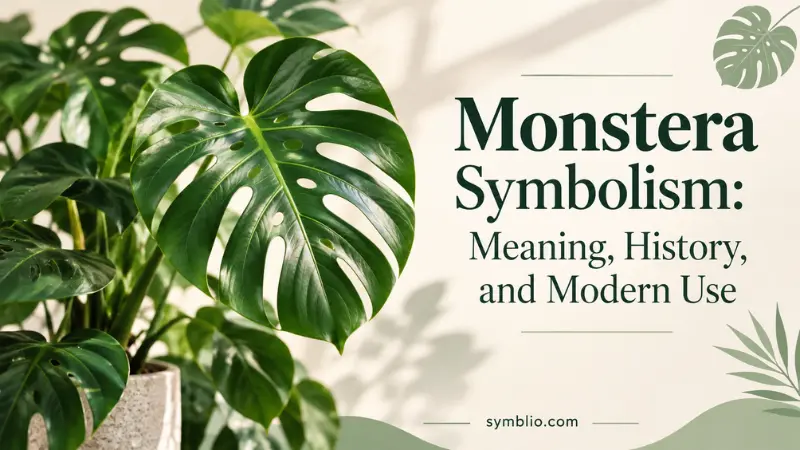
Monstera symbolism is commonly associated with personal growth, renewal, resilience, and the beauty of natural change. Recognized by its large, glossy leaves and distinctive splits, the monstera plant has become a familiar sight in American homes, offices, interior design, and lifestyle photography. Its appearance makes it more than a decorative houseplant for many people; it can represent a connection to nature and a desire to create a calmer, more welcoming space.
Native to tropical regions of the Americas, monstera plants have a botanical history that long predates their popularity in modern home decor. Their unusual leaf shapes, climbing growth habits, and ability to develop in changing light conditions have helped make them recognizable symbols of tropical landscapes and adaptable living.
Today, people may choose monstera leaves for wall art, tattoos, textiles, and personal gifts because they suggest freshness, individuality, or a new chapter in life. These associations are modern interpretations rather than universal cultural rules. Understanding where the plant grows, how its leaves develop, and how people use it today provides a clearer picture of its symbolism.
Quick Answer: What Does Monstera Symbolize?
Monstera commonly symbolizes growth, renewal, resilience, and a connection to nature in modern American culture, particularly in home decor, plant collections, and botanical art. Its tropical origins and distinctive leaves also connect it with adaptability, openness, and the beauty of change, although these meanings are largely contemporary interpretations rather than ancient, universally established traditions.
TL;DR
- Growth: New leaves represent development and fresh beginnings.
- Resilience: Climbing growth suggests adaptability and persistence.
- Renewal: Lush green foliage evokes freshness and renewed attention to nature.
- Openness: Split leaves can suggest change and embracing individuality.
- American decor: Monstera leaves are popular in botanical and tropical-inspired interiors.
- Personal expression: Tattoos and artwork can represent growth, identity, or a love of plants.
What Is the Monstera Plant?
Botanical background
The monstera is a tropical climbing plant in the arum family, Araceae. Several species belong to the genus, but Monstera deliciosa is especially familiar in American homes. It is often called the Swiss cheese plant because its mature leaves develop distinctive openings and splits.
In its natural environment, monstera grows in tropical forests of the Americas. It can climb tree trunks and other supports, using aerial roots to attach itself and access moisture and nutrients. Its foliage changes as the plant matures, with younger leaves generally appearing smaller and less divided than mature ones.
This physical transformation provides a natural foundation for many symbolic interpretations. A plant that develops from modest leaves into expansive, dramatically shaped foliage can remind people of gradual progress and the changes that accompany maturity.
The monstera is also a living plant rather than a fixed decorative object. New leaves unfurl, stems extend, and the plant responds to its surroundings. For people who enjoy caring for houseplants, this ongoing development can make it a personal reminder that growth takes time.
The Core Symbolic Meanings of Monstera
Although no single meaning applies to every person or culture, several associations appear naturally when people interpret the monstera’s appearance and growth.
Growth and development are among its most intuitive meanings. The plant produces new leaves and changes shape as it matures, making it a fitting image for learning, personal progress, and developing confidence.
Renewal and fresh beginnings come from its green foliage and continuing growth. A monstera placed in a new home or workspace may represent a fresh start or the intention to build a more nurturing environment.
Resilience and adaptability reflect its climbing habit and ability to grow under suitable conditions that vary in light and moisture. Symbolically, the plant can represent finding a way forward when circumstances change.
Individuality and openness connect with the leaves themselves. Their irregular openings create a distinctive silhouette that differs from the simple, uninterrupted shape of many other houseplants. Some people interpret this feature as an invitation to accept change or recognize that development does not always follow a predictable path.
These meanings are interpretations, not botanical facts about human character. The plant does not guarantee personal transformation, and its symbolism depends on the context in which someone chooses to use it.
How Monstera’s Tropical Origins Shape Its Meaning
Monstera’s natural habitat helps explain its associations with vitality, abundance, and tropical beauty.
In the tropical forests of Central America and parts of South America, monstera plants grow among other vegetation. Their broad leaves contribute to the dense green appearance associated with humid forests. When people encounter monstera imagery outside that environment, the foliage can evoke the atmosphere of a tropical landscape.
For American audiences, this association often brings to mind warmth, outdoor living, vacation destinations, and lush gardens. A monstera print in a bedroom may suggest a peaceful retreat, while a large potted specimen in a living room can make the space feel more connected to the natural world.
Its tropical origin also distinguishes it from plants traditionally associated with colder climates or familiar temperate gardens. The monstera suggests a different environment, one defined in the imagination by abundant greenery and expansive foliage.
However, it is important not to confuse the plant’s geographic origin with a single cultural meaning. Tropical regions contain many different communities, histories, and traditions. The monstera’s popularity in contemporary design does not establish that all cultures where it grows have historically treated it as a sacred or symbolic plant.
Monstera Symbolism in the United States
In the United States, monstera is most often encountered through houseplant culture, interior design, botanical illustrations, and lifestyle imagery. Its symbolic meaning usually develops through these everyday uses rather than through a widely shared religious or national tradition.
For some Americans, owning a monstera represents an interest in gardening and caring for living things. Watching a new leaf emerge can make the plant a visible reminder of patience and gradual progress. Others choose it because its broad leaves create a natural focal point in a room.
The plant also fits into contemporary ideas about making indoor spaces feel more comfortable and personal. A monstera beside a reading chair, for example, may contribute to an atmosphere of relaxation. In an office, it can soften the appearance of technology and furniture.
Its presence in home decor can also communicate aesthetic preferences. Someone who displays monstera prints or textiles may enjoy tropical-inspired design, organic shapes, or botanical patterns.
There is no universal American interpretation, however. One person may see the plant as a symbol of a fresh start, while another simply appreciates its appearance. Both interpretations are valid because contemporary decorative symbolism often depends on individual experience.
Why the Split Leaves Matter Symbolically
The monstera’s leaves are its most recognizable feature. In mature plants, the foliage can develop deep cuts along the edges and openings within the leaf surface. These features create a shape that remains recognizable even when reduced to a simple outline.
The botanical explanation is more specific than the symbolic interpretations. Leaf openings and divisions develop as part of the plant’s growth, and their formation varies with species and growing conditions. They are not evidence of damage or an inability to develop normally.
In visual symbolism, however, these distinctive shapes offer several possibilities.
The openings may suggest openness, as though the plant allows space within its own structure. Some people connect them with accepting new experiences or making room for change.
The irregular divisions may suggest individuality. Rather than presenting a smooth, uniform leaf, monstera displays a recognizable form with variations that make each mature leaf slightly different.
The changing leaf shape can also represent maturity. New leaves emerge and gradually unfurl, giving plant owners a visible example of development over time.
These interpretations are especially suited to contemporary art and personal design. They should not be mistaken for established historical meanings attached to the leaf openings.
Growth, Patience, and Personal Development
Monstera can represent personal development because its growth is visible but gradual. A young plant may look quite different from a mature specimen, and each new leaf adds another stage to its development.
This makes the plant a useful metaphor for goals that require sustained attention. Learning a skill, adapting to a new school or workplace, or becoming more confident rarely happens all at once. Progress often becomes clear only after time has passed.
A monstera kept near a desk or study area may serve as a reminder to keep working without expecting immediate results. Someone starting a new job or moving into a first apartment might choose the plant as a marker of that transition.
Its symbolism does not require dramatic life changes, either. It can reflect smaller efforts, such as developing a daily routine, maintaining a creative practice, or learning to care for something consistently.
The plant’s appeal lies partly in this ordinary connection between care and development. Its growth offers a concrete reminder that living things change through time and suitable conditions, not through a single moment of effort.
Resilience, Adaptability, and Finding Support
Monstera is a climbing plant, and its growth habit provides another basis for symbolic interpretation. In natural settings, it can use tree trunks and other structures for support as it grows upward.
People may interpret this behavior as a reminder that resilience does not always mean acting alone. Progress can depend on recognizing useful support, adjusting to circumstances, and responding to the environment.
For example, a monstera might be given to someone beginning a new chapter after a difficult period. The gift can express encouragement and a wish for continued growth without suggesting that life must always be easy.
Its adaptability also suits situations in which people need to change their plans. A person moving to a different city or adjusting to a new routine might see the plant as a reminder that development can continue even when familiar surroundings change.
This symbolism has an important limitation: a plant’s ability to grow under suitable conditions is not proof that people can overcome every hardship through determination alone. The more grounded interpretation is that growth often involves time, resources, adjustment, and support.
Renewal, Hope, and New Beginnings
Green foliage is commonly associated with fresh growth, spring, and renewed life in contemporary American visual culture. Monstera fits this association because its leaves remain its main visual feature throughout the year when it is grown successfully indoors.
A new monstera can mark a practical transition, such as moving into a home, reorganizing a room, or starting a new routine. Its continued growth gives the idea of a fresh beginning a lasting physical presence.
The plant can also be used as a gift when someone begins a new job, starts a creative project, or settles into a different living arrangement. In these situations, its meaning comes from the occasion and the giver’s intention as much as from the plant itself.
Unlike flowers that are often associated with a particular holiday or ceremony, a potted monstera can remain part of someone’s daily surroundings for years with appropriate care. That longevity may make it a fitting reminder of an ongoing commitment or a new stage of life.
Still, renewal does not have to mean starting over completely. It can simply mean making room for healthier habits, a more comfortable environment, or a different perspective.
Emotional and Psychological Associations
The monstera’s symbolic appeal also comes from the way people experience plants and natural imagery.
Its large green leaves can make a room feel visually softer than one dominated by hard surfaces, electronic devices, or plain walls. For people who enjoy natural surroundings, the plant may evoke calm, comfort, and a sense of familiarity.
Caring for a houseplant can also create a simple routine. Watering when needed, observing new growth, and adjusting its position give an owner opportunities to pay attention to a living thing. The plant’s symbolism may develop from these repeated experiences rather than from its appearance alone.
Monstera can also represent a personal connection to nature for people who live in apartments or densely developed neighborhoods. Although an indoor plant cannot replace an outdoor ecosystem, it provides a small, tangible connection to the natural world.
Its meaning remains individual. Someone who associates plants with a childhood garden may experience a monstera differently from someone who recently developed an interest in interior design. Personal memories often influence symbolic meaning more strongly than a general interpretation.
Monstera in Home Decor and Interior Design
Contemporary American design
Monstera leaves are widely recognizable in botanical-inspired interiors because their outlines are bold enough to stand out in different materials and sizes.
A living plant can act as a focal point in a living room, sunroom, or office. Its large foliage introduces an organic shape that contrasts with straight furniture lines and simple architectural details.
Printed monstera leaves appear on wall art, cushions, curtains, bedding, wallpaper, and tableware. These designs can create a tropical atmosphere without requiring an entire room to follow a tropical theme.
The plant’s symbolism varies according to its placement and presentation:
- Living rooms: Hospitality, natural beauty, and a relaxed atmosphere.
- Bedrooms: A personal preference for calm, greenery, and a comfortable retreat.
- Home offices: Growth, creativity, and a connection to nature.
- Entryways: Freshness and a welcoming first impression.
- Art and textiles: Individuality, tropical aesthetics, and botanical appreciation.
Color changes the impression, too. Natural green foliage usually emphasizes freshness and vitality, while monochrome monstera illustrations may focus more on shape, simplicity, and modern design.
A monstera does not have to carry a special spiritual meaning to be meaningful in a home. Its symbolic value may come from the atmosphere its owner wants to create.
Monstera Tattoos, Jewelry, and Personal Style
Monstera imagery also works well in personal accessories because its leaves have an immediately recognizable silhouette.
A monstera tattoo may represent growth, a love of nature, adaptability, or an important period of personal development. Someone who has lived in a tropical region might choose the design to remember a place, while another person may simply appreciate botanical artwork.
Tattoo style influences the impression. A fine-line leaf can feel subtle and understated, while a large, detailed design can emphasize the plant’s dramatic shape. Pairing monstera with other elements, such as a sun, moon, or additional plants, introduces meanings that depend on those combinations.
In jewelry, the leaf may appear as a pendant, earring, charm, or engraved detail. These pieces can express an interest in gardening or serve as a personal reminder of a particular experience.
Fashion designers also use monstera shapes on clothing, bags, and accessories. In these settings, the image often functions primarily as a decorative botanical motif.
There is no official meaning that every wearer must follow. A monstera tattoo or accessory is best understood through the person’s own explanation rather than assumptions about their identity or life story.
Monstera as a Gift and Its Symbolism in Relationships
A monstera can make a thoughtful gift when the intention is to celebrate development, encourage someone, or mark a change in circumstances.
For a housewarming, it can represent the hope that a new home will become a comfortable and lively place. For a graduation, it may suggest continued learning and future development. Given to a friend beginning a new chapter, it can communicate encouragement without requiring a formal message.
In romantic relationships, the plant may symbolize a shared home, a growing partnership, or a mutual interest in nature. Unlike flowers traditionally associated with courtship, a potted plant can become a lasting part of a shared space.
However, monstera is not an established universal symbol of romantic love, marriage, or fidelity. Those meanings are usually assigned by the people exchanging the gift.
Practical considerations matter as well. The recipient needs enough space and suitable conditions to care for the plant. Monstera deliciosa is toxic if chewed or swallowed by cats and dogs, and its sap can irritate sensitive skin. A different gift may be more suitable for households with curious pets or limited room.
Cross-Cultural Interpretations and Botanical Traditions
Monstera species originate in tropical parts of the Americas, and the plants have ecological and cultural contexts that differ from those of modern American houseplant culture.
Their natural presence in tropical forests is a botanical fact, but it does not establish one shared symbolic meaning among the many Indigenous and local communities connected to those environments. Specific traditional meanings should be attributed only when supported by reliable cultural or historical evidence.
In contemporary international design, monstera imagery circulates through houseplant communities, botanical illustration, fashion, and interior decoration. Its broad leaves are frequently used to communicate tropical aesthetics, regardless of whether the design comes from a region where the plant grows naturally.
The plant should also not be confused with sacred plants or religious symbols simply because it appears in tropical artwork. A monstera illustration in a modern room does not automatically indicate a spiritual belief.
For readers interested in cross-cultural symbolism, the most respectful approach is to distinguish documented traditions from modern interpretations. A plant can have important local uses and meanings without those meanings being universal, and contemporary popularity should not be mistaken for evidence of ancient religious significance.
Common Misunderstandings About Monstera Symbolism
Because monstera appears frequently in lifestyle imagery, some interpretations can become exaggerated or presented as established facts.
One misconception is that the plant has a single ancient meaning shared across cultures. Its botanical history is older than its recent popularity in home decor, but modern associations with personal growth, individuality, and interior style should not automatically be projected onto earlier societies.
Another misunderstanding is that its leaf openings have a universally accepted spiritual explanation. The openings are botanical features. Ideas about openness, freedom, or transformation are personal or artistic interpretations rather than proven explanations for why the leaves develop that way.
Some decorative interpretations also describe monstera as a guarantee of prosperity, good luck, or success. People may choose the plant with those hopes in mind, but there is no reliable basis for treating it as a guarantee of future outcomes.
Finally, the plant is not always a suitable gift simply because it symbolizes growth. Space, light, maintenance, and pet safety are practical factors that may matter more to the recipient.
Separating these issues from the plant’s actual characteristics allows its symbolism to remain meaningful without overstating what is known.
How Monstera Symbolism Has Evolved in Modern Culture
Monstera’s contemporary symbolic identity reflects a combination of its natural form, ornamental use, and changing design preferences.
Its tropical origins provide the botanical foundation. Its distinctive leaves make it visually recognizable, while its growth habit lends itself to interpretations involving change and development.
As houseplants and botanical motifs have become familiar elements of contemporary interiors, monstera has taken on additional associations with comfortable living spaces, personal style, and an interest in nature. Images of the plant can now appear in settings where no living specimen is present, including illustrations, clothing, stationery, and digital designs.
Social media also makes the leaf shape easy to recognize and reproduce. A single silhouette can communicate a tropical or botanical aesthetic without requiring a detailed explanation.
This modern popularity should not be mistaken for a universal historical tradition. The plant’s symbolic meaning continues to develop through individual choices and contemporary visual culture.
The result is a flexible symbol rather than a fixed code. For one person, monstera represents the experience of nurturing a plant; for another, it marks a new home or an appreciation of natural design. Its meaning is strongest when the interpretation reflects a real connection to the plant or the occasion in which it appears.
Monstera Symbolism at a Glance
| Context | Common symbolic meaning | Why people make the connection |
|---|---|---|
| Houseplants | Growth and patience | New leaves appear as the plant matures. |
| Home decor | Nature and comfort | Large green leaves create a botanical focal point. |
| Tattoos | Personal development and individuality | The distinctive leaf shape supports personal interpretations. |
| Gifts | Encouragement and new beginnings | A living plant can mark an important transition. |
| Fashion and artwork | Tropical beauty and creativity | The leaf has a recognizable, adaptable outline. |
| Personal spaces | Renewal and connection to nature | The plant introduces living greenery into everyday surroundings. |
FAQs
Monstera may represent growth, renewal, adaptability, and a connection to nature in personal spiritual interpretations. These meanings are not universal religious teachings, so the significance depends on the beliefs and experiences of the person who chooses the plant.
A monstera tattoo can represent personal growth, individuality, resilience, or an appreciation of the natural world. It may also commemorate a meaningful place or period in someone’s life, but there is no single interpretation that applies to every tattoo.
Some people associate monstera with good fortune, prosperity, or positive change, especially when giving it as a housewarming present. These are personal or contemporary associations rather than evidence that the plant causes good luck.
Its large leaves create a recognizable botanical pattern that works well with many interior styles. The plant also appeals to people who want to introduce greenery and a tropical atmosphere into their living spaces.
Monstera can represent a growing relationship, a shared home, or a mutual interest in plants when chosen as a gift. However, it is not a universally established symbol of romantic love, so the meaning usually comes from the people exchanging it.
In personal artwork, the openings may be interpreted as openness, individuality, or acceptance of change. Botanically, they are natural features of mature leaves rather than signs of a specific spiritual message.
Monstera does not have one widely recognized religious meaning shared across major religious traditions. Although individuals may incorporate the plant into personal spiritual practices or artwork, those uses should not be confused with an established religious doctrine.
Conclusion
Monstera symbolism centers on growth, renewal, adaptability, and a connection to nature. Its climbing habit and changing leaves provide natural starting points for these interpretations, while its modern popularity in American homes, artwork, tattoos, and fashion has expanded the ways people use it to express personal meaning.
The plant does not carry one fixed message. For one person, it may represent the patience required to develop a new skill; for another, it may mark a move, celebrate a fresh beginning, or simply bring a favorite botanical shape into everyday life.
Ultimately, monstera symbolism is most meaningful when it connects the plant’s natural growth with a person’s own experiences. Its distinctive leaves offer a simple reminder that development can take many forms, and that change does not have to follow a single pattern.