Clematis symbolism connects this beautiful flowering vine with mental beauty, creativity, ingenuity, and personal growth. Known for its climbing stems and distinctive blossoms, clematis has attracted attention from gardeners, artists, and flower enthusiasts for generations. Its ability to grow upward while producing elegant flowers creates natural associations with ambition, imagination, and personal development.
In the United States, clematis is primarily appreciated as an ornamental garden plant. Its flowers appear in residential landscapes, decorative arrangements, botanical artwork, and floral photography. Beyond its appearance, the plant has an interesting historical association with intellectual beauty, making it a meaningful subject in the language of flowers.
Understanding clematis requires looking beyond its decorative qualities. Its history includes European floral dictionaries, botanical traditions, and the cultural appreciation of climbing plants. These influences help explain why clematis represents both outward elegance and qualities that develop within a person.
Quick Answer
Clematis commonly symbolizes mental beauty, creativity, ingenuity, and personal growth in modern interpretations. Historically, Victorian flower dictionaries associated clematis with mental beauty, connecting the flower with intelligence, imagination, and the attractiveness of a thoughtful mind.
TL;DR: Key Meanings of Clematis
- Mental beauty represents intelligence and inner qualities.
- Creativity reflects imagination and original thinking.
- Ingenuity symbolizes resourcefulness and clever solutions.
- Climbing growth represents ambition and personal development.
- Victorian flower language connects clematis with intellectual beauty.
- Modern gardens celebrate its elegance and visual appeal.
What Clematis Looks Like and Why Its Appearance Matters
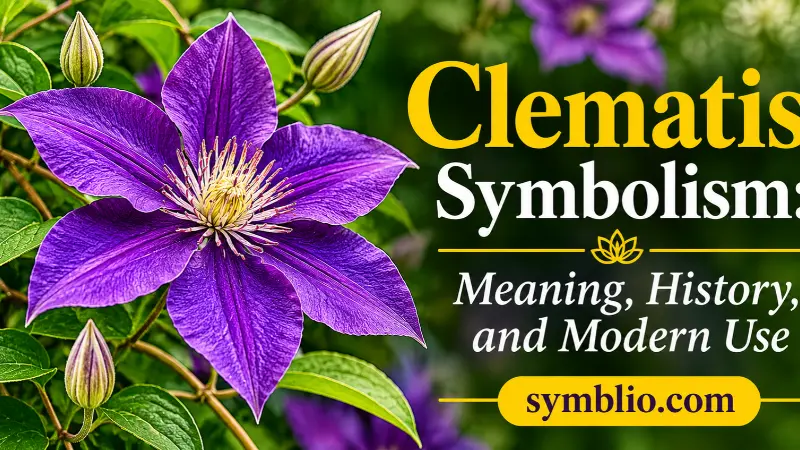
Clematis is a flowering plant belonging to the buttercup family, Ranunculaceae. The genus contains hundreds of species, including climbing vines, spreading plants, and herbaceous varieties. Many popular garden cultivars grow vertically along fences, walls, arches, and trellises.
Its flowers appear in several colors, including purple, blue, pink, red, white, and creamy yellow. Some varieties produce large, star-shaped blossoms, while others have smaller, bell-shaped flowers. Their flowering seasons depend on the species and cultivar.
One interesting botanical detail is that the colorful structures commonly identified as clematis petals are usually sepals. These modified floral structures create the flower’s recognizable appearance.
Several physical characteristics contribute to its symbolism:
- Climbing stems: Suggest ambition, upward movement, and progress.
- Open blossoms: Represent expression, imagination, and creativity.
- Varied colors: Connect the plant with individuality and artistic expression.
- Delicate appearance: Suggest refinement and understated elegance.
- Long-growing vines: Offer a visual association with development and persistence.
Clematis does not have one universally accepted symbolic meaning. Its interpretations come from different historical and cultural contexts, but its appearance provides a natural starting point for understanding its associations.
The Core Symbolism of Clematis
The most established historical association of clematis is mental beauty. This expression refers to attractiveness that comes from intelligence, character, imagination, and thoughtful behavior rather than physical appearance alone.
The meaning offers a different perspective on beauty. Instead of focusing exclusively on outward features, it recognizes qualities that become visible through someone’s words, decisions, creativity, and understanding.
Clematis also carries several related modern interpretations.
Creativity: Its unusual flower forms and varied colors make it a natural symbol of artistic imagination.
Ingenuity: The plant’s climbing habit can suggest finding opportunities and adapting to available support.
Personal development: Its upward growth offers an image of learning, improvement, and gradual progress.
Elegance: Its carefully shaped blossoms are associated with refinement and graceful expression.
Together, these interpretations emphasize qualities that develop over time. Clematis can represent someone whose appeal comes from intelligence, originality, and the way they approach life.
Historical Origins of Clematis Symbolism
The historical meaning of clematis is closely connected with the European language of flowers, also known as floriography.
During the nineteenth century, flower dictionaries became popular in Europe and the United States. These publications assigned emotional meanings to different plants and flowers. People could use carefully selected blooms to communicate sentiments through bouquets, letters, and decorative arrangements.
One influential publication was Le Langage des Fleurs, published in France in 1819 under the name Madame Charlotte de la Tour. Similar books subsequently appeared in Britain and America.
The meanings were not always consistent. Different authors sometimes assigned different sentiments to the same flower, drawing inspiration from botanical characteristics, poetry, literature, religious traditions, and personal interpretation.
Clematis became associated with mental beauty in several nineteenth-century flower dictionaries.
This historical connection also appears in the correspondence of Mary Ann Evans, who later became known as the novelist George Eliot. Her nineteenth-century correspondence included the use of clematis as a floral reference associated with mental beauty.
This gives clematis an interesting place in Victorian floral culture. Its meaning was not simply about attractive blossoms; it celebrated the qualities of the mind.
Mental Beauty: The Most Important Historical Meaning
Mental beauty is the central historical meaning associated with clematis.
The phrase describes an attractive personality shaped by intelligence, understanding, imagination, and character. It suggests that genuine beauty can come from how someone thinks and interacts with others.
This interpretation remains relevant because physical appearance changes, while knowledge, kindness, and creativity can continue developing throughout life.
Clematis offers an appropriate visual expression of this idea. Its flowers may attract attention immediately, but the climbing structure and gradual growth of the plant add another dimension to its appearance.
In personal symbolism, clematis can represent:
- Appreciation for intelligence and thoughtful conversation.
- Respect for creativity and independent thinking.
- Recognition of someone’s inner qualities.
- Meaningful connections rather than superficial impressions.
- The belief that character contributes to lasting beauty.
For this reason, clematis can be a thoughtful floral choice when recognizing someone for their knowledge, originality, or personality.
What Clematis Symbolizes in the United States
In the United States, clematis is primarily recognized as an ornamental flowering vine. Its symbolic meaning is often interpreted through its appearance, garden use, and associations with personal expression.
Unlike flowers that have strong connections with particular American holidays, clematis does not have one nationally established cultural role. Its meaning is more personal and decorative.
American gardeners appreciate clematis for its ability to add vertical interest to outdoor spaces. It can transform an ordinary fence, garden entrance, or pergola into an attractive flowering feature.
This visual transformation creates several symbolic associations.
Ambition and progress: Its upward growth provides a natural image of reaching goals and developing new abilities.
Individuality: Different varieties offer distinct colors and flower shapes, making clematis suitable for gardens that express personal taste.
Creativity: Its placement along structures allows gardeners to create distinctive outdoor designs.
Elegance: The flowers add refinement without requiring elaborate decorative arrangements.
In American homes, clematis may also appear in garden photography, greeting cards, floral artwork, and landscape-inspired interior decoration.
Its symbolism is therefore less about a fixed national tradition and more about the personal meanings people attach to beauty, creativity, and growth.
Clematis Symbolism in Different Cultures
Clematis has a broad geographical distribution, with species native to regions of North America, Europe, and Asia. Its long history of cultivation also connects it with different gardening traditions.
However, it is important to distinguish the plant’s botanical history from its symbolic history. Not every culture assigns clematis the same emotional or spiritual meaning.
European traditions
European floral dictionaries played an important role in establishing clematis as a symbol of mental beauty. Nineteenth-century writers used flowers to communicate ideas that might otherwise be difficult to express directly.
Chinese and Japanese gardening traditions
Clematis species have a long cultivation history in China and Japan. These plants became part of ornamental horticulture and contributed to the development of numerous cultivated varieties.
Their appreciation in these traditions should not automatically be interpreted as evidence of one universal religious or spiritual meaning.
North American traditions
Several clematis species are native to North America. American gardeners have incorporated native and cultivated varieties into residential landscapes, woodland gardens, and naturalistic planting designs.
These different histories demonstrate that clematis has botanical importance across regions, even though its best-documented historical flower-language meaning comes from European traditions.
Purple Clematis Symbolism
Purple clematis is one of the most recognizable forms of this flowering vine.
Purple has long-standing associations with creativity, imagination, dignity, and artistic expression in various Western decorative traditions. These associations influence how people interpret purple clematis today.
Its rich color can suggest originality and individuality. In garden design, purple flowers also create contrast against green foliage and lighter backgrounds.
Purple clematis may represent:
- Creative thinking and artistic imagination.
- Individuality and personal expression.
- Intellectual curiosity.
- Elegance and refinement.
- Appreciation for originality.
For someone who enjoys painting, writing, music, or other creative interests, purple clematis can make a meaningful decorative choice.
Its symbolism is an interpretation of the flower’s color rather than a universally recognized historical definition.
White Clematis Symbolism
White clematis is often associated with simplicity, clarity, sincerity, and elegance.
In many Western floral traditions, white flowers have connections with innocence, remembrance, peacefulness, and new beginnings. These associations influence modern interpretations of white clematis.
Its pale blossoms create a softer visual impression than darker varieties. They are frequently used in cottage gardens, formal landscapes, and outdoor arrangements where a light and understated appearance is desired.
White clematis can represent:
- Clarity of thought.
- Sincerity and honesty.
- Fresh beginnings.
- Simplicity and refinement.
- Peaceful personal reflection.
Although white flowers sometimes appear in wedding and memorial arrangements, white clematis does not have a universally established role in either tradition.
Its meaning depends on the surrounding flowers, the occasion, and the personal intention behind the arrangement.
Pink Clematis Symbolism
Pink clematis offers a softer interpretation of the plant’s symbolism.
Pink flowers are commonly associated with affection, appreciation, warmth, and tenderness in contemporary American floral culture. When combined with clematis’s historical connection to mental beauty, pink varieties can suggest admiration for someone’s personality and character.
The flower may express appreciation without communicating exclusively romantic feelings.
Pink clematis can represent:
- Affection and appreciation.
- Gentle communication.
- Emotional warmth.
- Admiration for someone’s character.
- Graceful personal expression.
Its meaning can suit friendships, family relationships, and thoughtful gifts.
The combination of pink coloring and elegant flower shapes makes it especially appealing to people who prefer softer floral designs.
Clematis and the Symbolism of Personal Growth
One of the most recognizable modern interpretations of clematis comes from its climbing growth habit.
Unlike plants that remain close to the ground, many clematis varieties use their leaf stalks to attach themselves to nearby supports. As they grow, their stems extend upward and outward.
This natural behavior creates a useful metaphor for personal development.
Growth rarely happens all at once. People develop knowledge, confidence, and experience through gradual effort. The climbing vine offers a visual representation of that process.
Clematis can therefore symbolize:
Learning: Intellectual development and the willingness to discover new ideas.
Ambition: Setting goals and working toward future opportunities.
Adaptability: Making progress while responding to changing circumstances.
Patience: Recognizing that meaningful development takes time.
Support: Understanding that relationships, education, and encouragement can help people move forward.
This interpretation is particularly suitable for personal gardens and artwork celebrating educational achievements, new opportunities, or important life transitions.
Emotional and Psychological Meaning of Clematis
Flowers can influence how people experience a space. Their colors, shapes, and natural surroundings often contribute to feelings of calmness, appreciation, and connection with nature.
Clematis has several visual characteristics that help explain its emotional associations.
Its climbing habit creates a sense of movement. Its flowers add color and visual interest, while its foliage connects decorative structures with the natural environment.
From a psychological perspective, people may associate clematis with:
- Inspiration: Unusual flower shapes can encourage artistic appreciation.
- Optimism: Upward growth provides a visual connection with progress.
- Calmness: Flowering garden spaces can create a pleasant environment.
- Self-expression: Different varieties allow people to reflect personal preferences.
- Appreciation: Its historical meaning encourages recognition of intellectual qualities.
These are cultural and personal associations, not scientifically established psychological effects unique to clematis.
The emotional meaning of a flower often comes from personal experiences. Someone who grew up with clematis covering a family garden may associate it with home, childhood, and familiar surroundings.
Another person might connect it with a new beginning or a meaningful gift.
Clematis in Gardens, Home Decor, and Modern Design
Clematis has become a popular feature in ornamental gardening because it combines vertical growth with attractive flowers.
In the United States, gardeners use it in several landscape styles.
Cottage gardens: Clematis can grow alongside roses, lavender, and other flowering plants, creating a layered and informal appearance.
Vertical gardens: Trellises, fences, and garden arches provide structures that support climbing varieties.
Formal landscapes: Large-flowered cultivars can become focal points around entrances and outdoor seating areas.
Naturalistic gardens: Native clematis species can contribute to planting designs that support local wildlife.
Its use in home decoration also reflects its visual appeal.
Botanical prints, decorative cushions, wallpaper, and framed floral illustrations sometimes feature clematis blossoms. These designs bring natural forms into interior spaces without requiring living plants.
The flower’s historical association with mental beauty can add another layer of meaning to botanical artwork, especially when displayed in reading rooms, creative studios, or personal workspaces.
Why Clematis Appears in Tattoos and Personal Art
Clematis can also inspire personal artwork and tattoo designs.
Its distinctive flower structure makes it suitable for detailed botanical illustrations. Depending on the chosen style, an artist can emphasize its petals, leaves, climbing stems, or natural movement.
People may choose clematis-inspired designs to communicate ideas such as:
- Appreciation for intelligence and creativity.
- Personal growth and ambition.
- Individuality and originality.
- Grace and elegance.
- Connection with gardening or nature.
A climbing clematis design may represent progress, while a single blossom can emphasize mental beauty or personal expression.
Color also influences the interpretation. Purple designs may emphasize creativity, white flowers may suggest clarity, and pink blossoms may communicate affection.
There is no standardized clematis tattoo meaning. The significance comes from the individual’s experiences and the qualities they want the artwork to represent.
Misunderstandings and Distorted Meanings of Clematis
Flower symbolism is often presented online as though every plant has one permanent meaning. Clematis demonstrates why this approach can be misleading.
Its historical association with mental beauty is established in several nineteenth-century flower dictionaries. However, modern interpretations sometimes introduce additional meanings without explaining whether they come from historical literature, color symbolism, or contemporary personal associations.
Three misunderstandings deserve attention.
First, clematis does not have one universal meaning.
Different cultures, authors, and generations interpret flowers differently. The Victorian meaning should not be treated as a rule for everyone.
Second, climbing growth does not automatically create an ancient spiritual meaning.
Ambition, perseverance, and personal development are reasonable modern interpretations of its growth habit, but they should be distinguished from documented historical traditions.
Third, flower color does not determine a person’s personality.
Purple, pink, and white varieties can suggest different emotions in floral design, but these associations are cultural conventions rather than scientific classifications.
Another important distinction concerns the plant itself. Some clematis species contain irritating or poisonous compounds, so ornamental beauty should not be confused with suitability for consumption or medicinal use.
Recognizing these differences allows people to appreciate the flower without confusing botanical facts, historical records, and modern interpretations.
How Clematis Symbolism Has Evolved Over Time
Clematis has passed through several stages of cultural appreciation.
Its botanical history stretches across temperate regions of the Northern Hemisphere. Species from China, Japan, Europe, and North America eventually contributed to the diverse cultivated varieties seen in modern gardens.
During the nineteenth century, flower dictionaries introduced a more specific emotional association: mental beauty.
This meaning reflected an interest in expressing personal qualities through flowers. It also demonstrated how Victorian writers connected natural characteristics with human emotions and character.
As ornamental gardening developed, clematis became increasingly appreciated for its decorative value. Plant breeders developed numerous hybrids with different colors, flower shapes, and flowering periods.
Today, its symbolism includes both historical and contemporary interpretations.
| Historical or Modern Context | Common Meaning | Main Association |
|---|---|---|
| Victorian flower language | Mental beauty | Intelligence and character |
| Contemporary floral design | Creativity | Artistic expression |
| Purple varieties | Individuality | Imagination and originality |
| Climbing growth | Personal development | Ambition and progress |
| White varieties | Clarity | Simplicity and sincerity |
The evolution of clematis symbolism shows how a flower can retain an older meaning while acquiring new interpretations through gardening, design, and personal experience.
FAQs
Clematis can represent personal development, intellectual awareness, creativity, and the appreciation of inner qualities. These are modern spiritual interpretations rather than universally established religious meanings.
Clematis traditionally represents mental beauty in several Victorian flower dictionaries. The meaning celebrates intelligence, imagination, and the attractiveness of a thoughtful personality.
Purple clematis is commonly interpreted as a symbol of creativity, individuality, imagination, and elegance. These associations largely come from broader Western interpretations of the color purple.
Clematis is not primarily recognized as a traditional symbol of romantic love. However, pink varieties can express affection and appreciation, especially when included in a personalized floral arrangement.
A clematis tattoo can represent mental beauty, creativity, ambition, and personal growth. Its climbing stems may also communicate progress or a person’s commitment to developing their abilities.
Clematis is generally interpreted positively because of its historical association with mental beauty and its modern connections with creativity and growth. Some older flower dictionaries assign different meanings to particular varieties, so the context matters.
The association comes from nineteenth-century European flower-language traditions. Victorian floral dictionaries connected the plant with mental beauty, emphasizing intelligence and character rather than outward appearance.
Conclusion
Clematis represents mental beauty, creativity, ingenuity, and personal growth. Its most established historical association comes from Victorian flower language, where it celebrated the attractiveness of intelligence and thoughtful character. Modern interpretations also draw inspiration from its climbing growth, distinctive blossoms, and varied colors.
In American gardens and decorative culture, clematis offers more than ornamental appeal. It provides a way to express individuality, appreciate creativity, and celebrate personal development. Whether featured in a garden, botanical illustration, or personal artwork, clematis symbolism reminds us that beauty can be found not only in appearance but also in the qualities people develop throughout their lives.