Flowers often communicate emotions that people find difficult to express in words. The narcissus, commonly known through familiar daffodil varieties, carries several meanings connected to beauty, self-reflection, renewal, hope, and personal growth. Narcissus symbolism is particularly interesting because the flower has both positive and negative associations rooted in mythology, literature, and cultural traditions.
In the United States, narcissus flowers are especially associated with spring, fresh beginnings, and the return of life after winter. Their bright blooms make them popular in gardens, seasonal decorations, floral arrangements, and gifts. However, their connection to the Greek myth of Narcissus also gives them a more complicated meaning involving vanity and excessive self-admiration.
Understanding these different interpretations helps explain why the same flower can represent optimism in one setting and unhealthy self-absorption in another.
Quick Answer: What Does Narcissus Symbolize?
Narcissus commonly symbolizes new beginnings, hope, self-reflection, beauty, and renewal in modern American culture. Its connection to Greek mythology also associates it with vanity and self-absorption, while Chinese traditions connect the flower with prosperity, good fortune, and longevity.
TL;DR: Key Meanings of Narcissus
- Renewal: Represents spring, fresh opportunities, and personal growth.
- Self-reflection: Connects to awareness, identity, and understanding oneself.
- Vanity: Reflects excessive admiration of personal appearance or beauty.
- Hope: Represents optimism and encouragement during difficult periods.
- Prosperity: Associated with good fortune in Chinese traditions.
- Beauty: Expresses elegance, freshness, and natural attractiveness.
What Is the Narcissus Flower?
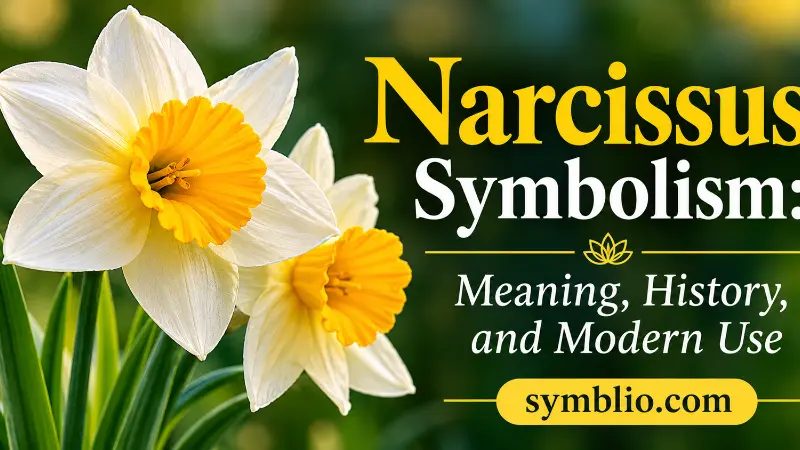
Narcissus is a genus of flowering plants in the Amaryllidaceae family. It includes daffodils, jonquils, and paperwhites, which appear in different colors, shapes, and sizes.
Most narcissus flowers have six petal-like structures surrounding a central cup or trumpet. Depending on the variety, the blooms may be yellow, white, orange, pink, or combinations of these colors.
Their appearance contributes to their symbolic associations. The upright stems suggest growth, while the flowers emerging after winter make them natural representations of renewal and seasonal change.
In American gardens, narcissus varieties are familiar spring flowers. Some varieties also bloom indoors during winter, particularly paperwhites, making them popular seasonal decorations.
An important distinction is that narcissus is the botanical genus, while daffodil is the familiar common name used for many members of that genus. This explains why the two names often appear together in discussions of flower symbolism.
The Main Symbolic Meanings of Narcissus
Narcissus carries several interpretations, and its meaning often depends on the cultural setting, historical background, and reason someone chooses the flower.
Its most common positive associations include renewal, hope, beauty, and self-awareness. Its negative interpretation comes primarily from the Greek myth that inspired its botanical name.
Renewal and fresh beginnings
Narcissus flowers often appear when winter begins giving way to spring. Their seasonal appearance makes them natural symbols of starting again, leaving difficult experiences behind, and welcoming new opportunities.
Self-reflection and personal awareness
The flower’s mythological connection with a reflection in water gives it an association with examining one’s identity, choices, and emotions.
Beauty and admiration
Its distinctive shape and attractive colors have made narcissus a familiar representation of natural beauty and elegance.
Vanity and excessive self-admiration
The Greek story introduces a warning about becoming so absorbed in one’s own appearance that meaningful relationships and responsibilities receive little attention.
These contrasting meanings make narcissus more complex than flowers traditionally associated with only one emotion.
Ancient Greek Mythology and the Story of Narcissus
The most recognizable historical association of narcissus comes from Greek mythology.
Narcissus was a beautiful young man whose appearance attracted admiration. In the well-known Roman version recorded by the poet Ovid in Metamorphoses, he became captivated by his own reflection in a pool of water.
Unable to understand that the image belonged to himself, he remained fascinated by what he saw. His attachment eventually became tragic, and a flower grew in the place associated with his death.
The story helped establish the flower’s connection with vanity, self-absorption, and the dangers of excessive pride.
However, the myth is not simply a story about physical attractiveness. It also explores the difference between recognizing personal worth and becoming completely absorbed in oneself.
The flower therefore carries two related interpretations: beauty can be appreciated, but excessive admiration can interfere with understanding other people.
The myth also explains the connection between the botanical name Narcissus and the modern psychological term narcissism. The flower itself, however, is not a symbol of a psychological diagnosis in every context.
Narcissus Symbolism in the United States
In the United States, narcissus flowers are primarily recognized through their familiar daffodil varieties. Their arrival is closely associated with the changing seasons, making them popular symbols of optimism and new beginnings.
American gardeners plant daffodil bulbs in anticipation of spring. When the flowers emerge, they provide a visible reminder that colder weather will eventually give way to warmer days.
Several cultural associations contribute to their American interpretation.
Spring celebrations: Daffodils appear in seasonal garden displays, public parks, and spring floral arrangements.
Birth flower traditions: The daffodil is widely recognized as March’s birth flower. It commonly represents renewal, happiness, and new opportunities.
Charitable awareness: Daffodils have been adopted by cancer-related fundraising and awareness campaigns. Their association with hope makes them appropriate symbols of encouragement and support.
Home decoration: Yellow and white narcissus flowers frequently appear in spring decorating because their colors complement the season’s brighter atmosphere.
In American culture, the positive seasonal interpretation is generally more familiar than the negative mythological association.
Narcissus Symbolism in Chinese Culture
Narcissus has a particularly favorable meaning in Chinese cultural traditions.
Known as shuixian (水仙), the flower’s name is commonly translated as water immortal or water fairy. It is associated with good fortune, prosperity, accomplishment, and longevity.
Its seasonal flowering contributes to this interpretation. Chinese narcissus often blooms around the Lunar New Year, making it a popular decorative plant during celebrations that welcome a new year.
Families may grow the bulbs in shallow containers filled with water and stones. When the flowers open around the festive period, they are regarded as an auspicious sign.
This tradition gives narcissus a meaning that differs considerably from its Greek mythological association.
Where the Greek story emphasizes the dangers of self-absorption, Chinese traditions frequently emphasize prosperity, good fortune, and the promise of a favorable year.
The flower also appears in traditional Chinese paintings and decorative artwork, sometimes alongside other plants associated with longevity and good wishes.
The Emotional and Psychological Meaning of Narcissus
Narcissus can communicate different emotional messages depending on the interpretation attached to it.
For some people, the flower represents the importance of understanding themselves. Its association with reflection encourages consideration of personal identity, confidence, and individual development.
For others, it represents the emotional relief that comes with a fresh beginning. Because narcissus flowers emerge during the transition from winter to spring, they can suggest that difficult periods do not necessarily last forever.
The flower also introduces a useful distinction between healthy self-respect and excessive self-admiration.
Healthy self-respect involves recognizing personal strengths while remaining considerate of other people. The negative interpretation of narcissus warns against allowing admiration of oneself to become the center of every interaction.
In this sense, the flower can represent both confidence and a reminder to maintain perspective.
Its emotional associations include:
- Hope after a challenging experience.
- Confidence and personal awareness.
- Appreciation of natural beauty.
- Optimism about future opportunities.
- Reflection on personal behavior and relationships.
What Different Narcissus Colors Symbolize
Narcissus flowers come in several colors, and their appearance can influence the impression they create.
Although color meanings vary between traditions, common modern floral interpretations offer a useful starting point.
| Flower Color | Common Symbolic Association | General Impression |
|---|---|---|
| Yellow | Happiness, hope, and renewal | Cheerful and optimistic |
| White | Purity, simplicity, and fresh beginnings | Calm and graceful |
| Orange | Enthusiasm, creativity, and energy | Warm and expressive |
| Pink | Affection, tenderness, and admiration | Gentle and romantic |
These associations are interpretive rather than universal rules. A particular color does not have exactly the same meaning in every culture or floral tradition.
For example, a white narcissus arrangement may communicate simplicity and elegance in a modern American home, while a Chinese New Year arrangement may emphasize good fortune regardless of its precise color.
Narcissus Symbolism in Literature and Art
Narcissus and daffodils have inspired writers, poets, and visual artists because their meanings combine natural beauty with human emotion.
One particularly familiar example is William Wordsworth’s poem I Wandered Lonely as a Cloud, commonly known as Daffodils. Published in 1807, the poem describes an encounter with a field of golden flowers and the happiness the memory later brings.
Although Wordsworth was writing in a British literary context, the poem became widely read in the United States. Its treatment of daffodils helped strengthen their association with happiness, memory, and the emotional value of nature.
Visual artists have also explored the flower through the myth of Narcissus.
In classical and later European artwork, Narcissus frequently appears looking into a pool of water. The reflection becomes a visual representation of beauty, desire, and self-absorption.
These artistic interpretations demonstrate how the flower developed two distinct literary identities: the hopeful spring flower and the tragic reminder of excessive self-admiration.
Narcissus as a Symbol of Hope and Renewal
The association between narcissus and renewal comes largely from its natural growing cycle.
Many narcissus varieties spend the colder months as dormant bulbs beneath the soil. When seasonal conditions become favorable, they produce leaves and flowers that bring visible color back to the landscape.
This process makes the flower an understandable representation of recovery and fresh opportunities.
In the United States, daffodils are particularly familiar signs of spring. Their appearance in residential gardens, public landscapes, and community flower displays often marks a transition away from winter.
The flower’s association with hope also appears in charitable settings. Cancer awareness and fundraising initiatives have used daffodils to communicate encouragement, solidarity, and optimism.
For individuals going through major life changes, narcissus can serve as a reminder that progress sometimes begins quietly before becoming visible.
Its symbolism does not promise that every difficult situation will resolve easily. Instead, it represents the possibility of moving forward.
Narcissus Symbolism in Tattoos and Personal Style
Narcissus tattoos offer a way to express personal values through floral imagery.
Unlike some flowers with relatively consistent cultural interpretations, narcissus allows people to choose between several different messages.
Personal growth: A narcissus tattoo can represent a new chapter, recovery, or a meaningful change in someone’s life.
Self-awareness: Its connection with the Narcissus myth can communicate reflection and the importance of understanding one’s identity.
Hope and optimism: A yellow daffodil may represent a positive outlook and appreciation for new opportunities.
Beauty and individuality: Its distinctive shape makes it suitable for botanical designs that celebrate natural beauty.
Cultural heritage: Someone familiar with Chinese traditions may choose narcissus to represent prosperity, good fortune, or family wishes.
Tattoo styles also influence the impression. A delicate botanical illustration emphasizes the flower’s natural appearance, while a design showing Narcissus beside a pool references the Greek myth.
There is no single fixed interpretation. Personal experience and cultural background usually determine what the tattoo communicates.
Narcissus in Weddings, Gifts, and Home Decoration
Narcissus flowers appear in different personal and decorative settings because their seasonal associations make them suitable for expressing optimism and appreciation.
In American homes, daffodils and paperwhites are popular choices for spring arrangements. Their bright appearance can bring a sense of freshness to dining tables, entryways, and living spaces.
They can also communicate several positive messages when given as gifts.
- Birthdays: A March birthday bouquet can feature daffodils as the recipient’s traditional birth flower.
- New homes: The flower can represent a fresh start and positive expectations.
- Personal milestones: Narcissus may express encouragement when someone begins a new chapter.
- Seasonal celebrations: Spring arrangements can represent the return of warmer weather and outdoor activities.
In Chinese wedding and decorative traditions, narcissus can also carry associations with good fortune and the flourishing of a relationship.
However, it is worth considering cultural context before choosing flowers for an important ceremony. The Greek mythological association with vanity may not communicate the same message as the flower’s favorable interpretation in Chinese traditions.
Narcissus and Its Connection to Self-Love
The connection between narcissus and self-love requires some explanation because the terms are not interchangeable.
In modern conversations, self-love generally refers to respecting personal needs, recognizing individual worth, and maintaining healthy boundaries.
The Greek myth presents a different situation. Narcissus becomes so absorbed in his own reflection that he cannot establish a meaningful relationship with the world around him.
Consequently, the flower can represent two contrasting ideas.
On the positive side, it may encourage people to recognize their strengths and develop a healthier understanding of themselves.
On the negative side, it can serve as a reminder that excessive self-admiration may prevent someone from recognizing the feelings and needs of others.
This distinction matters when interpreting the flower in contemporary American culture.
Choosing narcissus as a personal symbol does not automatically suggest vanity. It may instead represent self-discovery, confidence, or a commitment to personal development.
Common Misunderstandings About Narcissus Symbolism
Several misconceptions surround narcissus because its mythology, botanical identity, and cultural interpretations sometimes become mixed together.
Misunderstanding: Narcissus always represents vanity.
The Greek myth explains this association, but it does not define every cultural interpretation. The flower also represents renewal, hope, and prosperity.
Misunderstanding: Narcissus and daffodil are completely different flowers.
Daffodils belong to the botanical genus Narcissus. The terms often refer to overlapping groups of flowers rather than unrelated plants.
Misunderstanding: Narcissus has only negative symbolism.
Its mythological background includes a warning about self-absorption, but its seasonal and cultural associations are frequently positive.
Misunderstanding: Every narcissus flower has the same meaning.
Color, variety, cultural tradition, and personal experience can influence interpretation.
Misunderstanding: Narcissus symbolizes a psychological condition.
The modern term narcissism has a historical connection with the myth, but a flower cannot establish anything about someone’s personality or mental health.
Understanding these distinctions prevents the flower from being reduced to a single interpretation.
How Narcissus Symbolism Has Changed Over Time
The meaning of narcissus has developed through several cultural and historical stages.
In ancient Greek mythology, the flower became associated with beauty and excessive self-admiration through the story of Narcissus.
Later European artistic traditions continued exploring the myth, particularly its relationship with reflection, desire, and personal identity.
During the development of Victorian floriography, flowers became part of a broader system of symbolic communication. Their meanings could vary between different floral dictionaries and traditions. Narcissus and daffodil interpretations included both positive and negative associations.
In Chinese traditions, the flower developed a particularly favorable connection with prosperity, longevity, and Lunar New Year celebrations.
In modern American culture, its springtime appearance has helped establish a more optimistic interpretation centered on hope, renewal, and fresh opportunities.
Today, people may encounter narcissus in botanical gardens, home decorations, literary artwork, tattoos, and cultural celebrations.
Its meaning continues to depend on the context in which it appears.
FAQs
Narcissus is commonly interpreted as a symbol of renewal, self-awareness, hope, and personal development. Some interpretations also connect it with reflection and the importance of balancing self-respect with consideration for others.
Yes. Its association with vanity comes from the Greek myth of Narcissus, who became fascinated by his own reflection. However, the flower also carries positive meanings, including beauty, prosperity, and new beginnings.
Narcissus can represent both positive and negative ideas. Its springtime appearance connects it with hope and renewal, while its mythological background introduces warnings about excessive self-admiration.
A narcissus tattoo may represent personal growth, self-awareness, beauty, confidence, or a fresh beginning. Its meaning often depends on the person’s experience and whether the design references the Greek myth or the flower’s positive associations.
Narcissus often blooms around the Lunar New Year and is considered an auspicious flower in Chinese traditions. It represents good fortune, prosperity, and longevity, making it a popular seasonal decoration.
Yellow narcissus commonly represents happiness, optimism, hope, and renewal. Its bright color and springtime flowering make it a familiar expression of positive expectations.
Narcissus is the botanical genus that includes daffodils, jonquils, and paperwhites. Daffodil is the common name used for many varieties within this genus.
Conclusion:
Narcissus symbolism brings together several ideas that may initially seem contradictory. Its connection with Greek mythology represents vanity and excessive self-admiration, while its natural flowering cycle makes it a familiar symbol of hope, beauty, and renewal.
In the United States, daffodils are particularly associated with spring, fresh opportunities, and positive change. In Chinese traditions, narcissus carries favorable associations with prosperity, longevity, and good fortune. These interpretations show how one flower can develop different meanings across cultures.
Ultimately, narcissus reminds us that beauty can encourage admiration, reflection, and personal growth. Its meaning depends not only on the flower itself but also on the stories, traditions, and experiences people associate with it.