
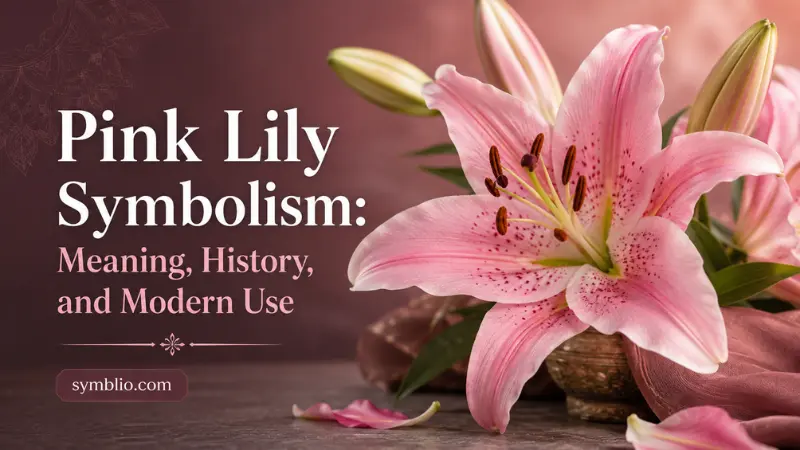
Pink lilies combine the traditional symbolism of the lily with the softer associations of the color pink. In the United States, they are commonly used to express affection, admiration, appreciation, tenderness, and celebration, making them especially suitable for bouquets, weddings, birthdays, and meaningful gifts.
The meaning of a flower rarely comes from one source. It develops through religious art, literature, gardening traditions, color associations, social customs, and everyday use. Pink lilies are a good example because their symbolism is partly inherited from the long history of lilies and partly shaped by modern ideas about pink.
Unlike a symbol with one fixed definition, a pink lily can communicate different things depending on its setting. A bouquet at a wedding may suggest affection and grace, while flowers given to a friend may communicate appreciation without romantic intent.
Quick Answer
Pink lily symbolism commonly represents affection, admiration, tenderness, and appreciation in modern American culture, especially in gifts, weddings, celebrations, and floral arrangements. Historically, lily symbolism also became associated with purity and religious devotion, while the color pink added associations with gentleness and emotional warmth.
TL;DR
- Pink lilies commonly express affection, admiration, and appreciation.
- Lily symbolism has important roots in Christian art and religious imagery.
- Pink softens the traditional lily associations with purity and formality.
- Americans often use pink lilies for celebrations and personal gifts.
- Their meaning changes according to color, setting, and relationship.
- Modern use emphasizes beauty, warmth, grace, and positive emotion.
What a Pink Lily Looks Like and Where It Appears
A pink lily typically has large, prominent flowers with six petal-like tepals arranged around a central group of stamens. Depending on the variety, the flowers may be pale blush, soft rose, salmon, pink-and-white, or intensely colored.
The term “pink lily” can refer to several cultivated lilies rather than one single botanical species. Asiatic lilies, Oriental lilies, trumpet hybrids, and other garden varieties can all appear in shades of pink.
That variety matters when discussing symbolism. A flower’s cultural meaning does not depend only on its botanical classification. People also respond to its color, shape, fragrance, size, arrangement, and setting.
In American life, pink lilies can appear in:
- home gardens
- flower shops
- wedding arrangements
- birthday bouquets
- Mother’s Day flowers
- sympathy arrangements
- paintings and decorative art
- tattoos and illustrations
- seasonal home décor
Their large blossoms make them visually noticeable, so they often function as focal flowers rather than background decoration.
What Pink Lilies Commonly Mean in the United States
The most familiar modern American associations are affection, admiration, appreciation, femininity, tenderness, and celebration.
The meaning of pink helps explain this interpretation. In contemporary American color associations, softer pinks often suggest gentleness, sweetness, care, and warmth, while stronger pinks can feel more energetic or expressive.
The lily contributes a different layer. Lilies have long carried associations with beauty, purity, dignity, and devotion in Western visual culture. Medieval and Renaissance Christian art frequently used white lilies to represent Mary’s purity, particularly in representations of the Annunciation.
A pink lily therefore does not simply mean “love.” Its message is usually less narrowly romantic. It can say:
“I appreciate you.”
“You are important to me.”
“I admire your grace and beauty.”
“This is a moment worth celebrating.”
That flexibility explains why pink lilies work in both romantic and non-romantic settings.
How the Color Pink Changes Traditional Lily Symbolism
Color is one of the most important factors in interpreting flowers.
White lilies have a particularly strong history of associations with purity and chastity in Christian art. The Metropolitan Museum of Art notes that the Madonna lily became a symbol of the Virgin Mary’s purity, while lilies frequently appeared in Annunciation imagery.
Pink lilies occupy a different emotional territory.
Pink generally makes the lily feel:
- softer
- warmer
- more affectionate
- less formal
- more personal
- more celebratory
This creates an interesting symbolic shift. The flower’s traditional dignity remains, but the color introduces a more approachable emotional tone.
A white lily in a religious painting can communicate purity and devotion. A pink lily in a contemporary bouquet may communicate admiration and affection. The underlying flower is similar, but the cultural message changes with context.
Ancient Roots and the Older Symbolism of Lilies
Lilies have a much older cultural history than the modern language of flower colors.
The plant family has been cultivated and admired for centuries, and lilies appear in ancient and medieval artistic traditions. Their striking appearance made them suitable for representing beauty, fertility, renewal, and other ideas associated with flowering plants.
However, it is important not to treat every ancient reference to a “lily” as evidence for today’s specific meaning of a pink lily. Historical plant identification was not always as precise as modern botanical classification.
The strongest documented Western symbolic tradition developed around the white lily, especially the Madonna lily. Medieval Christian writers and artists connected the white flower with Mary’s purity and chastity. The Metropolitan Museum describes the lily as one of the important botanical symbols used in medieval and Renaissance religious imagery.
Pink lilies inherited some of the flower’s cultural prestige, but their modern meaning should not be projected backward into periods when pink cultivars were not being used in today’s way.
Pink Lilies in Christian and Religious Symbolism
The lily has an especially recognizable place in Christian iconography.
In representations of the Annunciation, the angel Gabriel is frequently shown holding or standing near a lily. The flower represents Mary’s purity in this artistic tradition. The Metropolitan Museum’s collections include multiple works showing Gabriel with a lily in connection with the Annunciation.
The association is strongest with white lilies, not pink ones.
That distinction is important. A pink lily may be used by Christians today as a beautiful flower associated with grace, love, celebration, or devotion, but there is no universal Christian doctrine assigning one official meaning to pink lilies.
In religious settings, interpretation depends heavily on denomination, local tradition, artistic convention, and the purpose of the flowers.
So when someone asks whether pink lilies are specifically “Christian symbols,” the most accurate answer is that lilies have a substantial Christian symbolic history, but pink lilies do not possess one universally prescribed religious meaning.
Victorian Flower Language and the Rise of Floral Messages
The Victorian era helped popularize the idea that flowers could communicate messages without spoken words.
Flower dictionaries and illustrated guides assigned meanings to different flowers, allowing people to construct bouquets with symbolic intentions. This tradition helped make floral symbolism part of popular culture rather than something restricted to religious art.
Victorian flower culture was particularly influential in literature, painting, cards, gardens, and social customs.
But modern readers should be careful with lists that claim every flower had one fixed Victorian definition. Flower language varied between books, regions, and authors.
This matters for pink lilies because many modern websites present a single definition as though it were an ancient, universal rule. In reality, today’s interpretation combines older flower symbolism with modern color psychology and contemporary floral customs.
Pink Lily Symbolism in American Weddings
Pink lilies fit naturally into American wedding symbolism because they combine elegance with warmth.
Wedding flowers frequently carry emotional associations rather than strict coded messages. Pink lilies can suggest:
- affection between partners
- admiration
- grace
- happiness
- new beginnings
- celebration
- appreciation for family and friends
They can appear in bridal bouquets, centerpieces, ceremony arrangements, reception décor, and photographs.
Their meaning also depends on the rest of the floral design. Pink lilies combined with roses may feel more romantic. Paired with greenery and simple white flowers, they may feel more natural and graceful. Used with bright seasonal flowers, they can become part of a cheerful celebration.
This illustrates an important principle of symbolism: a flower’s meaning comes partly from what surrounds it.
Pink Lilies, Motherhood, and Family Affection
Pink flowers are often associated with nurturing and tenderness in contemporary American culture, which makes pink lilies suitable for family occasions.
They may appear in bouquets for:
- Mother’s Day
- birthdays
- anniversaries
- family celebrations
- graduation events
- personal milestones
The flower does not automatically mean motherhood. Instead, its combination of softness, beauty, and affection can support a message of appreciation toward someone who provides care or emotional support.
This distinction keeps the symbolism grounded. Pink lilies can symbolize family affection, but there is no universal rule that says they specifically represent mothers.
Emotional and Psychological Associations
Flowers influence emotion partly through appearance and cultural learning.
Pink lilies have several visual qualities that contribute to their emotional effect:
- rounded, open blossoms can suggest openness
- pale pink can feel gentle and calming
- brighter pink can feel lively and joyful
- fragrance can create a memorable sensory association
- large flowers can communicate importance or celebration
These responses are not universal psychological laws. Personal experience matters.
Someone who associates lilies with a loved one’s garden may experience nostalgia. Another person may associate them with weddings. Someone else may simply see them as attractive flowers.
Symbolism works because shared cultural meanings interact with personal memories.
Pink Lily Symbolism Across Different Cultures
Lily symbolism varies considerably across cultures, so it is better to avoid claiming one global meaning.
In Western Christian art, the white lily became strongly associated with Mary’s purity. Medieval artists incorporated botanical imagery into religious scenes, giving flowers moral and theological meanings.
In other cultural settings, lilies may be connected with beauty, renewal, prosperity, mourning, or ceremonial life. The meaning can also differ between individual lily species.
This is especially relevant when discussing pink lilies because modern commercial flower culture often blends traditions. A bouquet purchased in the United States may carry assumptions from Western flower language, contemporary color associations, and international floral customs simultaneously.
The safest interpretation is therefore contextual rather than universal.
Pink Lilies in Sympathy and Mourning
Lilies have a prominent place in American sympathy flowers and funeral arrangements. Their association with dignity, beauty, and the cycle of life makes them suitable for moments of remembrance.
Pink lilies can add a gentler emotional tone to such arrangements. They may communicate affection for the person being remembered or warmth toward the grieving family.
However, their use does not mean that pink lilies inherently symbolize death.
The association with mourning comes largely from how lilies have been used in Western funeral traditions, rather than from the flower having an intrinsic connection to death.
This distinction prevents a common misunderstanding: a symbol can appear in a particular ritual without becoming permanently defined by that ritual.
Pink Lilies in Tattoos, Jewelry, and Personal Style
A pink lily tattoo can carry a highly personal meaning.
Common interpretations include:
- affection
- femininity
- family connection
- admiration
- personal growth
- remembrance
- beauty
- grace
But tattoo symbolism is especially individual. Someone may choose a pink lily because it reminds them of a relative, a garden, a particular period of life, or simply because they like the flower.
The same applies to jewelry and clothing motifs. A pink lily design can function as decoration without carrying a specific symbolic message.
Modern symbolism is therefore less rigid than older systems of flower language. People increasingly choose symbols based on personal associations as well as shared cultural meanings.
A Quick Guide to Pink Lily Meanings
| Context | Meaning in the USA | Common Associations | Notes |
|---|---|---|---|
| Gift bouquet | Affection and appreciation | Friendship, admiration, warmth | Usually less explicitly romantic than red roses |
| Wedding | Grace and affection | Love, celebration, elegance | Meaning depends on the overall floral design |
| Family occasion | Tenderness and appreciation | Motherhood, care, gratitude | Not an exclusive motherhood symbol |
| Sympathy flowers | Remembrance and affection | Dignity, comfort, farewell | Lily symbolism has a long history in mourning |
| Tattoo or jewelry | Personal meaning | Beauty, memory, identity | Interpretation is highly individual |
Modern Uses in American Culture
Today, pink lilies are primarily understood through floral design rather than formal symbolic systems.
Florists use them because their large flowers create visual impact. Home decorators may choose them because pink complements contemporary interiors. Gardeners grow pink cultivars for seasonal color. Social media users photograph them as part of lifestyle, gardening, wedding, or nature content.
The flower’s symbolic meaning therefore operates on several levels at once.
A florist may think primarily about color harmony and arrangement. A customer may think about affection. A recipient may simply see a beautiful bouquet. All three interpretations can coexist.
This is typical of modern American symbolism: meanings are often suggestive rather than mandatory.
Common Misunderstandings About Pink Lily Symbolism
One common mistake is assuming that every lily has exactly the same meaning.
It does not.
White lilies have a particularly strong association with purity in Christian art, while other colors and species developed different associations through horticulture and popular flower culture.
Another mistake is treating Victorian flower dictionaries as universal historical authorities. Flower meanings varied between publications, and modern websites sometimes simplify those traditions.
A third misconception is that giving pink lilies automatically communicates romantic love. In contemporary American culture, they can express romantic affection, but they can just as easily communicate admiration, friendship, gratitude, family affection, or celebration.
Finally, symbolism should not be confused with scientific fact. Saying that pink lilies symbolize tenderness does not mean the flowers produce a measurable psychological response in every person.
How the Meaning Has Evolved
The symbolism of lilies has moved from religious and literary imagery toward broader personal and decorative meanings.
In medieval Christian art, the white lily could carry a highly specific theological message. Over time, flowers became increasingly connected with gardens, literature, social customs, commercial floristry, and personal expression.
Modern pink lilies represent this evolution particularly well.
They retain something of the lily’s older associations with beauty and grace while taking on newer associations created by the color pink and contemporary American gift culture.
The result is not one replacement meaning but a layered one. A pink lily can be traditional without feeling old-fashioned, affectionate without necessarily being romantic, and elegant without being formal.
Why Pink Lilies Remain Meaningful Today
Pink lilies remain useful as symbols because their meaning is flexible.
They can fit a joyful occasion without seeming casual, express affection without the intensity of a romantic red flower, and appear in serious settings without feeling overly somber.
That flexibility also makes them effective in visual communication. A pink lily can suggest a mood before a viewer knows anything about the person or event surrounding it.
In contemporary America, that makes the flower particularly adaptable to weddings, family celebrations, gifts, gardens, artwork, and personal symbolism.
FAQs
Pink lilies commonly symbolize affection, admiration, appreciation, tenderness, and celebration. Their meaning combines the cultural history of lilies with modern associations attached to the color pink.
They can be romantic, but they are not exclusively romantic. In the United States, pink lilies can also communicate friendship, gratitude, family affection, admiration, or congratulations.
Lilies have an important Christian history, especially the white lily’s association with Mary’s purity and the Annunciation. Pink lilies do not have one universally established Christian meaning, so their interpretation depends on the religious and artistic context.
Yes. They can work well in American weddings because their color and form can suggest affection, grace, beauty, and celebration. The overall arrangement determines whether they feel romantic, elegant, cheerful, or understated.
They can suggest femininity in modern Western culture, particularly because pink is often culturally associated with softness and feminine identity. However, that association is cultural rather than an inherent property of the flower.
There is no broadly recognized negative meaning attached specifically to pink lilies in contemporary American culture. Their interpretation is generally positive, although lilies themselves can be associated with mourning when used in funeral or sympathy arrangements.
A pink lily tattoo may represent affection, beauty, family, remembrance, grace, or personal growth. Because tattoos are highly personal, the wearer’s own story is usually more important than any standard flower-language definition.
Conclusion
Pink lilies bring together two layers of symbolism: the long cultural history of the lily and the modern emotional associations of pink. In American culture, they most often communicate affection, admiration, appreciation, tenderness, beauty, and celebration, while the older lily tradition adds associations with purity, grace, and devotion.
Their meaning is strongest when considered in context. A pink lily at a wedding does not necessarily say the same thing as one given to a friend, placed in a sympathy arrangement, or chosen for a tattoo.
Ultimately, pink lily symbolism works because the flower can carry both shared cultural meaning and personal memory. That combination allows a simple blossom to express something specific without forcing it into a single definition.


