
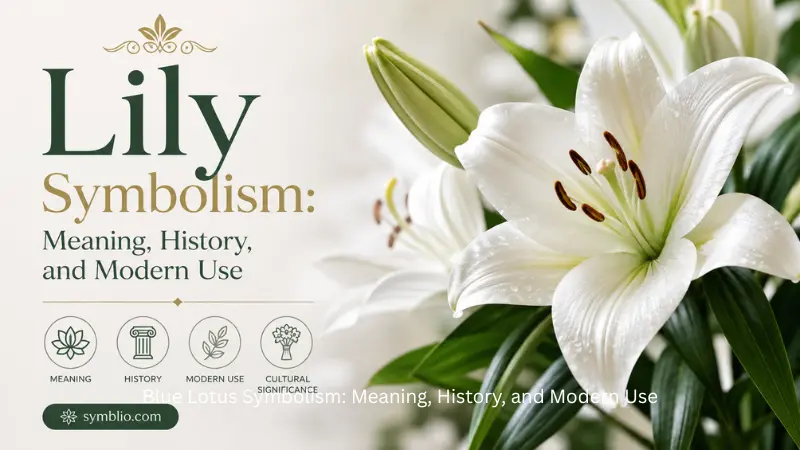
Lilies are among the most familiar flowers in American weddings, churches, gardens, sympathy arrangements, and spring celebrations. Lily symbolism most often centers on purity, renewal, devotion, remembrance, peace, and graceful beauty, although the exact message changes depending on the flower’s color and setting.
Part of the lily’s appeal comes from this flexibility. A white lily beside an Easter altar may express resurrection and faith, while the same flower in a funeral arrangement can suggest peace and remembrance. Pink, orange, yellow, and red lilies introduce warmer meanings such as admiration, confidence, friendship, and romantic affection.
It is also worth knowing that not every flower called a lily is botanically a true lily. True lilies belong to the genus Lilium. Calla lilies, peace lilies, daylilies, water lilies, and lily-of-the-valley belong to different plant families, even though their common names often cause their meanings to be mixed together.
Quick Answer
Lily symbolism commonly represents purity, renewal, devotion, peace, and remembrance in modern American culture, especially at weddings, funerals, and religious celebrations. Historically, lilies have also been associated with fertility, motherhood, innocence, faith, and new life.
TL;DR
- White lilies commonly represent purity, peace, renewal, and remembrance.
- Christian tradition connects lilies strongly with innocence and resurrection.
- Funeral lilies often communicate sympathy, dignity, and peaceful farewell.
- Wedding lilies can suggest devotion, sincerity, and new beginnings.
- Different lily colors communicate different emotional messages.
- Modern tattoos often use lilies for renewal, identity, or remembrance.
What a Lily Looks Like and Where It Appears
True lilies are perennial flowering plants known for their large, structured blooms and prominent stamens. Their flowers may face upward, outward, or downward depending on the species or hybrid. Some have trumpet-shaped blossoms, while others have open, star-like petals or strongly curved tips.
Americans commonly encounter lilies in bouquets, garden beds, churches, weddings, funerals, and seasonal displays. Asiatic lilies are popular for their bright colors, while Oriental lilies are known for large flowers and strong fragrance. Easter lilies are especially recognizable because of their white trumpet-shaped blooms.
Their visual form contributes to their symbolic appeal. Tall stems and symmetrical flowers often create a formal, composed appearance, which helps explain why lilies fit both celebratory and solemn occasions.
What Lilies Commonly Mean in the United States
In modern American culture, lilies most often communicate purity, peace, renewal, remembrance, devotion, and admiration.
Their meaning depends heavily on context. At Easter, lilies suggest resurrection and new life. At funerals, they communicate sympathy and peaceful remembrance. At weddings, they can represent devotion, sincerity, or a fresh beginning.
Color also changes the message. White lilies feel more solemn and ceremonial, while brighter shades can seem warmer, more romantic, or more celebratory.
| Context | Common Meaning in the USA | Typical Associations | Notes |
|---|---|---|---|
| Easter | Renewal and new life | Resurrection, spring, hope | Usually white lilies |
| Funeral | Peace and remembrance | Sympathy, dignity, farewell | White blooms are common |
| Wedding | Devotion and purity | Commitment, sincerity, new beginnings | Meaning varies by color |
| Romantic gift | Love and admiration | Attraction, affection, appreciation | Pink and red are common |
| Tattoo | Personal transformation | Recovery, identity, remembrance | Meaning is highly personal |
| Religious setting | Purity and faith | Innocence, devotion, resurrection | Strong Christian connection |
The lily therefore does not have one fixed definition. Its meaning changes according to color, occasion, tradition, and personal experience.
Ancient Roots and Early Associations
Lilies have been cultivated and represented in art for thousands of years. Ancient Mediterranean societies valued them not only as attractive flowers but also as plants connected with fertility, beauty, life, and divine figures.
Their seasonal growth may have helped shape some of these meanings. Lilies emerge from underground bulbs and return with new growth after periods of dormancy. That natural cycle makes associations with renewal, continuation, and rebirth easy to understand.
Ancient flower symbolism should still be interpreted carefully. Historical cultures did not always classify plants in the same way modern botany does, and old names for flowers can refer to plants that are not true lilies.
This distinction becomes especially important when comparing lily symbolism across civilizations.
Lilies in Greek Mythology
Greek mythology helped connect lilies with motherhood, fertility, marriage, and divine femininity.
The flower became associated with Hera, queen of the gods and a goddess linked with marriage and family. Later traditions connected the white lily with stories involving Hera’s milk, giving the flower an additional association with motherhood and fertility.
These stories influenced later interpretations, but they did not create every meaning lilies carry today. Over time, ancient mythology blended with Christian symbolism, European art, flower customs, and modern floristry.
The lily’s meaning is therefore best understood as something that accumulated gradually rather than coming from one single origin story.
Christian Symbolism and the Virgin Mary
Christian art had a major influence on the meaning of white lilies in Western culture.
Artists frequently placed white lilies in scenes involving the Virgin Mary, especially representations of the Annunciation. In this setting, the flower became associated with purity, innocence, chastity, and devotion.
This connection became so familiar that the white lily developed into a recognizable religious symbol even outside individual paintings. Churches, religious artwork, stained glass, and devotional imagery continued to reinforce the association.
The flower’s white color certainly contributes to its visual impression of cleanliness and simplicity, but the meaning of purity is not based on color alone. Centuries of Christian artistic tradition strengthened that interpretation.
Why Easter Lilies Represent Renewal
The Easter lily is one of the clearest examples of lily symbolism in American culture.
Its large white trumpet-shaped flowers appear in churches, homes, and seasonal displays during the Easter period. Because Easter centers on the resurrection of Jesus Christ, the flower became associated with new life, hope, spiritual renewal, and resurrection.
White lilies already had strong connections with purity through Christian art, so their use at Easter brought several related meanings together.
Even outside explicitly religious settings, Easter lilies can suggest spring and fresh beginnings. Their appearance during a season associated with returning warmth, flowering plants, and longer days gives them a broader cultural connection with renewal.
For many Americans, the Easter lily therefore works as both a religious symbol and a seasonal flower.
Why Lilies Are Common at Funerals
Lilies are among the most recognizable flowers used in American funeral and sympathy arrangements.
White lilies usually communicate peace, remembrance, dignity, sympathy, and a respectful farewell. In Christian families, they may also suggest hope in resurrection or life beyond death.
This does not mean lilies symbolize death itself.
The flower appears at funerals because its existing associations with purity, peace, faith, and renewal fit the emotions people often want to express after a loss. Its formal appearance also works well in memorial arrangements.
Personal experience can make this association especially strong. Someone who has repeatedly seen or smelled lilies at funerals may connect them with grief even more strongly than with Easter or weddings.
For that person, the symbolism becomes emotional as well as cultural.
Lilies in Weddings and Romantic Relationships
Lilies also work naturally in wedding symbolism.
White lilies can suggest sincerity, devotion, purity, and a new beginning. Their formal appearance makes them suitable for bridal bouquets, ceremony arrangements, and elegant receptions.
Pink lilies create a softer emotional message and are often associated with admiration, tenderness, or affectionate love. Red varieties can suggest romantic passion, while bright orange or yellow flowers may make a wedding arrangement feel more joyful and energetic.
Older associations with marriage and fertility also help explain why lilies fit wedding traditions so comfortably.
Modern couples, however, do not need to choose them because of symbolism. Many people simply appreciate their shape, color, fragrance, or dramatic appearance.
The symbolic meaning becomes an additional layer rather than a rule.
What Different Lily Colors Symbolize
Color can dramatically change the emotional tone of a lily.
White Lilies
White lilies most commonly represent purity, peace, innocence, faith, renewal, and remembrance. They are especially common at Easter services, weddings, memorials, and funerals.
Pink Lilies
Pink lilies usually suggest admiration, tenderness, appreciation, affection, and caring love. They work well for birthdays, romantic gifts, friendship bouquets, and family celebrations.
Red Lilies
Red lilies are naturally associated with passion, romantic love, desire, and strong emotional commitment. Their message is generally more intense than that of pink flowers.
Orange Lilies
Orange lilies often communicate energy, confidence, enthusiasm, warmth, and bold personality. They create a lively visual impression and work well in celebratory arrangements.
Yellow Lilies
Yellow lilies usually suggest happiness, friendship, gratitude, optimism, or warmth. Their bright color makes them suitable for cheerful gifts and celebrations.
Purple Lilies
Purple and deep-toned lilies can suggest dignity, distinction, admiration, luxury, or individuality.
These meanings are cultural conventions rather than strict rules. The giver’s intention and the recipient’s own associations remain more important than any flower dictionary.
Emotional and Psychological Meaning
Lilies can create very different emotional reactions depending on a person’s experiences.
Their tall stems and structured blooms often communicate elegance and composure. White flowers can feel quiet and ceremonial, while brightly colored lilies feel more energetic and expressive.
Fragrance also matters. Many Oriental lilies have a strong scent, and smell can become closely connected with memory.
A person who remembers lilies from a wedding may associate their fragrance with happiness. Someone who encountered them during a loved one’s funeral may experience sadness when smelling the same flower years later.
Another person may remember Easter lilies from childhood church services and connect them with family, spring, or faith.
This helps explain why flower symbolism is never entirely universal. Cultural traditions provide common meanings, but personal memories can change them dramatically.
Lily Meanings Across Different Cultures
Cross-cultural lily symbolism requires care because several unrelated plants are commonly called lilies.
In parts of East Asian culture, flowers known in English as daylilies have historically been connected with motherhood and family. Daylilies, however, are not true Lilium species, so their meanings should not automatically be applied to every lily.
A similar issue appears with ancient Egyptian water lilies. These aquatic flowers became associated with the sun, creation, rebirth, and the daily cycle of life because of the way their blossoms opened and closed.
Botanically, water lilies are not true lilies either.
This distinction matters because modern articles often combine every plant containing “lily” in its English name into one symbolic history. Doing so creates a misleading picture.
True lilies have their own traditions, while calla lilies, water lilies, daylilies, and peace lilies carry separate botanical and cultural stories.
Lily Tattoos and Personal Symbolism
Lily tattoos are popular because the flower can represent both beauty and major life transitions.
A white lily tattoo may suggest peace, faith, innocence, renewal, or a fresh start. Memorial designs often use lilies to remember a family member, partner, or friend.
Someone recovering from a difficult period may choose the flower to symbolize personal renewal. Others use lilies to represent femininity, confidence, devotion, family, or spiritual identity.
Color changes tattoo interpretation as well. Pink can suggest affection or self-love, while orange may emphasize individuality or confidence. Darker lilies can create a more dramatic design linked with strength or personal transformation.
Religious tattoos sometimes combine lilies with crosses, rosaries, angels, or Marian imagery.
Ultimately, tattoo symbolism belongs to the wearer. Personal history matters more than any traditional definition.
Lilies in Jewelry, Decor, and Modern Style
The lily’s recognizable shape makes it easy to use beyond fresh flowers.
Lily pendants, charms, engraved rings, and memorial jewelry can represent remembrance, devotion, elegance, faith, or renewal. People may also choose the flower simply because they admire its appearance.
In home decor, lilies can create very different moods. White flowers often produce a calm or formal look, while pink and orange varieties add warmth and visual drama.
Lily motifs also appear in wallpaper, textiles, stationery, wedding invitations, fashion prints, ceramics, and decorative artwork.
On social media, people use lily images in memorial posts, tattoo inspiration, wedding boards, religious graphics, floral photography, and aesthetic content.
Modern use therefore ranges from meaningful personal symbolism to purely decorative design.
Common Misunderstandings About Lilies
One of the most common misconceptions is that lilies always represent death.
They do not.
Funeral use is highly visible in the United States, but lilies also represent resurrection, marriage, affection, purity, spring, friendship, admiration, and celebration.
Another misconception is that every plant called a lily has the same symbolism. Calla lilies, peace lilies, daylilies, water lilies, and lily-of-the-valley are not true lilies and have separate cultural histories.
It is also misleading to claim that one ancient civilization created the flower’s complete modern meaning.
The symbolism Americans recognize today developed from several influences, including mythology, Christian art, ceremonial traditions, horticulture, weddings, funerals, and commercial floristry.
The most accurate interpretation always considers both history and context.
How Lily Symbolism Changed Over Time
The lily’s meaning has expanded significantly across centuries.
Ancient Mediterranean traditions associated lilies with fertility, motherhood, marriage, beauty, and divine figures. Christian culture later emphasized purity and innocence, particularly through imagery connected with the Virgin Mary.
Religious celebrations added another layer. Easter transformed the white lily into a familiar symbol of resurrection, hope, and new life.
Flower-giving customs eventually broadened the range further. Different lily colors became connected with romance, admiration, friendship, sympathy, and celebration.
Modern tattoo culture introduced even more personal meanings. Lilies can now represent recovery, identity, grief, self-respect, family bonds, or a major transition.
The flower has therefore moved from mythology and sacred art into everyday emotional communication without completely losing its older associations.
FAQs
What does a lily symbolize?
A lily commonly symbolizes purity, renewal, love, devotion, and remembrance. Its exact meaning can change depending on the flower’s color, cultural tradition, and the occasion in which it appears.
What is the spiritual meaning of lilies?
Spiritually, lilies are often associated with purity, rebirth, hope, faith, and new beginnings. In religious and ceremonial settings, they may also represent innocence, divine grace, or the transition from one stage of life to another.
What do white lilies symbolize?
White lilies usually symbolize purity, innocence, peace, and remembrance. They are commonly used at weddings, religious ceremonies, and funerals because of their calm and dignified appearance.
What do pink lilies symbolize?
Pink lilies are often associated with admiration, affection, compassion, and gentle love. They can be given to express appreciation or celebrate someone important.
What do orange lilies symbolize?
Orange lilies commonly represent confidence, energy, passion, pride, and enthusiasm. Their bright color gives them a stronger and more energetic symbolic meaning than many softer-colored lilies.
What do lilies symbolize at funerals?
At funerals, lilies often symbolize peace, restored innocence, remembrance, and the renewal of the soul. White lilies are especially common in sympathy arrangements.
Are lilies a symbol of love?
Yes. Lilies can symbolize love and devotion, although the type of love depends on the color and context. Pink lilies may suggest affection and admiration, while white lilies often communicate sincere, pure, or devoted love.
Conclusion
Lilies can express both celebration and sorrow because their cultural meanings developed in very different settings. Purity and renewal stand out in religious traditions, peace and remembrance dominate many memorial arrangements, while devotion, love, admiration, and new beginnings fit weddings and personal gifts.
Over time, lily symbolism has been shaped by mythology, Christian art, seasonal celebrations, funerals, weddings, flower-giving traditions, and modern personal expression. The flower has kept its older meanings while gaining new ones through tattoos, decor, jewelry, and everyday culture.
The clearest interpretation comes from looking at the lily’s color, setting, and purpose. Those details reveal whether the flower is communicating faith, remembrance, affection, renewal, or simply the beauty of an important moment.


